ROYAL KLUDGE RK61 Tri-Mode (61-Key): Specs, Pros & Cons
The RK61 stands 39 mm tall, and that single figure explains more about living with it than the switch color does. A board this tall wants a wrist rest, or at least a habit of floating your hands, from the first day.
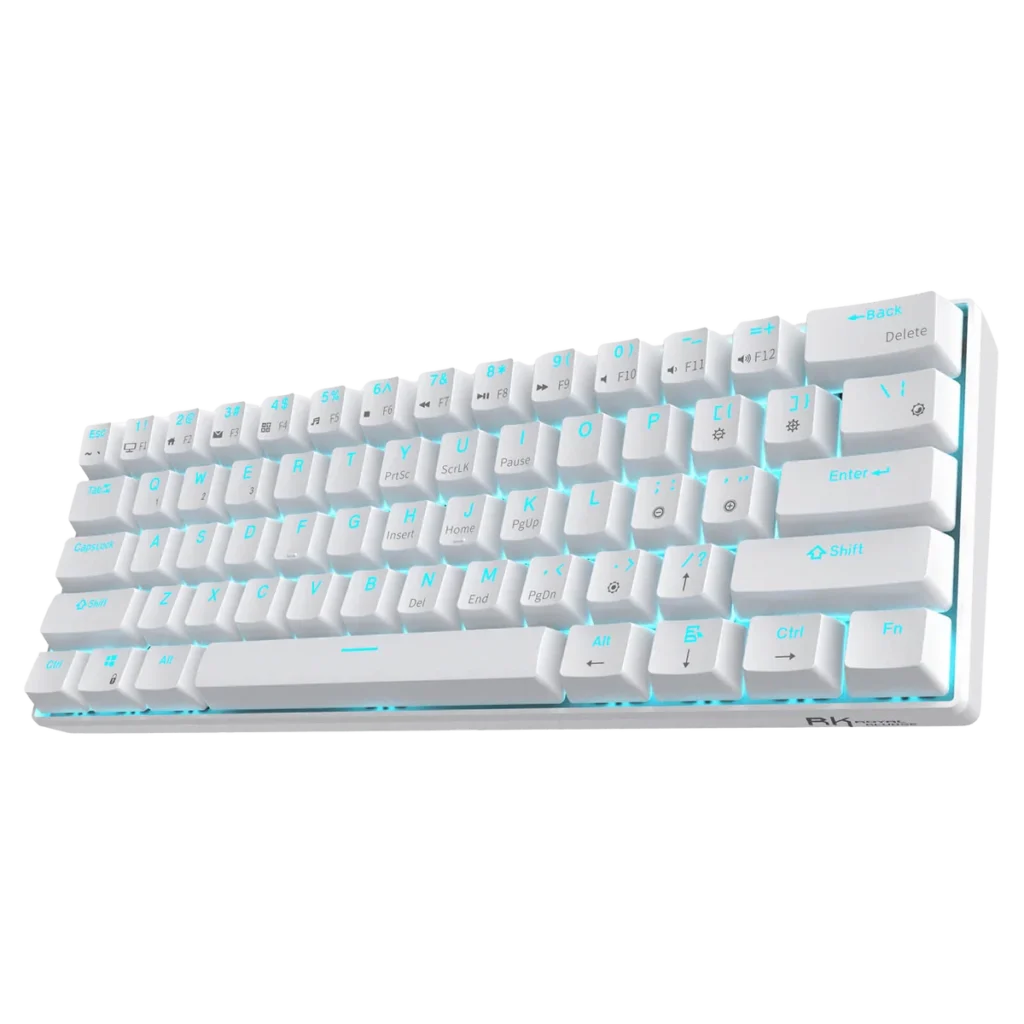
It is a compact keyboard with sixty-one keys, the smallest common layout, which keeps the letters, the number row and the modifiers and moves everything else onto a function layer. Royal Kludge sells it cheaply and in many versions, and this one is the tri-mode edition, with a cable, a receiver and Bluetooth for three devices.
At this price the hot-swap socket is the surprise. The switches pull out without soldering, so a buyer can try a different feel later or replace a worn switch instead of the whole keyboard. The keycaps are ABS and the lighting is a single color. Royal Kludge publishes no battery-life rating, so how long it runs between charges is something an owner learns after buying. There is no USB passthrough, and the height already noted makes long typing sessions tiring without support.
It suits a first mechanical keyboard, bought to find out whether the hobby appeals before spending more. Gamers who want the widest possible mouse space on a small desk, and students moving between a laptop and a desktop, are the natural owners. Writers and programmers will miss the arrow and Delete keys every hour, and one size up solves that.
Category strengths
Where the ROYAL KLUDGE RK61 Tri-Mode (61-Key) trails the median
- A much smaller battery ?1,450 mAh vs 4,000 mAh (median)
How this VS Score was computed
Score 54: each known spec is measured against the median of all keyboards (101 products), then weighted; 50 means level with that median. In classes of six or more, a value beyond the class’s 10th–90th percentile range counts as that limit, so one extreme product cannot set the scale. 31% of the scoreable weight could be used; unknown values, features not applicable to this class and proxies (battery capacity where a rated life exists) add or remove nothing.
| Specification | This product | Cohort median | Score weight | Points moved |
|---|---|---|---|---|
| Hot-swappable | Yes | 61% of the class have it | 0.6 | +30.0 |
| Keycap material | ABS | PBT | 0.4 | −10.0 |
| Battery capacity | 1,450 | 4,000 | 0.2 | −6.4 |
| Switch technology | Mechanical | Mechanical | 1 | +0.0 |
| Connection | 3 | 3 | 0.8 | +0.0 |
| Bluetooth devices | 3 | 3 | 0.3 | +0.0 |
Not scored: Actuation force (unknown: not scored); N-key rollover (unknown: not scored); Adjustable actuation (unknown: not scored); Analog input (not applicable: only 14% of this class have it); Polling rate (unknown: not scored); Wired latency (unknown: not scored); Wireless latency (unknown: not scored); Rapid trigger (unknown: not scored); Front height (unknown: not scored); Battery life (unknown: not scored); USB passthrough (not applicable: only 4% of this class have it); Sound dampening (unknown: not scored); Backlight (unknown: not scored); Programmable keys (unknown: not scored); Media controls (unknown: not scored); Rotary knob (unknown: not scored); Onboard profiles (unknown: not scored); Configuration software (standard for the class (95% have it)).
Editor’s note
The RK61 is a compact 61-key board that preserves letter keys, modifiers, and a number row while moving arrows and navigation commands to function layers. Its small footprint leaves generous mouse space and travels easily, but the layered controls require adaptation. Writers, programmers, and spreadsheet regulars who constantly need dedicated arrows, Delete, or function keys may find a 65% or 75% layout more efficient.
The tri-mode version adds 2.4 GHz wireless, Bluetooth, and USB-C wired operation. That makes it flexible across a desktop, laptop, and tablet. A 1,450 mAh battery is adequate rather than exceptional, and lighting reduces runtime. Hot-swappable sockets accept common three- and five-pin mechanical switches, which is valuable for repairs and experimentation. Buyers should still confirm the installed switch type, since red, brown, and blue options feel and sound different.
Keycaps are double-shot ABS and the basic lighting on this variant is single-color rather than full RGB. Software permits remapping and effects on supported systems, but Royal Kludge software is not as polished or platform-neutral as QMK/VIA. Stabilizer quality, wireless sleep behavior, and factory lubrication can vary between production runs, so a retailer with easy returns is useful.
Choose the RK61 for a low-cost compact setup, portable gaming, or a first hot-swappable board. Avoid it if dedicated navigation keys, a number pad, premium keycaps, or mature cross-platform configuration are essential. "RK61" has been sold in several revisions, including wired-only and Bluetooth-focused editions, so verify that the exact listing explicitly includes the wireless dongle, Bluetooth, USB-C, 61 keys, and hot-swap support before using the price or purchase link shown.
Specifications
Quality bars show where each figure sits between the lowest and highest of the 101 keyboards this VS Score is measured against.
Switches & typing
Performance
Layout & size
Connectivity
Build & sound
Features
Sources and verification
Where the specifications come from
- Official product pagerkgamingstore.com
- Independent testingrtings.com
Verification
- First published
- Specifications last checked
- Sheet completeness
- 15 of 34 specifications verified; the rest show as Unknown and are never estimated or scored
- Page type
- Product specification page — Compiled from the manufacturer’s published specifications and the cited sources; this is not a hands-on test.
- Basis
- Research-based: specifications and editorial text were compiled from the documents listed here and the manufacturer’s published data. We have not tested this unit ourselves; where independent measurements are mentioned they belong to the linked publication.
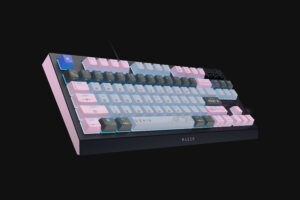
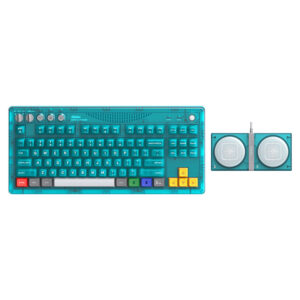
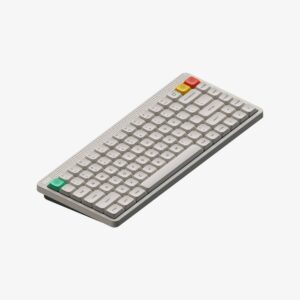
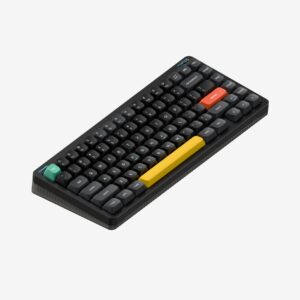
Keyboards with similar specs to the ROYAL KLUDGE RK61 Tri-Mode (61-Key)
Ratings & reviews
No reviews yet. Be the first to share your experience.
The bottom line
The ROYAL KLUDGE RK61 Tri-Mode (61-Key) earns a VS Score of 54 on the 31% of specifications we could compare like for like — an indication, not a ranking.
- Who it’s for
- A first-time mechanical buyer on a small budget who wants a tiny board to move between a desktop, laptop and tablet, with switches that can be swapped.
- Who should look elsewhere
- Anyone who edits text or code all day and needs dedicated arrows and Delete should look elsewhere, as should anyone who will not add a wrist rest to a tall board.
- The trade-off that matters
- Its size is the whole point and the whole cost. Arrows, Delete and the function row sit behind a Fn key, which is painless in games but slows editing until the layer becomes habit.
- The main alternative
- Ducky OK-M 65 Wireless: a slightly larger layout that keeps dedicated arrow keys, with a gasket build and PBT keycaps.
The VS Score is calculated from the weighted specifications above, each measured against the median of comparable keyboards — a shortlisting guide, not a substitute for your own priorities. See how we score.