Quick answer
A 96% keyboard works best for most people who want a number pad but do not want a wide keyboard. It keeps the main typing area, function row, arrow keys, and numpad. Then it packs them into a tighter frame.
A full-size keyboard still makes sense for users who want the classic layout. The keys sit in clear groups, so Delete, Home, End, Page Up, and Page Down feel easy to find.
So, the choice is simple. Pick a 96% keyboard if you want more mouse space. Pick a full-size keyboard if you want the most familiar setup.
What is a 96% keyboard?
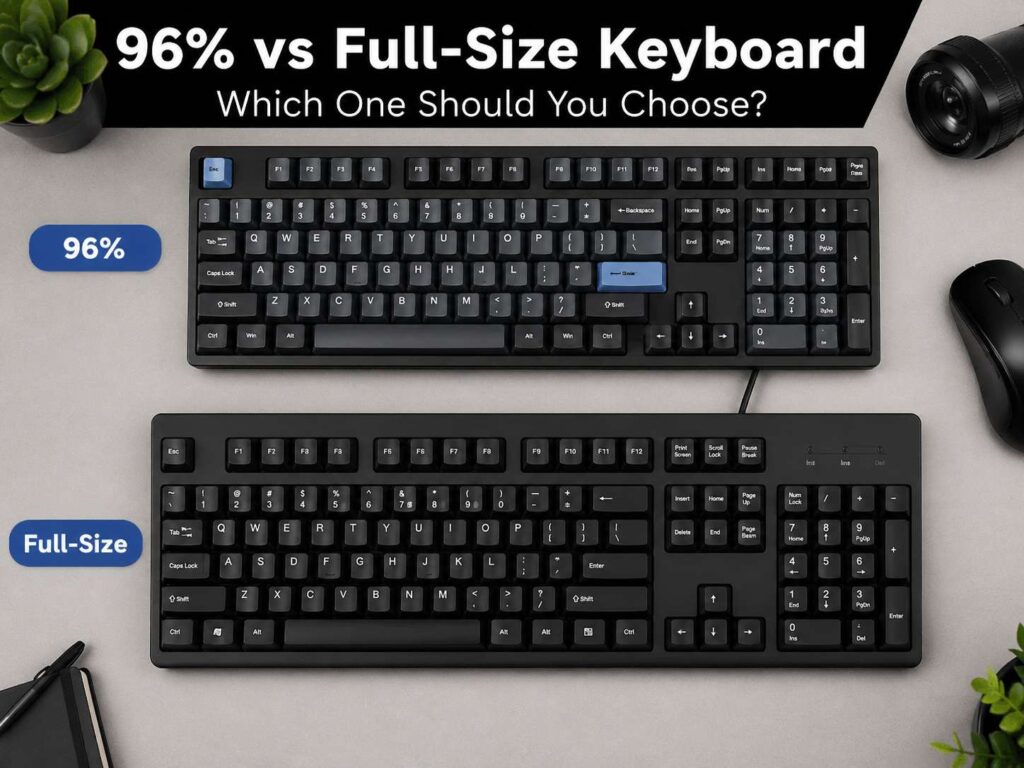
A 96% keyboard is a compact keyboard with almost all the keys from a full-size model. It is also called a 96 percent keyboard or an 1800 layout keyboard.
Most 96% keyboards have around 96 to 100 keys. The exact number changes by brand and region. Some use a US ANSI layout. Others use an ISO layout, which is common in the UK and parts of Europe.
The main idea stays the same. You keep the numpad, the function row, the arrows, and most navigation keys. The keyboard removes the empty gaps between these key groups, so the whole board feels much smaller.
This layout sits between a full-size keyboard and smaller options like 75%, TKL, and 65% boards. If you want a smaller board but still need numbers, a 96% model can feel like the sweet spot.
For more context on smaller boards, this guide on what a 75% keyboard is helps explain why compact layouts became so popular.
What is a full-size keyboard?
A full-size keyboard is the standard layout. A US ANSI full-size keyboard usually has 104 keys. Many ISO versions have 105 keys.
It includes the main typing section, function row, arrow keys, navigation cluster, and full numpad. These sections have clear gaps between them. That spacing makes the keyboard easy to scan and simple to use.
A full-size board works well for office tasks, spreadsheets, data entry, gaming, and general home use. It gives you every common key in a familiar place.
The drawback is width. A full-size keyboard takes up more desk space. It can push your mouse farther away from your body, mainly for right-handed users. Over long sessions, that wider reach can feel less natural.
Size and desk space
The size difference is the main reason people compare 96% vs full-size keyboards.
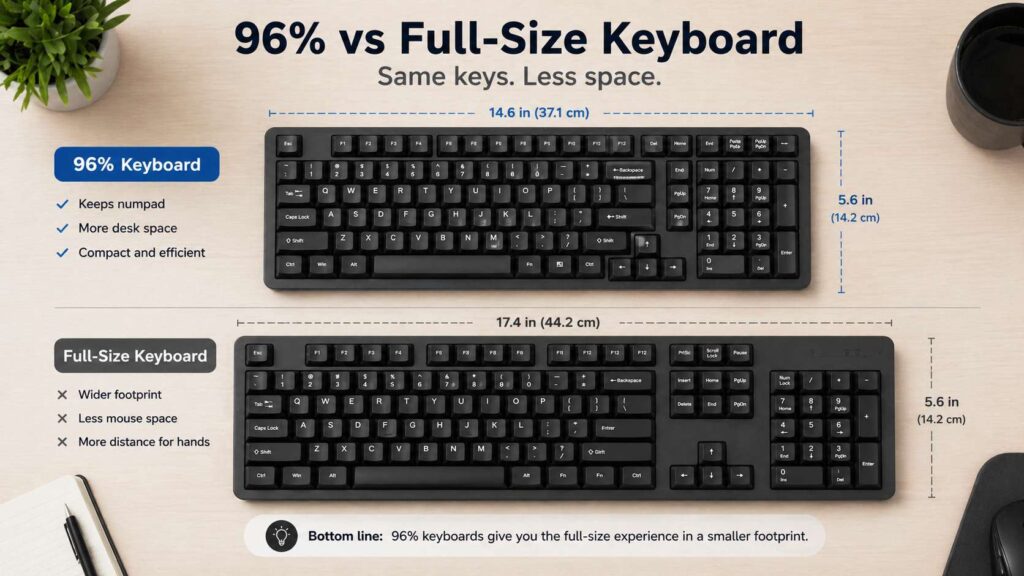
A full-size keyboard often measures around 17 to 18 inches wide. A 96% keyboard often sits closer to 14.5 to 15.5 inches wide. Exact measurements change by model, case design, and bezel size.
That small width change can make your desk feel much cleaner. Your mouse sits closer to the typing area. Your shoulder and arm stay in a more relaxed position. You gain extra space for a mouse pad, notebook, coffee cup, tablet, or desk mat.
This matters a lot on small desks. A full-size keyboard can crowd the setup fast. A 96% board gives you nearly the same key set in a smaller body, so it fits better in home offices, dorm rooms, and shared work areas.
A full-size keyboard still feels better on a large desk. It gives each key group room to breathe. It looks more open and feels less packed.
Key layout and comfort
A 96% keyboard saves space by moving keys closer together. That sounds simple, but it changes how the right side of the keyboard feels.
On many 96% keyboards, the arrow keys sit close to the numpad. The navigation keys often move above the numpad or into a slim column. Some models place Delete, Home, End, Page Up, and Page Down in new spots.
The first few days can feel a bit awkward. You may hit the wrong key near Enter, Backspace, Delete, or the arrows. After a little practice, that fades.
A full-size keyboard feels more natural from day one. The arrow keys sit in their own block. The navigation cluster has its own space. The numpad stays separate too.
For comfort, the best choice comes down to your daily habits. A 96% keyboard helps if you use your mouse a lot. A full-size keyboard helps if you use the navigation keys all day.
Typing and office work
For normal typing, both layouts work well. A 96% keyboard keeps the same main letter area as a full-size board. Emails, documents, chats, browsing, and light coding feel familiar.
The difference appears on the right side. A full-size keyboard gives you more separation between the arrow keys, nav keys, and numpad. That can help during fast editing or spreadsheet work.
A 96% keyboard still handles office tasks well. It keeps the numpad, so number entry feels much faster than on a TKL, 75%, or 65% keyboard. That makes it a strong choice for users who work with invoices, budgets, product lists, or simple spreadsheets.
For heavy Excel work, check the exact key placement before you buy. Some 96% boards make Delete easy to reach. Others place it in a spot that takes time to learn.
Gaming and mouse space
Gamers often prefer smaller keyboards for one reason: mouse room.
A wide keyboard can block large mouse movements. This matters most in shooters and other games where low mouse sensitivity needs wide swipes. A 96% keyboard gives your mouse hand more space without removing the numpad.
That makes it a good layout for people who use one desk for work and gaming. You can type, enter numbers, play games, and keep the setup compact.
A full-size keyboard still works fine for gaming. Many gaming keyboards use the full-size layout, and the extra keys can be handy. But if mouse space matters, the 96% keyboard has the clear edge.
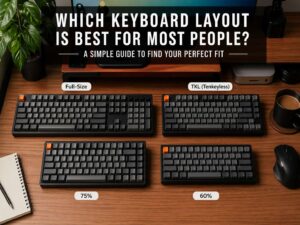
For a broader look at layout choices, this guide on the best keyboard layout for most people breaks down the common sizes in a simple way.
Spreadsheets and number entry
The numpad is the big reason to choose either a 96% keyboard or a full-size keyboard. If you enter numbers often, smaller layouts without a numpad can slow you down.
A 96% keyboard keeps the numpad but cuts the empty space around it. That helps users who need numbers but want a smaller board.
A full-size keyboard gives the numpad more room. It feels cleaner for long data-entry sessions. The navigation cluster also sits in a familiar block, which helps in spreadsheets and business tools.
So, for basic number work, a 96% board is more than enough. For long hours of spreadsheet use, a full-size keyboard still feels safer.
Learning curve
A full-size keyboard has almost no learning curve. Most people have used one at school, at work, or at home. You can sit down and type right away.
A 96% keyboard takes a little time. The compact right side can cause a few mistakes at first. The Delete key may sit in a different place. The arrow keys may feel squeezed. The numpad may sit closer than expected.
The adjustment period is usually short. After a few days, the layout starts to feel normal. After a few weeks, the smaller footprint can feel like the better fit.
The only real issue comes from switching back and forth. If you use a full-size keyboard at work and a 96% keyboard at home, your fingers may need a moment to reset.
Portability and desk setup
A 96% keyboard is easier to move and easier to fit into tight spaces. It works well with laptop stands, monitor arms, pull-out trays, and compact desks.
It also looks cleaner in modern desk setups. The shorter width leaves more room for speakers, notebooks, phones, chargers, or a larger mouse pad.
A full-size keyboard feels more fixed. It suits a larger desk where space does not matter much. It also works well in shared offices since the layout feels familiar to almost everyone.
Wireless models add another layer. A wireless 96% keyboard can make a small desk feel tidy. A wired full-size board can still make sense for a permanent setup.
Build quality and switch types
Both 96% and full-size keyboards come in many styles. You can find membrane, scissor switch, mechanical, low-profile mechanical, wired, wireless, RGB, and hot-swappable models.
Mechanical keyboards give you the most choice. Linear switches feel smooth. Tactile switches give a small bump. Clicky switches add a sharper sound and feel.
For office use, quieter switches make more sense. Silent tactile or silent linear switches can reduce noise. Good stabilizers also matter, mainly on the spacebar, Enter, Backspace, and numpad keys.
For comfort, check keyboard height. A tall mechanical board may feel better with a wrist rest. A low-profile keyboard can feel closer to a laptop keyboard.
Price and value
Full-size keyboards are easy to find at every price point. Basic office models cost very little. Premium mechanical models cost much more.
A 96% keyboard can cost a bit more than a basic full-size board. The layout is less common, and many models target keyboard fans. Still, budget options exist.
The better value depends on your needs. A cheap full-size keyboard works well for simple typing and office tasks. A 96% keyboard gives better desk use if your setup feels cramped.
Do not choose by price alone. Check the layout, switch type, build quality, and key placement first.
Who should choose a 96% keyboard?
Choose a 96% keyboard if you want a numpad and more desk space.
This layout works well for home office users, gamers, students, writers, designers, and people with smaller desks. It gives you the keys you need without the extra width of a full-size board.
It also works well for mixed use. You can type during the day, play games at night, and still enter numbers fast.
Before you buy, look closely at the right side of the keyboard. The arrow keys, Delete key, and numpad layout matter more than the color or lighting.
Who should choose a full-size keyboard?
Choose a full-size keyboard if you want the most familiar layout.
It suits accountants, office workers, admin staff, spreadsheet users, and anyone who uses navigation keys often. The separate key groups make it easier to work without looking down.
It is also a good pick for shared desks. A full-size keyboard needs no real adjustment period.
If your desk has plenty of space, the full-size layout remains a strong choice. It gives you every key, clear spacing, and a classic typing feel.
Final verdict
A 96% keyboard gives the better balance. It keeps the numpad, saves desk space, and brings the mouse closer to your hand. That makes it a smart pick for modern work and gaming setups.
A full-size keyboard still wins for familiarity. It gives every key group more room and feels easy from the first minute.
For most people, the 96% keyboard is the better daily layout. It keeps the useful parts of a full-size keyboard and removes the extra width that many desks no longer need.