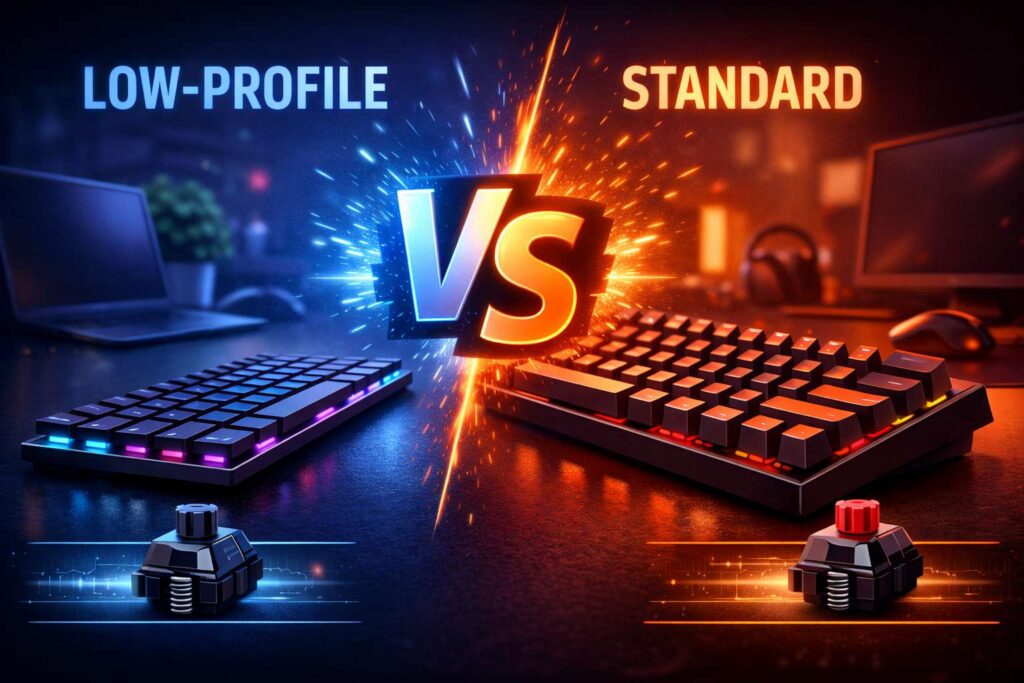
A mechanical keyboard can change the way your desk feels in one day. The sound is different. The key press is different. Your hands sit in a different position. That is why one big choice comes first. Should you buy a low-profile mechanical keyboard or a standard mechanical keyboard?
This question matters more than it seems. The choice shapes typing feel, gaming speed, comfort, portability, and upgrade options. It even changes how the keyboard looks on your desk. A slim board gives off a clean, modern feel. A standard board looks more classic and more substantial.
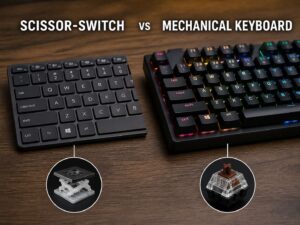
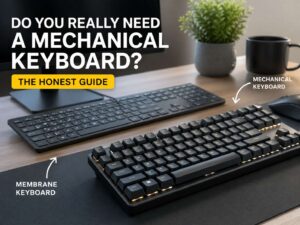
If you have already compared a mechanical vs membrane keyboard, that is a smart starting point. Once you know you want a mechanical board, the next step is the profile. This is where the experience starts to split.
You may reach this point from another angle. Maybe you looked at switch speed and rapid key response first. Then you read about Hall effect vs mechanical keyboard and started to wonder whether a low-profile board feels faster than a regular one. In many cases, it does feel quicker under the fingers, but that is only one part of the story.
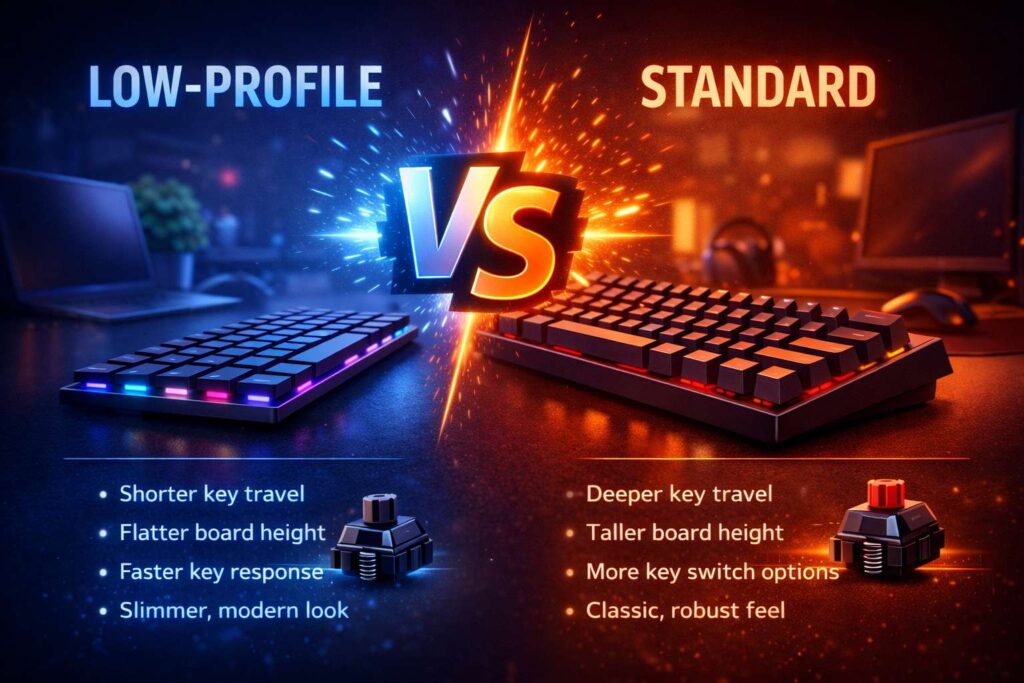
The short version is simple. A low-profile mechanical keyboard feels shorter, lighter, and flatter. A standard mechanical keyboard feels deeper, taller, and more traditional. Neither one wins for every person. The better pick is the one that matches your habits, your hands, and your desk setup.
What is a low-profile mechanical keyboard?
A low-profile mechanical keyboard uses shorter switches, shorter keycaps, and a slimmer case. The whole board sits lower on the desk. The keys travel a shorter distance, so each press feels quick and compact.
This type of board often appeals to laptop users first. The jump from a laptop keyboard to a low-profile mechanical keyboard feels smaller. You still get the snap and personality of a mechanical switch, but the board does not feel tall or chunky.
That lower height changes the mood of the keyboard right away. Your wrists sit flatter. Your fingers move a little less on each press. The board usually looks cleaner too, mainly in smaller workspaces or minimalist desk setups.
Low-profile boards have become much better in recent years. Early models felt like a compromise. Newer ones feel far more refined. Many now offer wireless support, hot-swap options, RGB lighting, and solid build quality. So this category is no longer a niche pick. It is a real part of the mechanical keyboard market.
What is a standard mechanical keyboard?
A standard mechanical keyboard uses full-height switches and taller keycaps. This is the classic mechanical keyboard design. It has more travel, more height, and a fuller key press.
This style dominates the custom keyboard space for a reason. It offers the widest range of switches, keycap sets, layouts, case designs, and modding parts. It is the easiest path for buyers who want to swap parts later or build a board that feels personal.
A standard board usually feels more planted on the desk too. The typing motion is deeper. The sound often feels richer. Many long-time keyboard fans still prefer this format for those reasons alone.
It has another advantage. The parts market is much larger. That matters if you care about custom keycaps, foam mods, switch lubing, or future upgrades. A standard board gives you more room to experiment.
The first thing you notice is key travel
The biggest difference between low-profile and standard mechanical keyboards is key travel. You feel it on the first sentence you type.
A low-profile board has a shorter press. The key moves down a smaller distance, so the action feels faster and lighter. A standard board has a deeper press. The key moves farther, so the action feels fuller and more deliberate.
Neither style is automatically better. This is a feel question first.
A person who types on a laptop all day often adapts to a low-profile board very fast. The motion feels familiar. A person who loves the classic mechanical feel often prefers a standard board right away. The deeper press gives more feedback and more sense of movement.
That feel changes rhythm too. A low-profile keyboard encourages quicker taps and shorter finger travel. A standard keyboard slows the motion just enough to feel more defined.
Typing feel matters more than raw speed
Chasing speed first makes sense. Many product pages talk about actuation, travel, and response. But typing is not only about speed. It is about control, comfort, and consistency over time.
Low-profile keyboards often feel fast and nimble. They are easy to move across. Your fingers do not need much lift between presses. That can feel great for chat, office work, light coding, and quick bursts of writing.
Standard keyboards often feel more stable and more satisfying for long sessions. The deeper stroke gives each key press more shape. Many writers like that richer feel. Many coders do too. You can settle into a flow and feel each word more clearly.
This is the point many reviews miss. A board that feels fast for ten minutes is not always the board that feels good after four hours. Comfort and rhythm matter just as much as raw response.
Gaming on low-profile vs standard keyboards
Low-profile mechanical keyboards often feel snappy in games. The shorter travel makes repeated taps feel fast. Movement keys, strafing, and quick inputs can feel very direct. That is a real strength.
This is one reason low-profile gaming boards have a loyal audience. They offer a cleaner desk look and a quick key feel without turning the board into a flat laptop keyboard.
Still, a standard mechanical keyboard remains a strong gaming pick. The deeper press and clearer feedback can feel easier to control in long sessions, and the extra travel does not ruin gaming.
The better choice depends on the type of game and your own habits. Fast shooters and action games often feel great on low-profile boards. Story games, strategy games, MMOs, and mixed-use setups often feel just as good, or better, on a standard board.
A keyboard does not win games on its own. Comfort over time has a big role. A board that feels right in your hands will usually serve you better than one that looks faster on paper.
Comfort and wrist position
Keyboard height affects comfort every single day. This part is easy to overlook in reviews, but it matters a lot in real use.
A low-profile keyboard sits lower on the desk. That often puts your wrists in a flatter position. That can feel easier and more natural, mainly if you come from a laptop or a slim desktop keyboard.
A standard keyboard sits higher. That can still feel great, but a wrist rest helps. Without one, the front edge can feel too tall after long use.
Desk height plays a part here too. So does chair height. So does the way you place your arms. Some people rest their palms on the desk. Others float their hands over the keyboard. Your own posture will shape the answer more than any trend or marketing line.
In simple terms, low-profile boards often feel easier right away. Standard boards often feel better once you build the rest of the setup around them.
Sound and character
Sound matters more than it seems. A keyboard lives on your desk. You hear it all day. So the tone of the board becomes part of the experience.
Low-profile keyboards often sound lighter and sharper. The shorter switch and slimmer case can create a tighter, thinner note. That crisp sound can feel tidy and controlled.
Standard keyboards often sound fuller and deeper. There is more room inside the case, more travel in the switch, and more variety in keycap materials. That gives enthusiasts more ways to tune the sound.
This does not mean every standard board sounds better. A bad standard board can sound hollow or cheap. A good low-profile board can sound clean and pleasant. Still, the standard format usually gives you more room to chase a certain sound.
If sound matters a lot to you, standard boards have the edge.
Customization and upgrade options
This is where standard mechanical keyboards pull ahead in a big way.
The custom market is built around standard switches and standard keycap fit. That gives you more options for colors, profiles, materials, artisan keys, cables, and switch choices. If you want to change the feel of your keyboard later, standard boards make that easier.
Low-profile boards have fewer options. The market is growing, and there are more parts than there used to be, but it still feels tighter. Many low-profile boards need keycaps or switches made for that specific format. That reduces your freedom.
This matters a lot for hobbyists. It matters less for buyers who want a keyboard that stays the same for years.
So ask yourself a simple question. Do you want to buy one keyboard and use it as-is, or do you want to tweak it over time? If you want room to play, standard is the safer path.
Portability and desk space
Low-profile keyboards win this part more often.
They look slimmer, pack more easily, and take up less visual space on a desk. That can make a setup feel cleaner and less crowded. This is a nice perk for small desks, shared workspaces, and people who move their keyboard between rooms or offices.
A standard keyboard feels more substantial. That can be a plus on a fixed desk setup. It looks more rooted and more serious. But it is rarely the better option for portability.
If your desk setup changes often, or if you like a light and tidy look, low-profile has a clear advantage.
Which one should you buy?
The best choice gets clearer once you think about your daily routine.
Pick a low-profile mechanical keyboard if you want:
A faster, shorter key press
A flatter typing angle
A cleaner, slimmer desk look
An easier jump from laptop keyboards
A board that feels light and modern
Pick a standard mechanical keyboard if you want:
A deeper and more classic mechanical feel
More switch and keycap options
Better upgrade potential
A fuller sound
A stronger fit for the custom keyboard hobby
There is no wrong pick here. There is only a better fit.
Many first-time buyers enjoy low-profile boards right away. They feel approachable. They feel easy. Standard boards often win long term for enthusiasts and heavy typists who want more character, more parts, and more room to fine-tune the experience.
Final verdict
A low-profile mechanical keyboard is not just a thinner version of a standard board. It offers a different feel from top to bottom. The press is shorter. The board is flatter. The whole typing posture can feel lighter and quicker.
A standard mechanical keyboard still holds the classic crown. It gives you deeper travel, more customization, and a fuller mechanical feel. For many buyers, that remains the more satisfying option over time.
So the real question is not which keyboard is better in the abstract. The real question is which keyboard fits the way you type, work, and play.
Choose low-profile if you want slim, quick, and easy to settle into. Choose standard if you want deep, flexible, and built for long-term tinkering. That simple split will get you to the right keyboard far faster than a long spec table ever will.