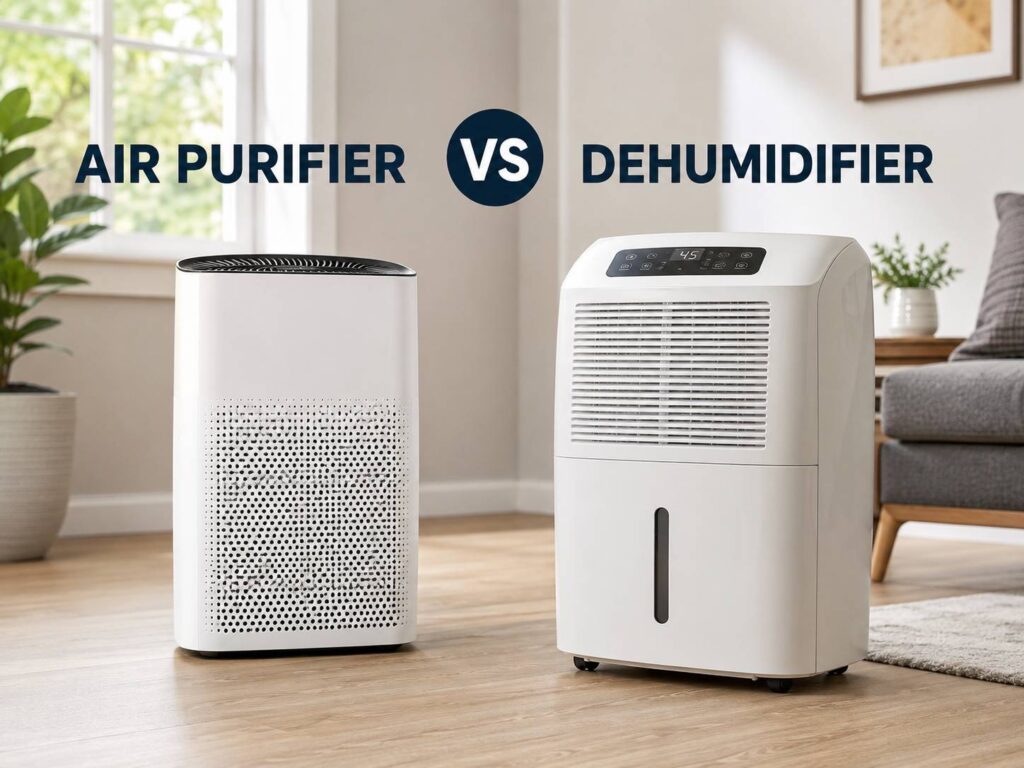
Air Purifier vs Dehumidifier: The Clear Difference
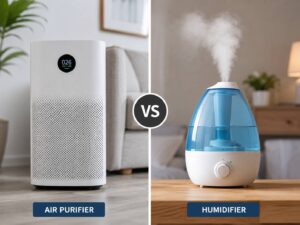
An air purifier and a dehumidifier can both make your home feel better, but they do very different jobs.
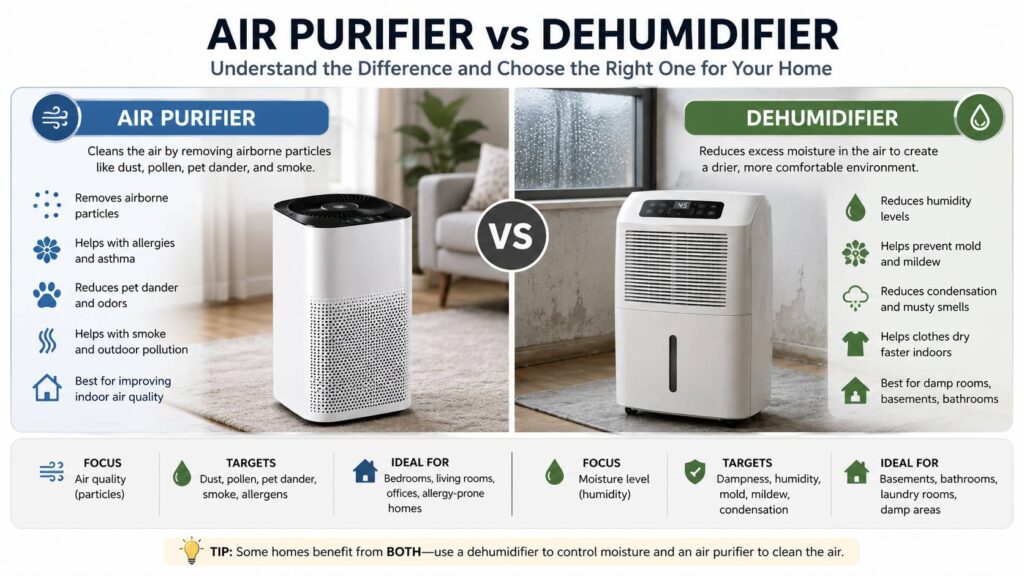
An air purifier cleans the air. It pulls air through filters and traps tiny particles such as dust, pollen, pet dander, smoke, and some airborne irritants. For allergy sufferers, pet owners, and people who live near traffic or wildfire smoke, this can make a room feel fresher and easier to breathe in.
A dehumidifier removes water from the air. It lowers indoor humidity, which helps with damp rooms, condensation, musty smells, mold risk, and that sticky feeling you get in humid spaces.
So, the simple rule is this: buy an air purifier for dirty air. Buy a dehumidifier for damp air.
Still, real homes are rarely that simple. A basement can have both dust and dampness. A bedroom can have pet dander and high humidity. A bathroom can smell musty and still collect airborne particles. So the better choice depends on what problem you notice most.
What Does an Air Purifier Actually Do?
An air purifier is made to reduce particles floating in the air. Most models use a fan, a pre-filter, and a main filter. Better units often use a true HEPA filter, which captures very small particles from the air that passes through the device.
An air purifier can help with:
- Dust in bedrooms and living rooms
- Pollen during allergy season
- Pet dander from cats and dogs
- Smoke particles from cooking, candles, or outdoor smoke
- Fine airborne particles
- Some odors, mainly with a good activated carbon filter
Still, an air purifier does not fix every indoor air problem. It will not dry a wet wall. It will not remove mold growing on grout. It will not solve a leak under the sink. It can reduce some airborne mold spores, but it cannot remove the moisture that lets mold grow.
Put an air purifier in a damp basement and the musty smell will not vanish. The room may smell better for a short time, but the damp problem stays. Then the odor comes back.
For the best results, place the purifier in the room where you spend the most time. Bedrooms, home offices, and living rooms usually make the most sense. Keep doors and windows closed while it runs, and pick a fan speed that actually moves enough air for the room.
What Does a Dehumidifier Actually Do?
A dehumidifier pulls extra moisture from the air. Most home models use a compressor system. Air passes over cold coils, water collects, and the machine sends that water into a tank or through a drain hose.
A dehumidifier can help with:
- Musty smells
- Window condensation
- Damp walls or floors
- Basement humidity
- Mold and mildew risk
- Sticky indoor air
- Clothes that dry slowly indoors
- Damp closets or storage rooms
A dehumidifier does not clean the air like a purifier. Some models have a washable screen, but that screen protects the machine. It is not a real air filter.
This type of device works best in damp spaces. Basements, laundry rooms, bathrooms, garages, crawl spaces, and storage rooms are common examples. It can also help in a bedroom if the room feels clammy or smells stale.
A small hygrometer can tell you a lot. It measures relative humidity. If your room often sits above 50% to 60%, a dehumidifier is likely the smarter first buy.
Air Purifier vs Dehumidifier for Mold
For mold prevention, a dehumidifier usually matters more.
Mold needs moisture. If a room has damp walls, wet corners, condensation, or poor ventilation, an air purifier will not fix the real cause. It may catch some airborne spores, but the mold source can keep growing.
A dehumidifier helps by making the space less friendly for mold. A relative humidity of 40% to 50% usually feels comfortable and helps reduce dampness.
Choose a dehumidifier first if you notice:
- Black, green, or dark spots on walls, grout, or window frames
- A musty smell that returns after cleaning
- Condensation on windows
- Damp cardboard, books, or stored clothes
- A basement that feels wet or heavy
An air purifier can still help after you fix the moisture issue. It can reduce airborne particles during cleanup and make the room feel fresher. Still, do not treat it as the main mold fix. Find the water source, dry the space, clean the affected area, then filter the air.
My honest take: if a room smells musty, do not buy an air purifier first. Buy a hygrometer first. It costs little, and it tells you whether humidity is the real problem.
Air Purifier vs Dehumidifier for Allergies
For allergies, an air purifier is usually the better first choice. This is especially true if your triggers include pollen, pet dander, dust, or smoke.
A true HEPA air purifier can reduce airborne allergens in the room where it runs. It works best with simple habits too. Wash bedding often, vacuum with a good filter, keep windows closed during heavy pollen days, and replace purifier filters on time.
A dehumidifier can still help allergy sufferers in damp homes. Lower humidity can reduce the conditions that support mold and dust mites. So, if your allergies get worse in a damp bedroom, basement, or closet, moisture control may be part of the fix.
Pick an air purifier first if:
- You sneeze more around pets
- Dust builds up fast
- Pollen season bothers you
- Smoke or cooking smells linger
- The room feels dry enough but still irritates your nose or throat
Pick a dehumidifier first if:
- The room smells damp
- You see condensation
- Mold keeps coming back
- The air feels sticky
- Humidity readings stay high
Many allergy-prone homes benefit from both. The purifier filters particles, and the dehumidifier controls dampness. Together, they cover more problems than either device can handle alone.
If you are comparing more indoor air devices, this guide on air purifier vs humidifier can help you understand which machine fits dry air, dirty air, and allergy-related issues.
Air Purifier vs Dehumidifier for Dust
An air purifier is the better choice for dust floating in the air. It can trap many dust particles before they settle on shelves, bedding, and floors.
Still, it will not stop dust completely. Dust comes from skin flakes, fabric fibers, carpets, pets, outdoor air, and daily movement. A purifier reduces the amount in the air, but regular cleaning still matters.
A dehumidifier does not remove dust. It may make a damp room feel less sticky, but it is not a dust control machine.
For dust, look for an air purifier with:
- True HEPA filtration
- A strong CADR rating for your room size
- Easy filter replacement
- A quiet low-speed mode
- A pre-filter for larger particles
- No ozone-producing feature
Small desktop purifiers often look nice, but they rarely move enough air for a full room. For a bedroom or living room, choose a model that matches the space and can run quietly for hours.
Air Purifier vs Dehumidifier for Musty Smells
A musty smell usually points to dampness, mold, mildew, or poor airflow. In that case, a dehumidifier is often the better purchase.
An air purifier with activated carbon can reduce light odors. Still, carbon filters vary a lot. Thin carbon sheets do very little for strong smells. Heavier carbon filters work better, but they still do not remove the source of the odor.
If a basement smells musty, start with moisture. Check for leaks, blocked gutters, wet foundation areas, stored damp items, and poor ventilation. Then use a dehumidifier with continuous drainage if the room stays wet.
A purifier can help after the room dries out. It can reduce leftover particles and mild odors. Yet the biggest improvement often comes from lowering humidity first.
Which One Is Better for a Bedroom?
For most bedrooms, an air purifier is the better everyday choice. Bedrooms collect dust, skin flakes, fabric fibers, pollen, and pet dander. Since you spend many hours sleeping there, cleaner air can make a real difference.
A dehumidifier makes sense in a bedroom if the humidity is too high. Signs include damp bedding, window condensation, closet odor, or mold near window frames.
For a bedroom air purifier, choose a quiet model. Sleep mode helps, but check the noise rating too. Some purifiers clean well on high speed but sound too loud for sleep. In practice, a slightly larger unit running on a lower setting often feels better than a small unit working too hard.
For a bedroom dehumidifier, choose a model with a humidistat and automatic shutoff. A hose drain is useful if you plan to run it often, but many bedrooms do not have a drain nearby. In that case, tank size matters more than people expect.
Which One Is Better for a Basement?
For basements, a dehumidifier usually comes first.
Basements often sit below ground level, so they deal with more moisture pressure. They can smell musty, feel cool and damp, or show mold on stored boxes and walls. Air cleaning alone will not solve that.
A good basement dehumidifier should have:
- Enough pint capacity for the room
- Continuous drain option
- Auto restart after a power cut
- Washable intake filter
- Built-in humidistat
- Drain pump if water needs to move upward
- A tank that is easy to remove and clean
An air purifier can still make sense in a finished basement, gaming room, home gym, or office. It can reduce dust and airborne particles. But if the basement feels damp, start with the dehumidifier. Once the room dries out, add a purifier if dust, pets, or odors still bother you.
Can You Use an Air Purifier and Dehumidifier Together?
Yes, you can use both in the same room. They do not fight each other.
Place them a few feet apart so both machines can pull in air freely. Do not push either one tight against furniture, curtains, or walls. The purifier needs open airflow. The dehumidifier needs space around its intake and exhaust areas.
A strong setup looks like this:
- Use the dehumidifier to keep humidity near 40% to 50%
- Use the air purifier to reduce dust, pollen, dander, and smoke particles
- Keep doors and windows closed during use
- Clean the dehumidifier tank often
- Replace purifier filters on schedule
- Check humidity with a hygrometer
This pairing works well in basements, pet rooms, older homes, and bedrooms with dampness issues.
Buying Tips for an Air Purifier
Do not buy only by brand name. Match the purifier to your room and your main problem.
Check these details before purchase:
- Filter type: Choose true HEPA for particles.
- CADR rating: Higher CADR means faster particle removal.
- Room coverage: Pick a model that can clean your room at a usable fan speed.
- Noise level: A loud purifier often gets turned off.
- Filter cost: Replacement filters can be expensive.
- Carbon filter: Useful for light odors, but bigger carbon filters work better.
- Ozone: Avoid ozone generators for normal home use.
One real issue buyers face is filter pricing. Some purifiers look cheap at first, then cost more over time. Always check replacement filter prices before buying.
Another common issue is noise. A purifier that sounds fine in the store may feel annoying at night. For bedrooms, quiet performance matters just as much as power.
Buying Tips for a Dehumidifier
A dehumidifier should match the space, the dampness level, and how often you plan to run it.
Check these details before purchase:
- Pint capacity: This shows how much water the unit removes per day.
- Drainage: A hose drain saves time in damp basements.
- Pump: Helpful if the water must drain into a sink or higher outlet.
- Humidistat: Lets the unit stop after reaching your target humidity.
- Tank size: Small tanks fill fast in wet rooms.
- Noise level: Compressor models can sound like small air conditioners.
- Low-temperature performance: Some models struggle in cold basements.
- Energy use: A dehumidifier can run for many hours.
Check the tank size. In a very damp room, you may need to empty it daily. If that sounds annoying, buy a model with continuous drainage.
This is similar to choosing between other home appliances. The right product is not always the one with the most features. It is the one that fits the job. The same logic applies in this air fryer vs toaster oven comparison, where room size, cooking style, and daily use matter more than hype.
Common Mistakes to Avoid
The symptoms overlap, so it is easy to buy the wrong device.
Avoid these mistakes:
- Buying an air purifier to fix a leak
- Buying a dehumidifier for pollen alone
- Ignoring filter replacement costs
- Letting a dehumidifier tank stay dirty
- Using a purifier in a room much larger than its rating
- Blocking air intake or outlet vents
- Ignoring bathroom and kitchen ventilation
- Letting indoor humidity drop too low in winter
- Expecting one machine to fix every air quality problem
The biggest mistake is guessing. A hygrometer gives you a clear humidity reading. Your symptoms give you the rest of the picture. Dust, pollen, smoke, and pet dander point to an air purifier. Dampness, condensation, mold spots, and musty smells point to a dehumidifier.
Final Verdict: Which One Should You Buy?
Buy an air purifier if your main problem is dirty air. It is the better choice for dust, pollen, pet dander, smoke particles, and allergy triggers in a dry room.
Buy a dehumidifier if your main problem is damp air. It is the better choice for musty smells, condensation, basement dampness, mold risk, and sticky indoor air.
Get both if the room has dirty air and high humidity. This is common in basements, pet areas, older homes, and rooms with poor airflow.
For most homes, the best first step is simple. Look for visible signs, then measure humidity. If the room smells musty or often reads above 50% to 60% humidity, start with a dehumidifier. If the room feels dry enough but dust, pollen, pets, or smoke bother you, start with an air purifier.
An air purifier makes the air cleaner. A dehumidifier makes the air drier. The right choice is the one that fixes the real problem in your home.