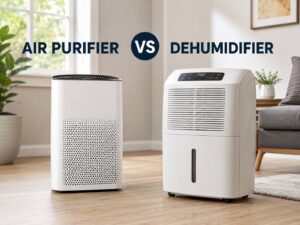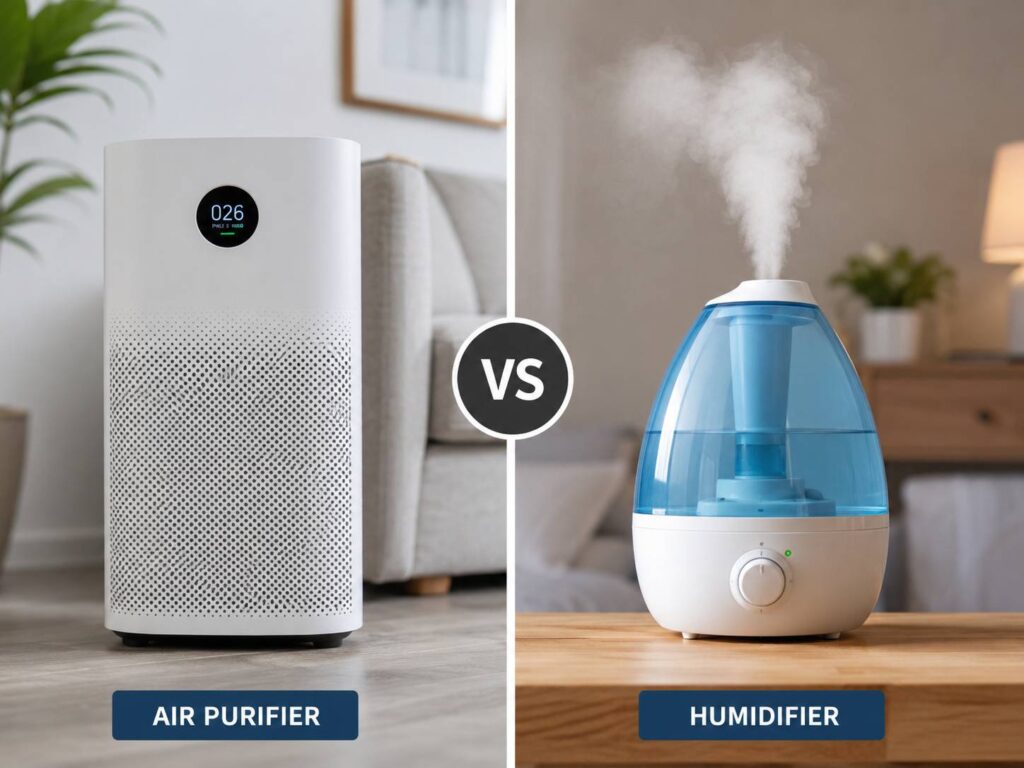
Air purifier vs humidifier is a common home comfort debate, and it can get confusing fast. Both devices sit in the same aisle. Both promise a better indoor environment. Yet they do very different jobs.
An air purifier cleans the air by trapping particles. A humidifier adds water vapor to dry air. So, the right choice starts with the problem you want to fix.
If your room feels dusty, smells stale, or triggers allergies, an air purifier is usually the better pick. If your skin feels dry, your throat feels scratchy, or static keeps building up, a humidifier makes more sense.
Still, a home can need both at different times. A bedroom can have dry winter air and dust at the same time. A living room can have pet dander and low humidity too. So, let’s break it down in a simple, practical way.
What Is an Air Purifier?
An air purifier pulls room air through one or more filters, then pushes cleaner air back out. Good models target tiny airborne particles that float around the room. These can include dust, pollen, pet dander, mold spores, and fine smoke particles.
Most strong home air purifiers use a HEPA-type filter. Many models also include an activated carbon filter. The particle filter handles dust and allergens. The carbon filter helps with smells from cooking, pets, smoke, and household odors.
That said, an air purifier does not add moisture. It will not fix dry skin or a dry throat caused by low humidity. It also will not remove dust already sitting on shelves or furniture. You still need to clean surfaces.
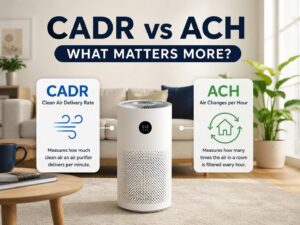
For best results, choose an air purifier based on room size and CADR. CADR stands for Clean Air Delivery Rate. A higher CADR means the purifier can clean more air in less time.
In practice, this matters a lot. A small purifier in a large room will run loudly and still feel weak. A properly sized unit can clean the air faster and work at a quieter speed most of the day.
What Is a Humidifier?
A humidifier adds water vapor to indoor air. It does not clean air, trap allergens, or remove dust. Its job is to raise humidity in rooms that feel too dry.
Dry air can feel rough, especially during winter. Heating systems often make indoor air feel drier. Then you may notice a scratchy throat, dry nose, tight skin, static shocks, or cracked wood furniture.
A humidifier can make a bedroom feel more comfortable at night. It can also help in a home office, nursery, or dry apartment. It can make the room feel softer and easier to breathe in cold months.
Still, humidifiers need care. A dirty tank can spread unwanted particles into the air. Hard water can leave white dust on nearby surfaces, especially with some ultrasonic models. Too much humidity can also create mold problems.
So, a humidifier works best with a small humidity meter. Indoor humidity often feels best around 30% to 50%. If the room goes above 50%, reduce the setting or turn the unit off for a while.
Air Purifier vs Humidifier: The Core Difference
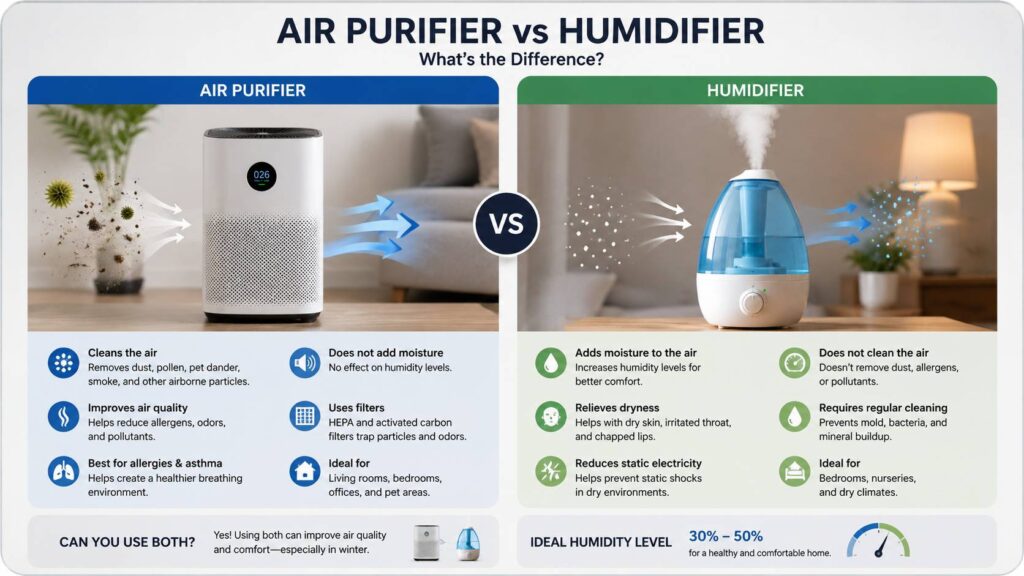
The core difference is simple. An air purifier removes particles from the air. A humidifier adds moisture to the air.
Choose an air purifier for air quality. Choose a humidifier for dry air comfort.
Here is a quick way to decide:
- Dust in the air: air purifier
- Pollen indoors: air purifier
- Pet dander: air purifier
- Smoke particles: air purifier
- Cooking smells: air purifier with carbon
- Dry throat: humidifier
- Dry skin: humidifier
- Static shocks: humidifier
- Dry winter bedroom: humidifier
- Window condensation: use less humidifier
Next, think about the room itself. A bedroom with pets may need a purifier first. A dry guest room may need a humidifier first. A nursery in winter may benefit from both, but only if you monitor humidity.
Which One Is Better for Allergies?
An air purifier is usually better for allergies. It can trap pollen, dust, pet dander, and other airborne particles before you breathe them in.
For allergy control, place the purifier in the bedroom first. You spend many hours there, so the benefit is easier to notice. Run it with the door closed, especially during sleep. Then, keep windows closed during high pollen days.
A humidifier can help if dry air makes your nose or throat feel irritated. Still, it does not remove allergens. Too much humidity can make dust mites and mold worse. That part is easy to miss.
So, for allergies, start with an air purifier. Add a humidifier only if your humidity level is low.
Which One Is Better for Asthma?
An air purifier can help reduce common airborne triggers. These include dust, pollen, pet dander, smoke particles, and some fine particles from outdoor pollution.
A humidifier can help comfort if the air is dry, but it needs careful use. Too much humidity can create the kind of room that mold and dust mites like. That can make things worse instead of better.
For an asthma-sensitive room, the smarter setup often includes:
- A properly sized air purifier
- No indoor smoking
- Regular dust removal
- Clean bedding
- Humidity around 30% to 50%
- No visible mold
- No foggy windows
At the same time, no device replaces medical advice or trigger control. A purifier can reduce particles, but it cannot fix damp walls, leaks, dirty carpets, or heavy smoke exposure.
Which One Helps More With Dry Air?
A humidifier wins for dry air. An air purifier cannot raise humidity at all.
Signs of dry air include a dry nose, scratchy throat, dry skin, static shocks, and cracking wood. You may notice these more at night or after the heating has been running for hours.
For example, a bedroom can feel clean but still uncomfortable. In that case, an air purifier is not the missing piece. A humidifier is the better tool.
Still, do not run a humidifier all day without checking the room. If windows fog up, the humidity is too high. If the room smells musty, stop using the humidifier and check for damp areas.
Which One Helps More With Dust?
An air purifier helps more with airborne dust. It can pull dust particles into the filter before they settle around the room.
That said, it will not make dust disappear forever. Dust comes from skin flakes, fabrics, pets, carpets, open windows, shoes, and outdoor air. A purifier lowers airborne dust, but cleaning still matters.
For better dust control, use this simple routine:
- Run the purifier daily.
- Vacuum floors and rugs often.
- Wash bedding every week.
- Wipe shelves and blinds.
- Keep windows closed on windy days.
- Replace purifier filters on schedule.
A humidifier does not remove dust. In fact, some humidifiers can create white mineral dust if you use hard tap water. Distilled water can help with that issue.
Can You Use an Air Purifier and Humidifier Together?
Yes, you can use an air purifier and humidifier in the same room.
The purifier handles particles. The humidifier handles dryness. Together, they can make a room feel cleaner and more comfortable.
Still, placement matters. Do not put the humidifier right beside the purifier. Mist can dampen the purifier filter, create odor, or shorten filter life. Place them several feet apart.
A practical setup looks like this:
- Air purifier near the main airflow path
- Humidifier away from electronics and filters
- Humidity meter near the bed or seating area
- Humidity kept around 30% to 50%
- Humidifier cleaned often
- Air purifier filter replaced as needed
Then, adjust based on the room. If humidity is already above 50%, skip the humidifier. If the room smells dusty or stale, run the purifier longer.
Air Purifier vs Humidifier for Baby Rooms
For a baby room, the right device depends on the room problem. An air purifier helps with dust, pollen, pet dander, and smoke particles. A humidifier helps with dry air.
If you are a parent, a humidifier may seem like the obvious first buy. Sometimes that is the right call, especially during winter. Yet if the room has pet hair, dust, or outdoor pollution, an air purifier can be the better first purchase.
Look for quiet operation, simple controls, and easy cleaning. Avoid units with strong lights that disturb sleep. For humidifiers, choose a tank that is easy to wash. A narrow tank opening becomes annoying fast.
For air purifiers, pick a model with a real room-size rating and a quiet sleep mode. For humidifiers, use a humidity meter and avoid over-humidifying the room.
What About Odors?
For odors, choose an air purifier with activated carbon. A basic particle filter will not do much for smells. Carbon helps with cooking odors, pet smells, smoke smells, and some household odors.
Still, carbon filters have limits. A thin carbon sheet may help a little, but it will not handle strong, constant odors for long. If the smell comes from mold, garbage, dirty litter, or smoke residue, fix the source first.
A humidifier will not remove odors. It can even make a musty room smell worse if humidity gets too high.
For people comparing home appliances in general, buying the right device for the right job matters. The same idea applies to kitchen choices like air fryer vs toaster oven. Two products can look similar at first, but the best pick changes once you look at daily use.
What About Mold?
An air purifier can trap some airborne mold spores. That can help reduce what floats through the room. Still, it will not remove mold growing on walls, windows, carpets, or furniture.
A humidifier can make mold risk worse if used too much. This is one of the biggest mistakes people make. If your windows fog up or the room smells damp, the humidifier is likely running too much.
For mold prevention, control moisture first. Fix leaks. Improve airflow. Clean visible mold safely. Keep humidity under control. Then, use an air purifier to help with airborne particles.
Cost and Maintenance
Air purifiers and humidifiers both have ongoing costs.
Air purifiers need replacement filters. Some filters last 6 months. Others last 12 months or more. Filter price varies a lot, so check it before buying the unit.
Humidifiers need cleaning and, in some models, replacement wicks or cartridges. They also need fresh water. If your tap water is hard, distilled water can reduce white dust, but it adds cost.
Noise is another real issue. Air purifiers can be loud on high speed. Humidifiers are often quieter, but some gurgle or hum at night. So, bedroom buyers should always check noise ratings and user feedback.
Common Mistakes to Avoid
The first mistake is buying a humidifier for allergies. It can help dry-air irritation, but it will not remove allergens.
The second mistake is buying a tiny air purifier for a large room. The unit may run nonstop and still fail to clean the air properly.
The third mistake is overusing a humidifier. Too much humidity can lead to mold, musty smells, and condensation.
Next, do not forget maintenance. Dirty humidifiers become unpleasant fast. Old purifier filters stop working well and can smell bad.
Another mistake is expecting one product to fix every indoor problem. A purifier helps air quality. A humidifier helps dry air. Neither replaces cleaning, ventilation, or fixing moisture problems.
The same thinking applies across home devices. A robot vacuum and an upright vacuum both clean floors, yet they fit different needs. If you like practical comparisons, this guide on robot vacuum vs upright vacuum follows the same idea.
Which One Should You Buy First?
Buy an air purifier first if your main issue is dust, allergies, pet dander, smoke particles, or odors. It is the stronger pick for indoor air quality.
Buy a humidifier first if your main issue is dry air. It is the better choice for dry skin, dry throat, static, and dry winter bedrooms.
Buy both if the room has dry air and airborne irritants. This is common in winter, especially in bedrooms with pets, carpets, or nearby traffic.
For most homes, an air purifier is the safer first purchase if the room feels dusty or stale. A humidifier is the better first purchase if the air feels clean but dry. Match the device to the problem, and you will get a better result without wasting money.
Final Verdict
Air purifier vs humidifier is not about which product is better overall. It is about which problem you need to solve.
An air purifier cleans the air. It helps with dust, pollen, pet dander, smoke particles, and some odors. A humidifier adds moisture. It helps with dry air, scratchy throats, dry skin, and static.
So, the best choice is simple. Choose an air purifier for dirty air. Choose a humidifier for dry air. Use both only if your room has both problems.