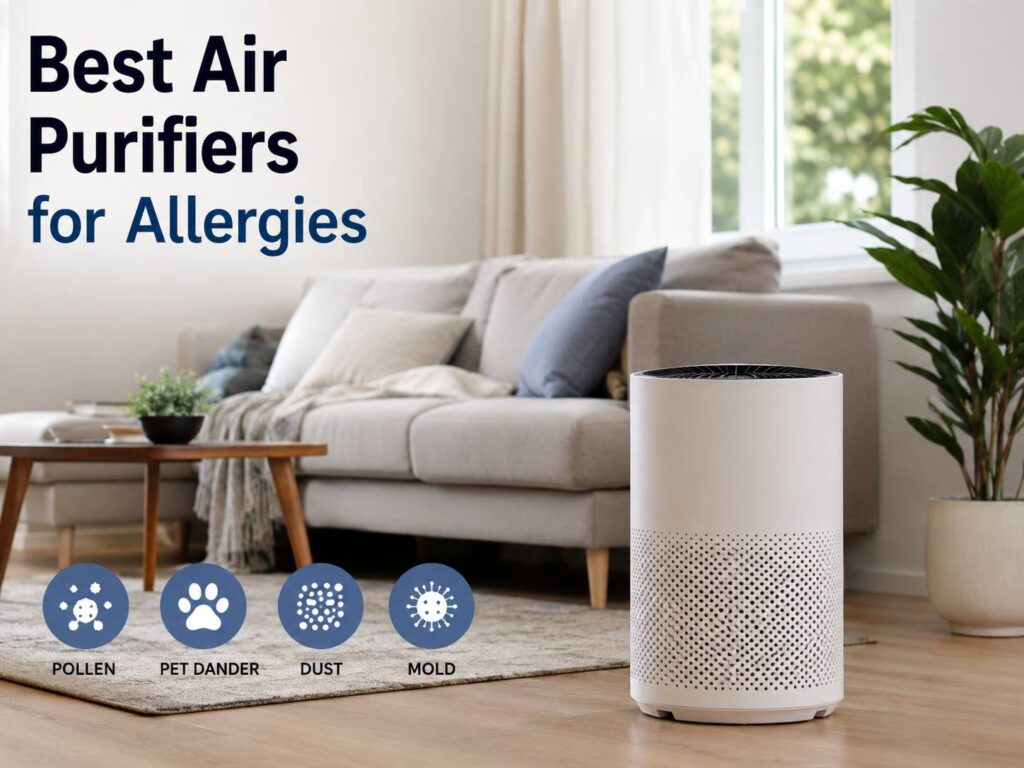
Allergies can turn a normal day at home into a tiring one. You wake up congested. Your eyes itch. You sneeze more than usual. Then, at night, your nose feels blocked again, even after you cleaned the room. That is frustrating, and it is a good reason to look at the best air purifiers for allergies.
A good air purifier will not cure allergies. Still, it can reduce the amount of airborne pollen, dust, pet dander, smoke particles, and some mold particles in the room. So, if your symptoms get worse indoors, the right purifier can help make the air feel cleaner and easier to breathe.
The key is choosing the right model for your space. A small purifier in a large room will disappoint, and smart features, lights, or big coverage claims will not change that. For allergies, you should care more about particle filtration, airflow, room size, noise, and replacement filter cost.
If you want better results, start with the room where you spend the most time. For most people, that is the bedroom. Then, if needed, add a second purifier in the living room or home office.
What Makes an Air Purifier Good for Allergies?
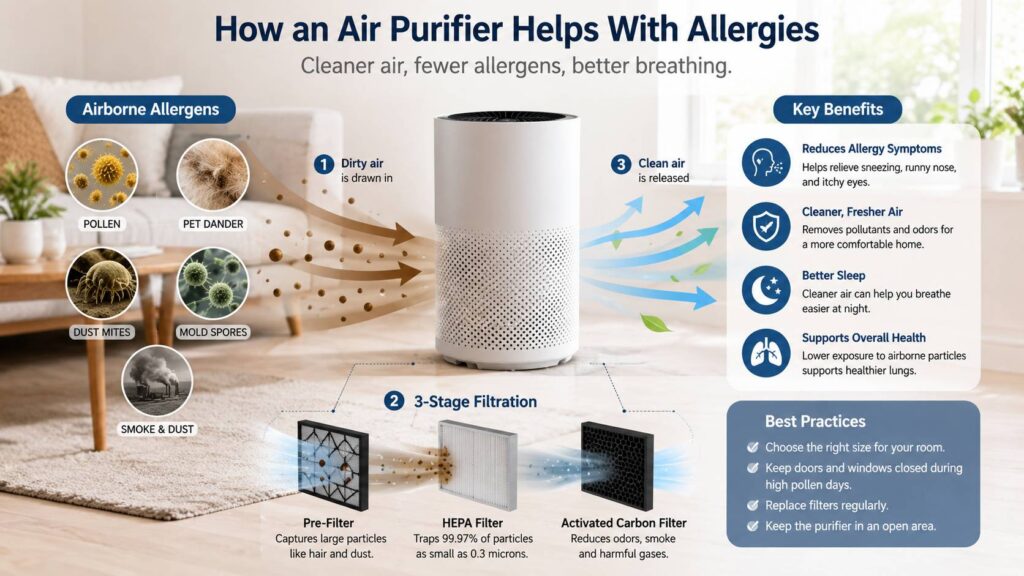
A good allergy air purifier needs to pull air in, trap small particles, and push cleaner air back into the room. That sounds simple, but not every purifier does it well. Some models have decent filters but weak fans. Others move a lot of air but use vague filter claims.
For allergies, look for these features:
- True HEPA or high-grade particle filtration
- Strong CADR ratings for pollen, dust, and smoke
- A room size rating that fits your real room
- Quiet fan speeds for night use
- A washable pre-filter for pet hair and larger dust
- Filter change reminders
- Easy filter replacement
- Reasonable filter prices
- A carbon layer for light household odors
A purifier with these basics will usually help more than a stylish model with weak airflow. In my opinion, CADR and filter cost should come before app control. Smart features are nice, but they do not matter much if the purifier cannot clean the room fast enough.
For example, a simple purifier with strong airflow can beat a fancy smart model in daily allergy use. So, before you look at design, check the performance details first.
HEPA Filters Explained in Simple Terms
HEPA filters are popular for allergy control because they trap very small airborne particles. That includes many common indoor triggers, such as pollen, dust mite particles, pet dander, and some mold particles.
You will see several filter labels while shopping. Some products say “True HEPA.” Others say “HEPA-type,” “HEPA-style,” or “high-efficiency filter.” These labels do not always mean the same thing. So, check the full product details before you buy.
A real HEPA-style purifier is often a safer pick for allergy buyers, especially if the brand gives clear room size and CADR details. Still, the filter alone is not enough. The purifier also needs enough airflow for your room.
For instance, a tiny desktop purifier may use a decent filter, but it will not clean a large bedroom properly. It may clean the air near your desk, yet the rest of the room can still hold plenty of allergens. For that reason, size and airflow matter just as much as filter type.
Why CADR Matters More Than Big Coverage Claims
CADR stands for Clean Air Delivery Rate. It tells you how much clean air the purifier can deliver. A higher CADR usually means the purifier can clean the air faster.
This number matters more than a huge claim like “covers up to 1,000 square feet.” Some brands use very low air change rates to make coverage look bigger. For allergy use, you want the purifier to clean the room air several times per hour, not just once.
Here is a simple way to think about it:
- Small bedroom: choose a compact purifier with solid CADR
- Medium bedroom: choose a stronger unit that runs quietly on medium
- Living room: choose higher airflow
- Open-plan room: consider one larger unit or two smaller units
- Pet home: choose strong dust CADR and a washable pre-filter
So, buy for the room you actually use. If your bedroom is around 180 square feet, do not buy a purifier made for a tiny office corner. If your living room connects to a kitchen or hallway, treat it as a larger space.
A slightly stronger purifier often works better in real life. It can run on a lower fan speed, which means less noise. Plus, you are more likely to keep using it every day.
Best Air Purifier Features for Pollen Allergies
Pollen allergies often get worse in spring and early summer. Some people also react in fall. Pollen enters the home through windows, clothes, shoes, pets, and hair. Then it lands on pillows, sofas, rugs, and curtains.
For pollen, choose a purifier with strong particle filtration and good airflow. Run it before bedtime, not only after symptoms start. Air purifiers work best with steady use.
Helpful habits during pollen season:
- Keep bedroom windows closed on high pollen days
- Rinse your hair before bed after spending time outside
- Change pillowcases more often
- Keep outdoor shoes away from bedrooms
- Run the purifier on medium before sleep
- Use sleep mode after the room air feels cleaner
Also, do not rely only on auto mode during heavy pollen days. Many sensors react better to fine particles than larger pollen particles. So, medium speed can work better in the evening, especially in a bedroom.
My honest opinion: pollen control is a routine, not a one-time fix. A purifier helps most when you pair it with closed windows, clean bedding, and better habits after outdoor time.
Best Air Purifier Features for Dust Allergies
Dust allergies are tricky because dust does not stay only in the air. It settles on shelves, mattresses, carpets, curtains, and furniture. So, an air purifier can help with airborne dust, but it will not clean your bed or sofa.
For dust allergies, choose a purifier with strong dust CADR and a good pre-filter. Then, pair it with regular cleaning. Wash bedding often. Vacuum rugs and carpets. Wipe hard surfaces with a damp cloth so dust does not fly back into the air.
Placement matters too. If the purifier sits behind a chair or too close to a wall, airflow drops. For better results, give it open space around the intake and outlet.
A common issue is using sleep mode all day. Sleep mode is quiet, but it may be too weak for dusty rooms. So, run the purifier on a higher setting for a few hours, then switch to low at night.
If dust keeps coming back fast, check the room itself. Heavy curtains, old carpets, fabric headboards, and open shelves can all hold dust. A purifier helps, but fewer dust traps can make a bigger difference.
Best Air Purifier Features for Pet Allergies
Pet allergies need a slightly different plan. Pet dander is light, sticky, and easy to spread. It sits on sofas, blankets, rugs, clothes, and pet beds. Pet hair can also clog the purifier faster.
For homes with pets, look for:
- Washable pre-filter
- Easy filter access
- Strong airflow
- Good dust and pollen CADR
- Carbon layer for light pet odors
- Simple cleaning around the intake
An air purifier can reduce airborne pet dander, but it will not remove dander from fabric. So, wash pet blankets often. Clean sofa covers. Brush pets outside when you can. If symptoms get worse at night, keep pets out of the bedroom.
One issue pet owners often notice is reduced airflow after a few weeks. The purifier may work well at first, then pet hair starts blocking the intake. A quick vacuum around the outside grille can help. Also, clean the pre-filter on schedule.
My real opinion: pet owners should not buy a purifier without checking filter price first. Pet homes load filters faster, so long-term cost matters.
Best Air Purifier Features for Mold Allergies
Mold allergies need extra care. A purifier can capture some airborne mold particles, but it cannot fix mold growth. If a room smells damp or has visible mold, moisture is the real problem.
A purifier can help as a support tool after you deal with the moisture source. Still, it should not cover up damp walls, leaks, or poor ventilation. If mold keeps growing, clean air will not stay clean for long.
Check these areas if you suspect mold:
- Bathroom corners
- Window frames
- Basement walls
- Under sinks
- Behind furniture near cold walls
- Around water stains
- Near air conditioner drip areas
For more help deciding what your home needs, read this guide on air purifier vs dehumidifier. It explains the difference between cleaning airborne particles and reducing moisture.
My honest view: if the room feels damp, solve the humidity problem first. A purifier can support the room after that, but a dehumidifier may help more if moisture is the main issue.
Air Purifier vs Humidifier for Allergies
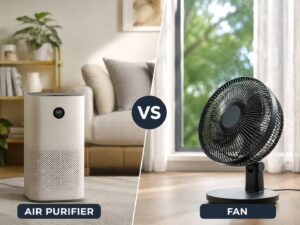
Air purifiers and humidifiers are easy to confuse. They do different jobs. An air purifier filters airborne particles. A humidifier adds moisture to dry air.
A humidifier can help if your throat, nose, or skin feels dry. Still, too much humidity can make dust mites and mold worse. So, it is not always the best choice for allergy sufferers.
If you are unsure which one fits your home, compare the two in this guide on air purifier vs humidifier. It will help you avoid buying the wrong device.
For allergies, start with the trigger. If the problem is pollen, pet dander, smoke particles, or dust in the air, choose an air purifier. If the air is very dry and your nose feels irritated, a humidifier may help. Then again, if the room feels damp or smells musty, a dehumidifier makes more sense.
Best Air Purifiers for Allergies by Room Type
Best for Bedrooms
Bedrooms are the best place to start. You spend many hours there, and allergy symptoms often feel worse at night. A good bedroom purifier should be quiet, compact, and strong enough for the room.
Look for sleep mode, a dim display, low noise, and easy filter replacement. Avoid units with bright lights that cannot turn off. A loud purifier will annoy you, and then you may stop using it.
Best fit: pollen, dust, pet dander, nighttime congestion, and light odors.
Best for Living Rooms
Living rooms usually need more airflow. They are larger, more open, and full of fabric surfaces. Pets spend time there. People bring in pollen from outside. Cooking particles may drift into the space too.
For a living room, choose a stronger purifier than you think you need. A compact bedroom model will struggle in a wide space. If the room connects to the kitchen or hallway, size up.
Best fit: pet homes, family rooms, pollen, dust, and light smoke particles.
Best for Home Offices
A home office needs quiet operation and steady airflow. If you work near a window or sit on carpet, dust and pollen can build up fast. A medium-size purifier often works better than a tiny desk unit.
Best fit: dust, pollen, dry throat, indoor particles, and long workdays.
Best for Kids’ Rooms
For a child’s room, choose a purifier with simple controls, a stable body, low noise, and no ozone-producing feature. Keep the unit away from curtains, bedsheets, and small hands. The filter should be easy for adults to replace but not tempting for children to open.
Best fit: pollen, dust, pet dander, and nighttime stuffiness.
A Safe Pick for Most Allergy Buyers
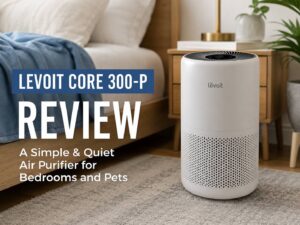
A strong pick to compare is the LEVOIT Core 300-P Air Purifier. It is popular for bedrooms, small offices, and allergy-prone homes. The design is compact, the controls are simple, and replacement filters are easy to find.
This model makes sense for people who deal with pollen, dust, pet dander, and everyday indoor particles. It works best in a bedroom or smaller living space. It is not the right choice for a large open-plan room, though.
The best part is the simple setup. You get easy filter changes, sleep mode, a small footprint, and basic odor support from the carbon layer. So, for many first-time buyers, it feels less confusing than larger smart models.
There are a few downsides. The Core 300-P is not ideal for very large rooms. It also lacks some smart features found on more expensive models. If you want stronger airflow, app control, or larger coverage, compare it with the LEVOIT Vital 200S, Coway Airmega AP-1512HH Mighty, or Blueair Blue Pure 311i Max.
My honest opinion: the LEVOIT Core 300-P is a sensible starting point for most allergy buyers. It is not perfect, but it covers the main needs well. You get particle filtration, quiet bedroom use, simple maintenance, and wide filter availability. Just check your room size before buying, then compare replacement filter prices.

Common Problems After Buying an Air Purifier
Do not count on instant relief. Sometimes that happens. More often, results build with daily use. Allergy symptoms can come from bedding, carpets, pets, humidity, outdoor pollen, and cleaning habits. So, one device cannot fix every trigger.
Common issues include:
- The purifier is too small for the room
- The filter is still inside its plastic wrapper
- Sleep mode is too weak for daytime cleaning
- The unit sits too close to a wall
- Windows stay open during pollen season
- Filters cost more than expected
- Pet hair blocks the intake
- The purifier runs for only one hour per day
- The room has too many dust-heavy fabrics
The filter wrapper mistake is surprisingly common. Many purifiers ship with the filter sealed in plastic. The unit turns on, but the filter cannot work correctly. So, open the purifier before first use and check the filter.
Another issue is noise. Some purifiers sound fine on low but too loud on high. For that reason, a stronger model can be better. It can clean more air on a lower setting, which feels easier to live with.
Air Purifier Features You Do Not Need to Overpay For
Some features sound useful but add little value for allergy relief. For most people, the basics matter more.
You do not need to overpay for:
- Fancy lighting
- Voice control
- Touchscreens
- Fragrance pads
- Huge coverage claims with weak airflow
- Ionizer features
- App control on a weak purifier
I would rather buy a plain purifier with strong CADR than a stylish smart model with weak airflow. Allergy buyers need cleaner air, not a prettier display.
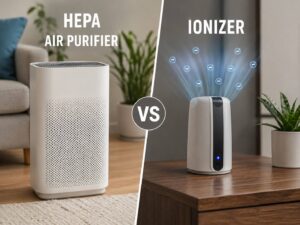
Be careful with ionizers and ozone-related claims too. Ozone can irritate the lungs. If a purifier includes an ionizer, check whether you can turn it off. For bedrooms and kids’ rooms, a simple mechanical filter design is often the safer choice.
How to Use an Air Purifier for Better Results
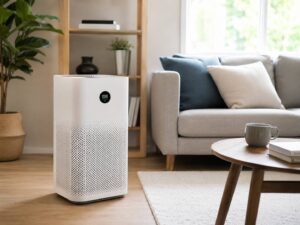
A good purifier needs the right setup. Place it in the room where you spend the most time. For most people, that means the bedroom first. Put it in open space with clear airflow. Do not hide it behind furniture.
Run it longer than you expect. Air cleaning takes time. During allergy season, run the purifier on medium for a few hours before sleep. Then switch to low or sleep mode overnight. If the unit is quiet enough, leave it running through the day.
Replace filters on time. A clogged filter cuts airflow and reduces performance. If you have pets, check the pre-filter more often. If you live near traffic, smoke, or construction dust, filters may load faster.
Keep windows closed during high pollen days. A purifier cannot keep up if fresh pollen keeps entering the room. Clean bedding, rugs, and curtains too. For better results, treat air filtration as part of a cleaner-room routine.
Best Air Purifier Buying Checklist
Before you buy, check these points:
- What is the real room size?
- Does the purifier list CADR numbers?
- Is the model suited for pollen, dust, and pet dander?
- Are replacement filters easy to find?
- How much do filters cost per year?
- Is it quiet enough for the bedroom?
- Can the display lights turn off?
- Does it have a washable pre-filter?
- Does the brand clearly explain filter type?
- Is the coverage claim realistic?
If a product page hides CADR, filter details, and replacement filter cost, treat that as a warning sign. A good purifier should make those details easy to find.
Final Verdict: What Is the Best Air Purifier for Allergies?
The best air purifiers for allergies are not always the biggest or most expensive models. The right choice comes down to room size, allergy triggers, noise level, and filter cost.
For most bedrooms, a compact HEPA air purifier with good airflow is enough. The LEVOIT Core 300-P is a smart suggestion for first-time buyers, especially for bedrooms and small rooms. For medium rooms, models like the Coway Airmega AP-1512HH Mighty or Blueair Blue Pure 311i Max are worth comparing. For pet homes, choose a purifier with a washable pre-filter and strong dust CADR.
The smartest buying order is simple: room size first, CADR second, filter quality third, and filter cost fourth. After that, look at noise, design, and smart features.
A good air purifier will not remove every allergy trigger from your home. Still, it can reduce airborne pollen, dust, pet dander, and fine particles in the rooms you use most. Used daily, placed well, and paired with better cleaning habits, it can make your home feel fresher and easier to breathe in.