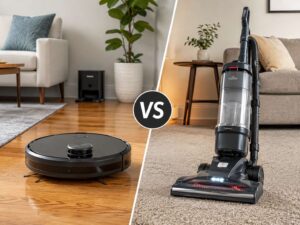
Robot vacuums are no longer simple little cleaners that bump around the room and hope for the best. Many models now map your home, avoid furniture, empty their own dustbins, wash mop pads, refill water, and clean specific rooms from an app. That sounds great, but it also makes buying one more confusing.
One of the biggest choices is this: should you buy a robot vacuum and mop, or is a vacuum-only robot still the better pick?
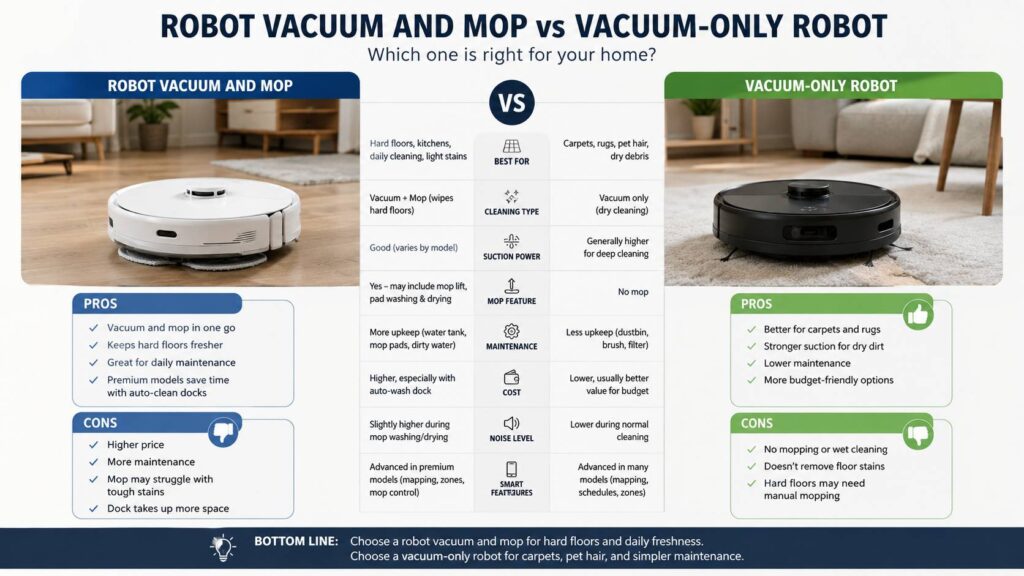
For many homes, a robot vacuum and mop makes more sense. It handles dry dirt, then wipes hard floors so they feel fresher between deeper cleans. Still, a vacuum-only robot can be the smarter buy if your home has lots of carpet, thick rugs, pet hair, or you simply want less maintenance.
So, let’s break it down in a practical way. No hype. Just the real pros, issues, and everyday differences.
What Is a Robot Vacuum and Mop?
A robot vacuum and mop is a 2-in-1 robot cleaner. It vacuums dust, crumbs, pet hair, and small debris, then uses a damp pad or mop system to wipe hard floors.
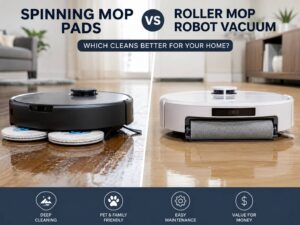
Some models use a flat mop pad. Others use spinning mop pads, vibrating plates, or roller-style mops. Higher-end versions can return to the dock, wash the mop pads, dry them, empty the dustbin, and refill the water tank.
That makes them very useful in homes with tile, laminate, vinyl, sealed hardwood, or stone floors. They are especially helpful in kitchens, entryways, dining rooms, and open-plan living spaces where dust and light marks build up fast.
Still, this type of robot is not a full replacement for a deep mop. It will not scrub old sticky stains, heavy mud, dried sauce, or dirty grout like a person can. Instead, it works best as a daily floor maintenance tool.
What Is a Vacuum-Only Robot?
A vacuum-only robot focuses on dry cleaning. It picks up dust, hair, crumbs, sand, lint, and small debris from hard floors and carpets.
Many modern vacuum-only robots include smart mapping, room-by-room cleaning, self-emptying docks, no-go zones, edge cleaning, and app schedules. They can be very useful for pet owners, busy families, and anyone who wants less dust on the floor.
Since there is no water tank or mop pad, these robots are usually easier to care for. You still need to clean the brush roll, remove tangled hair, wipe sensors, replace filters, and empty the dustbin or dock bag. Even so, the upkeep feels simpler than dealing with dirty water and wet mop pads.
For carpet-heavy homes, a vacuum-only robot often gives better value. It spends the budget on suction, brushes, navigation, and dry pickup instead of mopping parts you may barely use.
Main Difference: One Vacuums, the Other Vacuums and Wipes
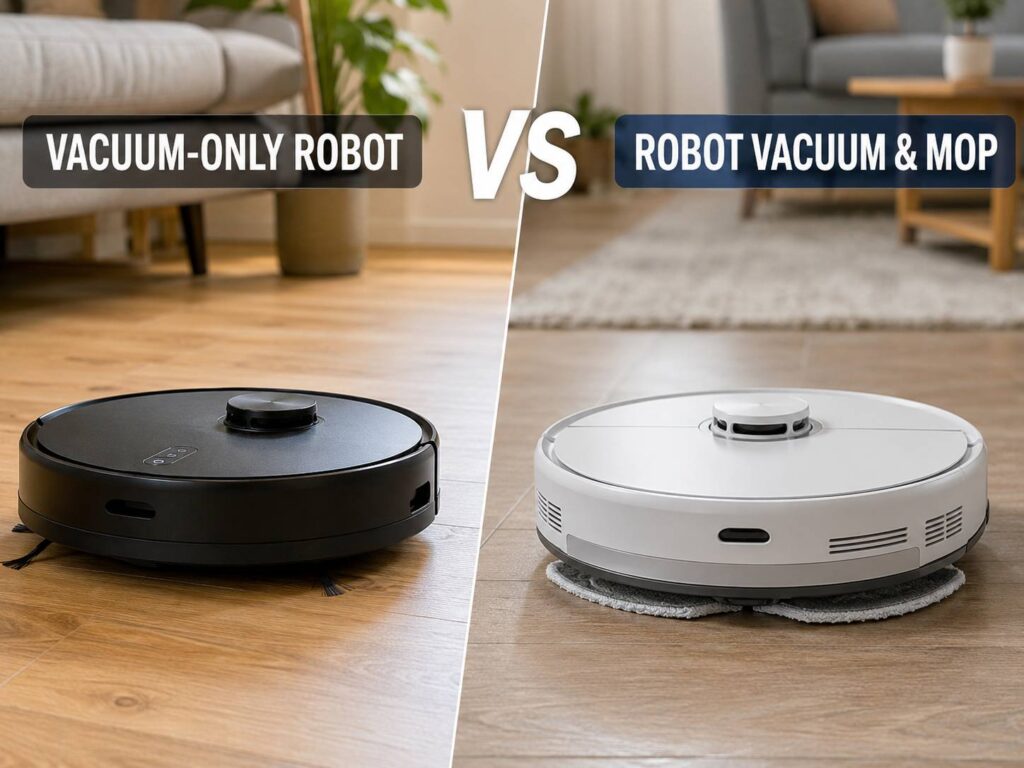
The main difference is simple. A vacuum-only robot removes dry mess. A robot vacuum and mop removes dry mess and wipes the floor after.
A vacuum-only robot is good for:
- Pet hair
- Dust
- Crumbs
- Sand
- Cereal
- Carpet lint
- Everyday dry dirt
- Debris under tables and sofas
A robot vacuum and mop is better for:
- Light footprints
- Fine dust stuck to hard floors
- Small dried water marks
- Kitchen film
- Pet paw marks
- Light sticky spots
- Daily hard-floor freshness
So, the combo model gives you one extra cleaning step. That extra step can make hard floors look and feel cleaner. But it also adds more parts to clean, more settings to manage, and more chances for small problems.
Which One Cleans Hard Floors Better?
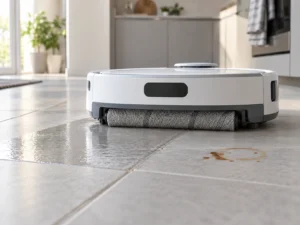
For hard floors, a robot vacuum and mop usually wins. It vacuums loose dirt first, then wipes the surface with a damp pad. That second pass makes a clear difference in kitchens, hallways, and dining areas.
For example, a vacuum-only robot can pick up crumbs near the kitchen counter. Yet it will not wipe away the light film that builds up after cooking. A combo robot can help with that, as long as the mop pad is clean and the water level is set correctly.
Still, expectations matter. A robot mop does not apply the same pressure as a human hand. It will not remove every stain in one pass. If the floor is very dirty, the mop pad can spread grime instead of cleaning it.
For better results, run the robot often. A combo robot works best when it handles small messes before they turn into stubborn marks.
Which One Cleans Carpet Better?
For carpet, a vacuum-only robot often makes more sense. It has no wet mop pad to worry about, so it can focus on dry pickup.
Combo robots can clean carpets too, but the mop system matters. Cheaper models may require you to remove the mop pad by hand before cleaning rugs. If you forget, the robot can drag a damp pad over the carpet.
Better combo robots can lift the mop pad when they detect carpet. That helps a lot. Still, thick rugs, high-pile carpet, soft mats, and rug edges can cause problems. Some robots may avoid them, climb badly, or brush the rug with the damp pad.
If your home is mostly carpet, choose a strong vacuum-only robot with good suction, reliable mapping, and a brush that handles hair well. If your home has mixed floors, pick a combo model only if it has mop lifting and no-mop zones.
Pet Hair, Paw Prints, and Family Messes
Pet owners often look at robot vacuum and mop combos first. That makes sense. Pets leave fur, litter dust, paw prints, food crumbs, and dirt from outside.
A combo robot can help a lot on hard floors. It picks up fur, then wipes light paw marks. For dog owners, that can make the home feel cleaner between deeper floor washes.
Still, pet hair creates extra work. Hair can wrap around brush rolls, side brushes, wheels, and small axles. Fine fur can clog filters. Long hair can slow the brush. So, even a smart robot needs regular care.
For pet homes, look for:
- Anti-tangle brush design
- Strong suction
- Self-emptying dock
- Good obstacle avoidance
- No-go zones
- Washable mop pads
- Easy brush removal
- Easy-to-find replacement parts
Pet accidents are different. A normal robot should not clean wet pet mess. It can spread the mess across the floor. If that is a real concern, look for a model with strong obstacle detection, and still check the floor before each run.
For families with kids, both options help. A vacuum-only robot handles crumbs and dust. A combo robot helps more with sticky kitchen marks and dusty footprints. Either way, toys, socks, cables, and small blocks need to be picked up first.
Maintenance: The Part People Often Regret Later
This is where vacuum-only robots have a clear advantage.
A vacuum-only robot needs dry maintenance. You empty the bin or dock bag, clean the brush, wipe the sensors, and change the filter. That is not hard.
A robot vacuum and mop adds wet maintenance. You may need to:
- Fill the clean water tank
- Empty the dirty water tank
- Wash mop pads
- Replace worn mop pads
- Clean the dock tray
- Check for smells
- Use only approved cleaning liquid
- Dry pads properly
- Clean hair from wet areas
This matters more than it seems. Dirty water tanks can smell bad if they sit too long. Damp mop pads can turn musty. Dock trays can collect hair, gray sludge, and mineral buildup.
Auto-wash docks help, but they do not remove the work completely. They make the robot easier to live with, yet they still need regular cleaning.
So, here is the honest view. A robot vacuum and mop saves more floor-cleaning time, but it asks for more care. A vacuum-only robot does less, but it is easier to manage week after week.
Cost and Long-Term Value
Robot vacuum and mop combos usually cost more than vacuum-only models. The price rises fast when you add an auto-empty dock, mop washing, mop drying, water refilling, and advanced obstacle detection.
A cheap combo robot is not always a good deal. If the mop is weak, the navigation is poor, or the robot drags a damp pad over rugs, you may not enjoy using it.
A good vacuum-only robot can be a smarter buy at the same price. It may have better suction, better mapping, and a better dock than a low-end combo model.
For that reason, think about your floors first. If your home has lots of hard floors, the mop feature can be worth paying for. If you mostly have carpet, spend your budget on vacuum performance instead.
For a broader buying view, this guide on are robot vacuums worth it in 2026 can help you decide if a robot cleaner fits your daily routine at all.
Common Problems With Robot Vacuum and Mop Combos
Robot vacuum and mop combos can be great, but they are not perfect. In real use, owners often run into the same issues.
Common problems include:
- Streaks on dark or glossy floors
- Damp mop pads touching low rugs
- Dirty water tanks that smell
- Dock trays that collect grime
- Mop pads that need frequent washing
- Weak stain removal
- Confusing app settings
- Large docks that take up floor space
- Higher replacement part costs
- More noise during dock cleaning cycles
Some problems are easy to fix. Use the right water level. Set no-mop zones around rugs. Clean the dock tray often. Replace pads before they wear out. Run the robot more often, so dirt does not build up.
Still, these robots need a little attention. If you want a cleaner that asks almost nothing from you, a combo model may feel annoying over time.
Common Problems With Vacuum-Only Robots
Vacuum-only robots are simpler, but they have limits too.
Common issues include:
- They do not clean sticky spots
- They miss dried marks on hard floors
- Hair can wrap around brushes
- Small bins fill quickly
- Cheap models clean in random paths
- Side brushes can scatter lightweight debris
- They can get stuck under low furniture
- They still need manual deep cleaning backup
A vacuum-only robot is best for dry dirt. It keeps floors tidier, but it will not make hard floors feel freshly wiped.
If you already mop by hand or use a separate wet cleaner, that may not matter. In fact, a vacuum-only robot plus a cordless vacuum can be a better mix for some homes. This comparison of robot vacuum vs cordless vacuum explains where each type works best.
Best Choice by Floor Type
For tile floors, choose a robot vacuum and mop. Tile collects dust, footprints, and kitchen film, so the wiping step helps.
For laminate floors, a combo robot can work well. Use a moderate water setting and avoid soaking the floor.
For sealed hardwood, choose carefully. Use low water flow and check that your floor finish allows damp cleaning.
For vinyl floors, a combo robot is often a strong fit. Vinyl handles light damp wiping well.
For thick carpet, choose a vacuum-only robot. A mop system adds cost without much benefit.
For mixed floors, choose a higher-end combo model with mop lifting, carpet detection, and no-mop zones.
For homes with many rugs, a vacuum-only robot is safer and simpler.
Which One Is Better for Busy People?
A robot vacuum and mop with a good dock can save a lot of time. It can vacuum, mop, wash pads, dry pads, and empty dust with less daily effort from you.
Still, it is not maintenance-free. You need to deal with water tanks, dock cleaning, pads, bags, filters, and brushes.
A vacuum-only robot is easier for people who want a low-effort cleaning helper. It will not mop, but it keeps dust and crumbs under control with fewer chores.
So, busy people with hard floors will likely prefer a combo robot. Busy people with carpet or low patience for maintenance may prefer a vacuum-only model.
Final Verdict: Robot Vacuum and Mop vs Vacuum-Only Robot
A robot vacuum and mop is the better pick for homes with mostly hard floors. It vacuums dust and crumbs, then wipes light marks, paw prints, and kitchen film. It works best when you run it often and keep the mop pads clean.
A vacuum-only robot is the better pick for homes with mostly carpet, thick rugs, or lower maintenance needs. It costs less in many cases, has fewer wet parts, and focuses on dry pickup.
The best choice is not the one with the longest feature list. It is the one that fits your floors and your cleaning habits.
Choose a robot vacuum and mop if you hate mopping and your home has hard floors. Choose a vacuum-only robot if you care most about dust, pet hair, carpet, and simple upkeep.