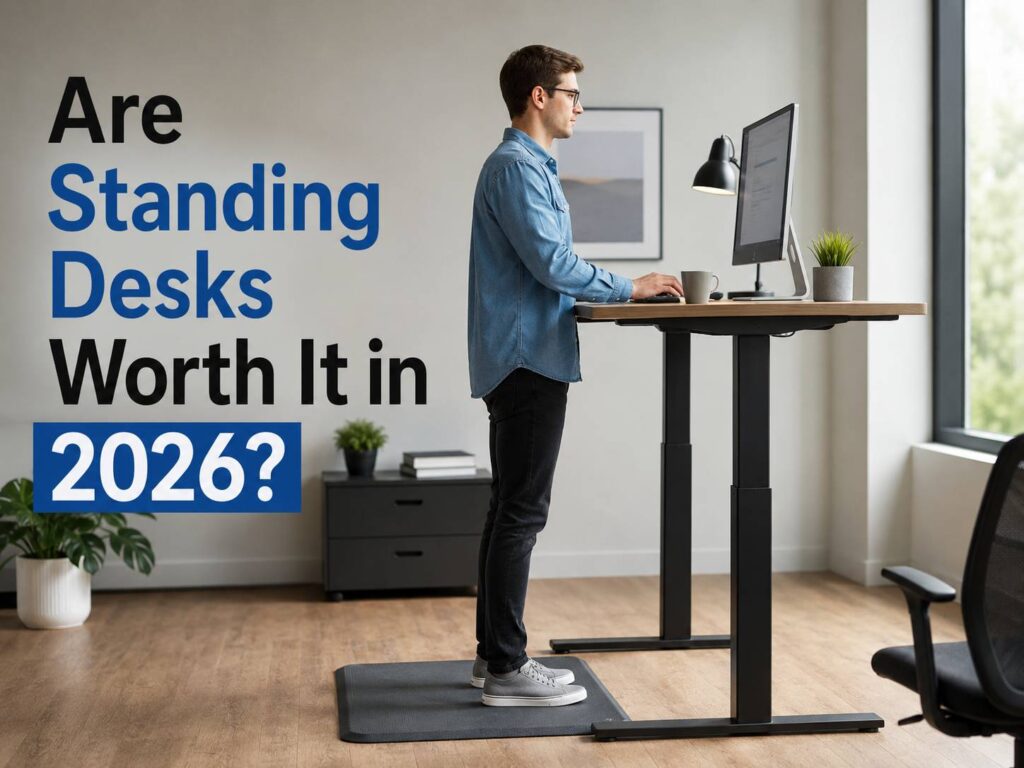
Standing desks are still worth considering in 2026, but they are not the miracle upgrade some ads make them seem. A good sit-stand desk can help you change position during the day, reduce long sitting blocks, and make a home office feel more flexible. It can also turn into an expensive table that stays in sitting mode all week.
The difference comes down to how you use it.
A standing desk works best for people who spend many hours at a computer and want more control over their setup. Remote workers, programmers, writers, students, designers, and gamers can all benefit from one. Yet standing all day is not the goal. Sitting all day is not great either. The real value comes from switching between sitting, standing, walking, and short breaks.
That sounds simple, but it matters. Stiffness after long work sessions comes not just from sitting, but from staying in one fixed posture for too long. A standing desk gives you a cleaner way to move without leaving your work area.
Still, it is worth buying only if you choose the right model and build better habits around it.
What Is a Standing Desk?
A standing desk is a desk that lets you work while standing. Most modern versions are height-adjustable, so you can use them while sitting too. These are often called sit-stand desks or height-adjustable desks.
Some models use electric motors. Others use a hand crank. A few use gas springs or manual lift systems. You can also buy a standing desk converter that sits on top of a normal desk.
Electric standing desks are the most popular choice for home offices in 2026. They usually have buttons, preset heights, and smoother adjustment. That makes it easier to switch positions several times per day.
The main idea is simple: your desk should adapt to your body, not the other way around.
Are Standing Desks Really Better Than Normal Desks?
Standing desks can be better than normal desks, but not for everyone. A standard desk can still work well if the height fits you, your chair supports you, and you take regular breaks.
A fixed desk locks you into one work height. If that height is wrong, your shoulders, wrists, back, or neck may feel it. A standing desk gives you more room to adjust. It also makes posture changes easier during long days.
For a deeper comparison, this guide on standing desk vs standard desk can help you see which setup fits your workspace better.
In daily use, a standing desk feels most useful during calls, light admin work, reading, and planning. For deep writing, coding, editing, or gaming, you may still prefer sitting. That is fine. You do not need to stand through every task to get value from the desk.
A good desk supports both modes.
The Main Benefits of a Standing Desk
The biggest benefit is movement variety. Your body usually feels better when you change position during the day. Sitting for hours can tighten your hips and lower back. Standing for too long can tire your feet and legs. Switching between the two often feels more natural.
A standing desk can help with:
- Less time spent sitting in one position
- Better control over desk height
- More comfort during long work sessions
- Easier posture changes
- More energy during calls or light tasks
- A cleaner ergonomic setup
- Better fit for taller or shorter users
- Easier use with monitor arms and laptop stands
Standing after lunch can also help you feel more alert. That is not magic. It is just a change in posture, and that can help break the slow, heavy feeling that comes from sitting too long.
Another real benefit is desk height control. A normal desk may be too high for one person and too low for another. A standing desk solves that problem fast, especially in shared home offices.
What Standing Desks Will Not Fix
A standing desk will not solve every comfort problem. It will not replace exercise. It will not fix a bad chair. It will not remove back pain for every person. It will not make poor posture disappear.
Do not buy one expecting a huge lifestyle change. The desk helps only if you use it well.
Standing still for long periods can create its own problems. Feet may ache. Knees may feel tired. Lower back tension can show up. Hard floors make this worse, especially without supportive shoes or an anti-fatigue mat.
Screen height can also become a problem. It is easy to raise the desk but leave the monitor too low. Then you bend your neck down while standing. That is not an ergonomic win. It just moves the strain to another place.
The desk is one part of the setup. The chair, keyboard, mouse, monitor, lighting, and break habits still matter.
Common Issues People Face With Standing Desks
The first common issue is standing too much at the start. A new desk feels exciting, so people stand for hours on day one. By the end of the week, their feet hurt and the desk stays lowered. Start slower. Short sessions work better.
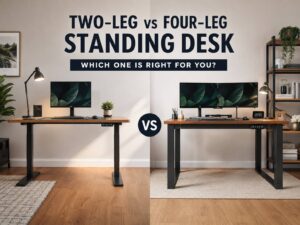
The second issue is wobble. Budget desks can shake at standing height. This gets annoying during typing or gaming. Heavy monitors can make it worse. If your setup includes two screens, speakers, and a desktop PC, check the frame strength and weight limit before buying.
Cable mess is another problem. A moving desk needs loose, well-managed cables. Tight cables can pull on your monitor, charger, speakers, or dock. A cable tray, clips, and a power strip mounted under the desk can make the setup much cleaner.
Some desks are noisy too. That may not matter in a private room. In a shared space, a loud motor can become irritating during calls.
Assembly can be another small headache. Larger electric desks are heavy. Some take time to align correctly. If you live alone, check the desk weight before ordering.
Who Should Buy a Standing Desk in 2026?
A standing desk makes the most sense if you work at a computer for long hours. It also fits people who feel stiff after sitting too long or people who want a better home office setup.
You are a good fit if:
- You work from home several days per week
- You sit for long blocks without noticing
- Your back, neck, or hips feel tight after work
- You take many video calls
- Your desk height feels wrong
- You want a cleaner monitor setup
- You share a desk with someone else
- You plan to keep your office setup for years
A standing desk may not be worth it if you work at a desk only for short sessions. It may also feel unnecessary if you already move often, have a great chair, and feel comfortable with your current setup.
Medical issues matter too. Foot pain, knee pain, hip pain, balance problems, or circulation problems can change how standing feels. In those cases, get personal medical advice before you build a long standing routine.
How Long Should You Stand Each Day?
You do not need to stand for half the workday. In fact, that can feel worse than sitting.
A better start is 15 to 20 minutes at a time. Stand during one call. Sit again for focused work. Raise the desk after lunch. Lower it for detailed tasks. Repeat this pattern in small blocks.
A simple day might look like this:
- Sit for deep work in the morning
- Stand for a short meeting
- Walk for five minutes after a long task
- Stand again after lunch
- Sit for writing, coding, or detailed work
- Stretch before the final work block
For many people, 1 to 2 hours of standing spread across the day is enough at first. Some will prefer more later. Others will stay closer to one hour. Comfort matters more than a fixed target.
The goal is not to win a standing contest. The goal is to avoid staying frozen in one posture.
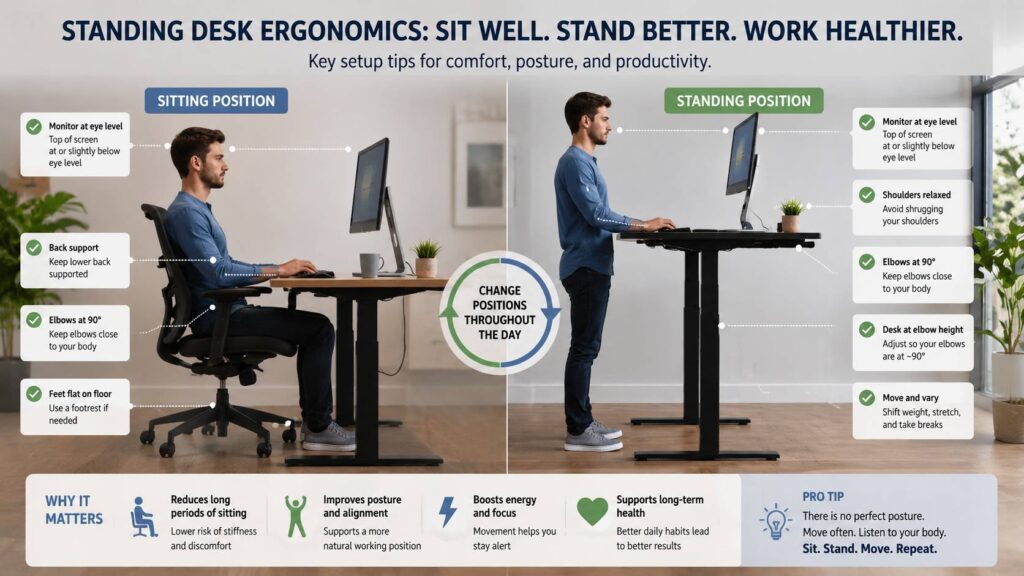
How to Set Up a Standing Desk the Right Way
The right setup makes a huge difference. A poorly adjusted standing desk can feel worse than a normal desk.
Start with your elbows. When typing, your elbows should stay near a relaxed 90-degree angle. Your shoulders should feel loose, not raised. Wrists should stay straight. The keyboard and mouse should sit close enough that you do not reach forward.
Next, check the monitor. The top part of the screen should sit near eye level for most users. You should not need to bend your neck down. Laptop users should use a laptop stand with a separate keyboard and mouse.
Your feet matter too. Hard floors can make standing tiring. An anti-fatigue mat helps, especially during longer sessions. Supportive shoes can help more than people expect.
Keep your stance relaxed. Shift your weight, bend your knees slightly, and move often. Standing stiffly in one place is not much better than sitting stiffly in one place.
What Features Are Worth Paying For?
Not every standing desk feature matters. Some are useful. Some are just nice extras.
The best features to look for are:
- Strong frame
- Stable legs
- Smooth height adjustment
- Wide height range
- Memory presets
- Quiet motor
- Good weight capacity
- Cable management options
- Enough desktop space
- Solid warranty
Memory presets are very useful. They let you save your sitting and standing heights. Without them, you may adjust the desk less often. That weakens the whole point of buying one.
A stable frame matters more than fancy design. Wobble gets old fast. A desk can look great in product photos and still feel shaky at standing height.
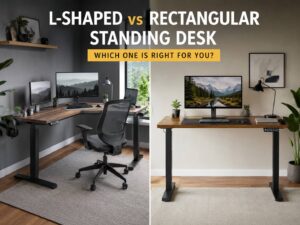
Desk size matters too. A small top may work for a laptop. A larger setup with dual monitors, speakers, a keyboard, and a mouse needs more surface space.
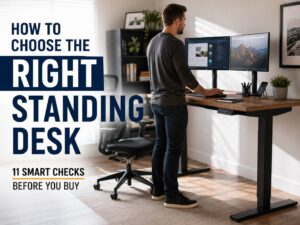
For more buying details, read this guide on how to choose the right standing desk before comparing prices.
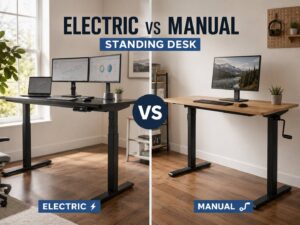
Electric Standing Desk vs Manual Standing Desk
Electric desks cost more, but they are easier to use every day. Pressing one button is simple. That means you are more likely to switch between sitting and standing.
Manual desks can still make sense. They usually cost less and have fewer parts that can fail. The downside is effort. If cranking the desk feels annoying, you may stop adjusting it.
For most people who work from home daily, an electric standing desk is the better long-term choice. For light use, a manual model can be fine.
A standing desk converter is another option. It costs less than a full desk and works on top of your current table. The trade-off is bulk. Some converters also place the keyboard too high or reduce desk space.
Are Standing Desks Good for Gaming?
Standing desks can work well for gaming, but stability matters a lot. Fast mouse movement, mechanical keyboards, large monitors, and heavy desktop setups can expose a weak frame fast.
Gamers should look for a solid desk with a high weight rating and a large top. Cable management is also more important for gaming setups. Controllers, speakers, RGB accessories, monitors, and chargers can become messy when the desk moves.
For longer gaming sessions, you will probably still want to sit. Standing can be useful between matches, during downloads, or for casual gaming. It can also help if you switch between gaming and work on the same desk.
Are Standing Desks Good for Small Rooms?
A standing desk can work in a small room, but you need to measure carefully. Check the full desktop size, frame width, and space behind the desk for cables. Also think about where your chair goes when you stand.
Some compact standing desks work well in bedrooms and small apartments. A desk converter may also fit better if you already own a desk.
Wall clearance matters. When the desk rises, cables and monitor arms need room to move. A tight corner setup can become frustrating if you do not plan it first.
Real Opinion: Is It Worth the Money?
For most full-time desk workers, yes, a good standing desk is worth it in 2026. It gives you better control, more movement, and a more flexible workspace. The benefit is most clear for people who work from home and spend long hours at one desk.
It is not worth buying the cheapest unstable model just to save money. A shaky desk can make typing worse and reduce the chance that you use standing mode. It is better to buy a stable mid-range desk than a bargain desk that feels weak.
The smartest buy is a desk that fits your body, your room, and your equipment. Pair it with a good chair, proper monitor height, and regular movement. That gives you the best chance of feeling a real difference.
Final Verdict: Are Standing Desks Worth It in 2026?
Standing desks are worth it in 2026 if you use them for the right reason. They help you change posture, improve desk fit, and build a more active work routine. They do not replace workouts, fix every ache, or turn standing into a health shortcut.
The best routine is simple: sit, stand, move, and repeat. Start with short standing sessions. Adjust your screen and keyboard properly. Use a mat if your floor feels hard. Take short walks instead of standing still for hours.
A standing desk is not a magic fix. It is a practical home office upgrade. Used well, it can make long workdays feel better and help you stay more comfortable at your desk.