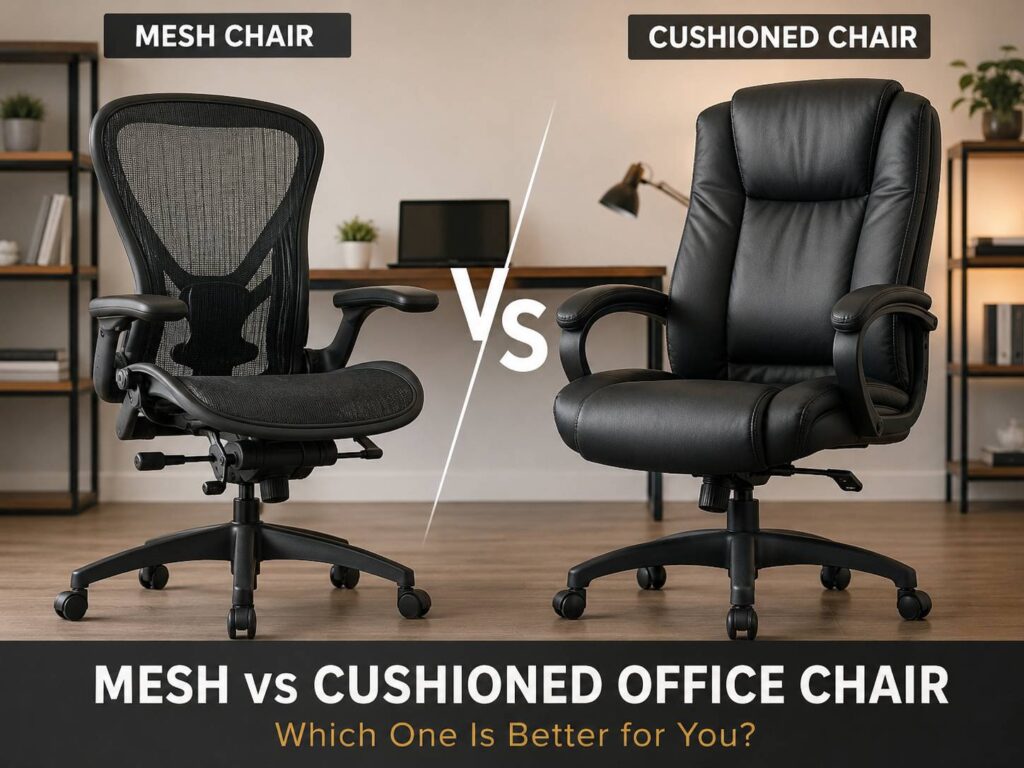
Choosing between a mesh vs cushioned office chair sounds simple at first. One feels cooler and more modern. The other feels softer and more familiar. After a few long days at your desk, though, the difference becomes much easier to notice.
A good office chair should support your back, keep your hips comfortable, and help you sit in a natural position. It should not make you shift around every few minutes. It should not trap heat until your back feels sticky. Most of all, it should not feel great for one week and then turn flat, stiff, or awkward.
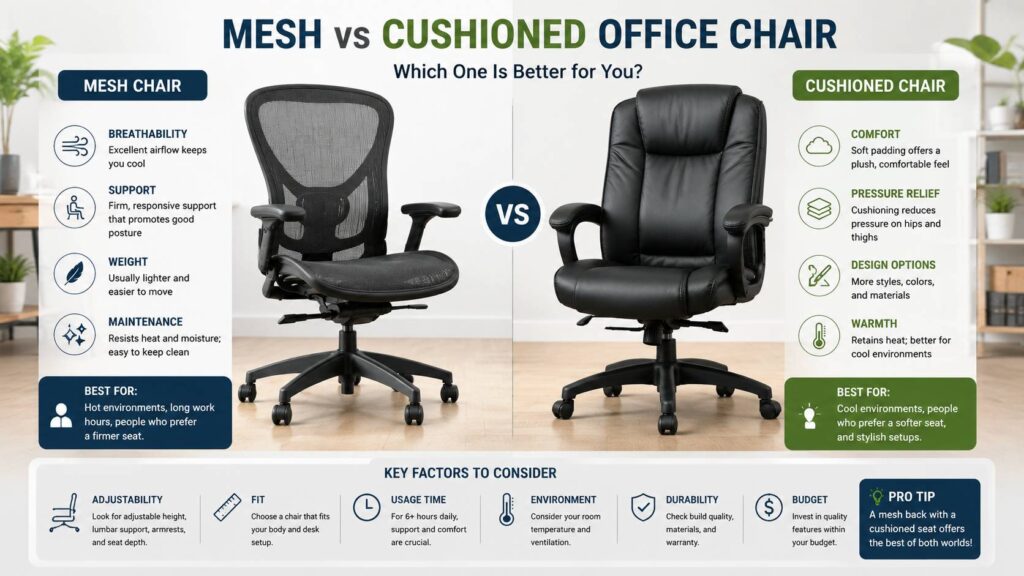
Mesh and cushioned chairs can both work well. Still, they solve different problems. Mesh chairs focus on airflow, a lighter feel, and firmer support. Cushioned chairs focus on softness, pressure relief, and a warmer sitting experience. So, the right choice depends on your room, your body, your desk setup, and the number of hours you sit each day.
Mesh vs Cushioned Office Chair: The Simple Difference
A mesh office chair uses a woven material across the backrest, the seat, or both. Many ergonomic chairs use a mesh back with a padded seat, which is often the safest mix for home offices. Full mesh chairs use mesh under your legs too, and that can feel cooler but firmer.
A cushioned office chair uses foam padding under fabric, leather, faux leather, or another cover material. The main appeal is comfort. A padded chair feels familiar, soft, and more relaxed when you first sit down.
The real difference comes from how each chair holds your weight. Mesh relies on tension. The material stretches slightly, then pushes back against your body. A good mesh chair feels firm but supportive. A cheap one can feel scratchy, narrow, or too stiff.
Cushioned chairs rely on foam quality. Dense foam supports your body without sinking too much. Cheap foam feels pleasant at first, but it can flatten quickly. Then the chair loses shape, and your posture starts to suffer.
Why Mesh Chairs Work Well in Warm Rooms
Mesh chairs usually feel better in warm offices, small bedrooms, and workspaces without strong air conditioning. The open back lets air move through the chair. For that reason, your back stays cooler during long work sessions.
This matters over a full workday. A thick padded chair can feel fine in the morning, then feel too warm by lunch. Faux leather can make this worse, especially in summer. It looks clean and smooth, but it often traps heat.
Mesh is not perfect, though. Some full mesh seats feel too firm after two or three hours. Others place pressure under your thighs, mostly near the front edge. For this reason, a mesh back with a padded seat is a good compromise. You get airflow where heat builds up most, and you still get softer support where your body needs pressure relief.
Why Cushioned Chairs Still Make Sense
Cushioned office chairs are not outdated. In fact, a good padded chair can feel better for people who want a softer, calmer sitting experience. If your hips feel sore on hard seats, a cushioned chair may be the better fit.
Foam spreads pressure across a larger area. That helps during writing, meetings, reading, and mixed home-office use. A padded chair can also feel less “springy” than mesh, which some people prefer.
Still, foam quality matters a lot. A very soft seat can feel comfortable in the store, but it may not support you well after a few months. Once the middle of the seat dips, your hips sink lower. Then your lower back starts working harder.
So, do not buy a cushioned chair only because it feels soft. Look for a supportive seat, firm foam, and a rounded front edge. Those details matter more than thick padding.
Comfort for Long Hours at a Desk
Long-hour comfort depends more on support than softness. A chair can feel plush and still leave your back tired. At the same time, a firm chair can feel comfortable if it keeps your body balanced.
Mesh chairs often suit people who sit upright and move often. They feel lighter, cooler, and more task-focused. Many good mesh models include adjustable lumbar support, seat depth control, recline tension, and armrests that move.
Cushioned chairs often suit people who like a relaxed sitting feel. They work well for longer calls, reading, and casual desk use. The chair still needs enough structure, though. Too much softness can make you slouch.
My honest view: for most people working six to eight hours a day, a mesh-back chair with a padded seat is the best middle ground. It feels cooler than a full cushioned chair and more forgiving than a full mesh chair.
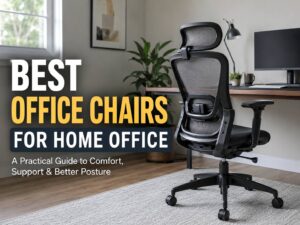
For a broader buying shortlist, you can compare options in this guide to the best office chairs for home office. It helps if you are still deciding which style fits your setup.
Back Support and Lumbar Support
Back support has more to do with design than material. A mesh chair is not automatically ergonomic. A cushioned chair is not automatically bad for posture.
The lower back area matters most. A good chair should support the natural curve of your spine. It should not push too hard, and it should not leave a gap behind your lower back.
Look for these features:
- Adjustable lumbar support
- Seat height adjustment
- Seat depth adjustment
- Recline tension
- Armrests that move up and down
- A stable five-point base
- A backrest that fits your body shape
A mesh backrest can follow your back nicely when the frame and tension are good. Cheap mesh, though, can push in the wrong place. That gets annoying fast.
A cushioned backrest can feel gentler, especially at first. Still, it needs shape. A flat padded back may feel soft, but it will not give your lower back enough support during long workdays.
Mesh Seat vs Padded Seat
The seat often decides whether the chair feels good after a full day. It is easy to focus on the backrest and forget about the seat until your legs start to ache.
A full mesh seat can feel cool and clean. It also lets air pass under your body. Still, it may feel too firm for some users. If the mesh tension is too tight, your thighs may feel sore. If it is too loose, you may sink too low.
A padded seat feels safer for most people. It gives a familiar base, and it usually works for more body types. Still, the foam must hold its shape. Thin foam or low-quality padding can flatten faster than expected.
A strong everyday setup looks like this:
- Mesh backrest for airflow
- Padded seat for pressure relief
- Rounded front seat edge
- Adjustable seat depth
- Firm foam that does not collapse
- Armrests that fit under or near the desk
This mix works well for remote work, hybrid schedules, and long computer sessions.
Durability and Common Problems
Mesh and cushioned office chairs age in different ways. Neither one lasts forever, and cheap models usually show problems faster.
Mesh can sag, stretch, or tear when the material is weak. Once the mesh loses tension, support drops too. Some mesh chairs also feel rough on bare skin, especially during summer.
Cushioned chairs usually wear through foam compression. The seat becomes thinner in the middle. Fabric can stain. Faux leather can peel or crack. Real leather lasts longer, but it costs more and can still feel warm.
Real issues people often report with mesh chairs:
- The seat feels too hard after a few hours
- The front edge presses under the thighs
- The lumbar support feels too sharp
- The backrest feels narrow
- Dust collects inside the mesh
- Cheap mesh starts to sag
Real issues people often report with cushioned chairs:
- Foam flattens after a few months
- The chair feels hot in summer
- Faux leather peels
- The seat feels too deep for shorter users
- Soft padding causes slouching
- The chair looks comfortable but lacks real adjustment
For this reason, the return policy matters. A chair can look perfect online and still feel wrong after two days at your desk.
Cleaning and Everyday Care
Mesh chairs are easy to keep cool, but the woven material can collect dust, crumbs, and pet hair. A vacuum brush usually helps. Stains can be harder to remove from light mesh, though.
Cushioned fabric chairs feel warmer and softer, but they can absorb smells and spills. Dark fabric hides marks better. Faux leather wipes clean fast, but it may peel over time. Leather feels more premium, but it needs care.
If you eat at your desk or have pets, a dark padded seat with a mesh back is often the most practical choice. It gives comfort, breathability, and easier day-to-day use.
Which Chair Is Better for Back Pain?
No office chair can fix back pain by itself. Your desk height, monitor position, keyboard placement, and sitting habits matter too. Still, a well-fitted chair can reduce common pressure and posture problems.
Seat height should let your feet rest flat on the floor or on a footrest. The seat depth should support your thighs without pressing behind your knees. Your lower back should touch the backrest without forcing you into an awkward curve.
So, do not focus only on mesh vs cushion. Focus on fit first. A basic chair that fits your body can feel better than an expensive chair with the wrong size or shape.
Mesh Chair Pros and Cons
Mesh office chairs work best for people who want a cooler, lighter, more upright work chair.
Pros:
- Better airflow
- Cooler feel in warm rooms
- Modern ergonomic designs
- Lighter build on many models
- Good support for upright desk work
- Less heat buildup during long sessions
Cons:
- Cheap mesh can feel rough
- Full mesh seats can feel too firm
- Weak mesh may sag over time
- Less plush than padded chairs
- Some models create thigh pressure
- Not ideal for everyone’s body shape
Cushioned Chair Pros and Cons
Cushioned office chairs work best for people who want softer pressure relief and a more relaxed seat.
Pros:
- Softer sitting feel
- Better pressure relief for many users
- Familiar comfort
- More style choices
- Good for colder rooms
- Often better for casual desk use
Cons:
- Can trap heat
- Foam can flatten
- Faux leather can peel
- Thick padding can hide weak support
- Some models lack useful adjustments
- Very soft seats can make posture worse
Mesh Office Chair or Cushioned Office Chair for Gaming?
Gaming chairs add another layer to this choice. Many gaming chairs use thick foam, large side bolsters, and a sporty design. They can feel comfortable for short sessions, but they do not always fit office work well.
A mesh office chair usually feels better for typing, focused work, and hot rooms. A cushioned gaming-style chair may feel better for leaning back, watching videos, or casual play. Still, the best choice depends on adjustment, not just style.
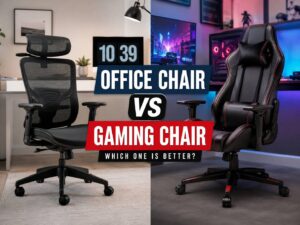
If you are comparing work chairs with gaming models, read this guide on office chair vs gaming chair. It can help you avoid paying for design features that do not improve comfort.
Which One Should You Buy?
Choose a mesh office chair if you sit in a warm room, sweat easily, prefer firm support, or work mostly at a computer. Mesh also makes sense if you want a lighter, cleaner-looking chair.
Choose a cushioned office chair if you want a softer seat, sit in a cooler room, or dislike the firm feel of mesh. A padded chair can also work better if you need more pressure relief around your hips and thighs.
Choose a hybrid chair if you want the safest option for most home offices. A mesh back with a padded seat gives you airflow and comfort in one chair.
Features to Check Before Buying
Before you buy, look past the style and check the adjustment list. A chair should fit your body, not just your room.
Useful features include:
- Adjustable seat height
- Adjustable seat depth
- Supportive lower back shape
- Recline or tilt tension
- Armrests that match your desk height
- Enough seat width for your hips
- Rounded front seat edge
- Breathable materials
- Strong casters for your floor
- Clear weight rating
- Good return policy
- Warranty that covers normal use
Try to avoid:
- Fixed armrests on a work chair
- Very soft foam with no structure
- Flat backrests with no lumbar shape
- Seats that press behind your knees
- Vague weight ratings
- Faux leather chairs for hot rooms
- Full mesh seats with no trial period
Best Choice for Different Users
Best for hot rooms: mesh back chair
Best for long desk work: mesh back with padded seat
Best for soft comfort: cushioned ergonomic chair
Best for shared home offices: adjustable mesh-back chair
Best for shorter users: chair with seat depth adjustment
Best for taller users: deeper seat with strong back support
Best for tighter budgets: padded seat with mesh back
Best for premium comfort: ergonomic chair with adjustable lumbar support
Best for gaming and work mix: firm cushioned chair with real ergonomic controls
Final Verdict: Mesh vs Cushioned Office Chair
Mesh and cushioned office chairs are both good choices, but they solve different comfort problems. Mesh helps with airflow, heat control, and firmer support. Cushioned chairs help with softness, pressure relief, and a more relaxed sitting feel.
For most home offices, the best choice is a hybrid ergonomic chair with a mesh back and padded seat. It stays cooler than a full cushioned chair and feels softer than a full mesh chair. More importantly, it gives you a better chance of staying comfortable through a full workday.
If you sit for short periods, personal comfort can guide the decision. If you sit for six to eight hours a day, adjustability should come first. A chair that fits your body will beat a better-looking chair every time.