
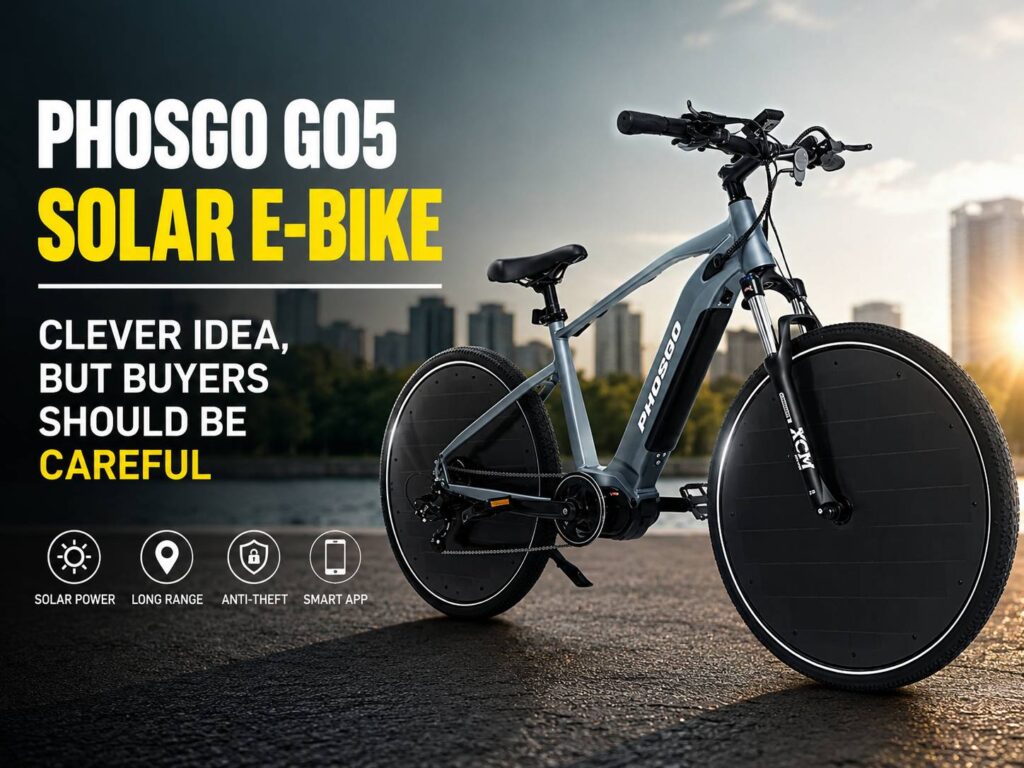
A Solar E-Bike With a Clever Pitch
The Phosgo Go5 Solar E-Bike has the kind of idea that grabs attention fast. A bike that can collect solar energy during the day sounds useful, clean, and a little futuristic. For riders who hate watching the battery drop, that promise feels very appealing.
This is not just another electric bike with a bigger battery. Phosgo is trying to make the Go5 feel more like a connected mobility gadget. It brings together solar charging, app controls, theft protection, smart features, and long-range claims. On paper, that mix gives it a strong hook.
Still, buyers should not treat the headline as proof. Solar charging on an e-bike is a difficult idea to get right. The bike has to work in shade, city traffic, changing weather, dirty roads, and normal parking spots. A smart concept only matters when it helps in daily use.
Why the Phosgo Go5 Gets So Much Attention
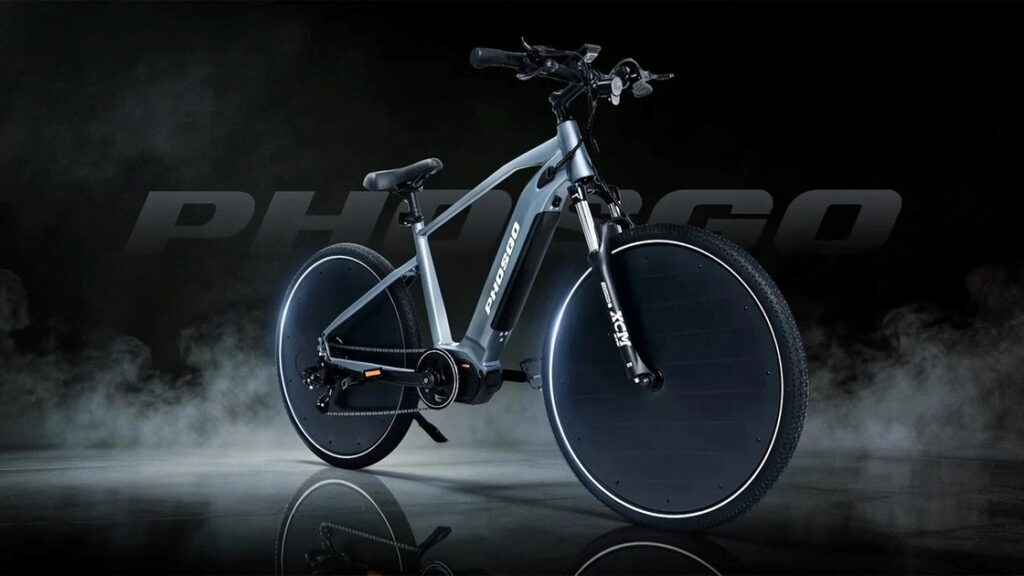
The main draw is the solar charging setup. Phosgo uses solar panels built into the wheels instead of placing a large solar panel on top of the bike. That makes the design look cleaner than some older solar bike concepts.
For people searching for a solar e-bike, self-charging electric bike, or long-range commuter e-bike, the appeal is easy to understand. A bike that slowly adds charge during the day could help riders who commute, camp, run errands, or park outdoors for long stretches.
Smart features add another layer. Phosgo has talked about app control, anti-theft tools, location features, and an AI voice assistant. These extras make the Go5 sound more advanced than a basic commuter e-bike.
Range claims add even more interest. Most e-bike buyers care about range before almost anything else. Nobody wants a bike that feels strong for the first few miles and weak by the end of the ride. A battery backed by solar charging sounds like a good answer to that fear.
That said, a strong idea still needs real proof.
Solar Charging Sounds Great, But Real Use Is Messy
Solar panels work best in direct sunlight at a good angle. An e-bike wheel does not stay in that perfect position. During a ride, the panels spin. During parking, one side of the wheel gets more light than the other. Buildings, trees, racks, cars, bags, fenders, and dirt can all cut solar output.
That does not make the system useless. It means buyers should read solar range claims with care.
A rider who parks outside in bright sun for several hours may get a helpful boost. Someone who stores the bike in a hallway, office garage, apartment block, shaded rack, or basement will see much less benefit. Rainy weeks and winter days can lower the value too.
The safest expectation is simple: solar charging may stretch the range in good weather, but wall charging will still matter. Anyone buying the Phosgo Go5 should see solar power as a bonus, not a full replacement for a charger.
Crowdfunding Makes the Purchase More Complicated
The Phosgo Go5 has been promoted through a deposit and campaign-style launch. That matters for buyers. A crowdfunding-style product is not the same as walking into a local bike shop and buying a finished e-bike.
With a regular e-bike purchase, the buyer can often check stock, warranty terms, return rules, delivery dates, and repair support before paying. A campaign product works differently. Buyers may pay before mass production, shipping, support, and long-term parts supply are fully proven.
That does not mean every campaign e-bike is a bad choice. Some brands use campaigns to bring real products to market. Even so, e-bikes are not small gadgets. They have lithium batteries, motors, brakes, displays, sensors, frames, chargers, tires, firmware, and shipping issues. A delay or defect can become a real headache.
Before paying the full price, buyers should read every campaign term. Refund rules matter. Shipping costs matter. Taxes matter too. Warranty coverage matters most of all.
Smart Features Should Not Distract From the Basics
The Go5 sounds packed with tech. Depending on the final version, buyers may see features linked to app control, GPS, Bluetooth, 4G support, voice control, and anti-theft tools. These features can be useful, but they should not be the first thing buyers judge.
A good e-bike must first be a good bike. It needs stable handling, strong brakes, safe battery design, reliable charging, weather resistance, and parts that can be serviced. After that, smart features become a bonus.
Some buyers may compare this solar bike with lighter electric bikes, commuter e-bikes, or even models built more for weekend trails. If that sounds like you, this look at the Amflow TL Carbon E-Bike gives a useful comparison point for a very different style of e-bike.
The practical questions are not glamorous, but they matter:
- Can a local shop repair the bike?
- Are brake pads, tires, tubes, displays, chargers, and controllers easy to replace?
- Is the battery removable?
- Are the battery and charger properly certified?
- Does the company offer clear warranty support?
- Are spare parts listed with real prices?
- Can the bike still work if the app has problems?
- Will the motor system be legal in your region?
A voice assistant sounds fun. Good brakes and safe battery charging matter far more.
Legal Fit Should Be Checked Before Buying
E-bike rules are not the same everywhere. This is one area where buyers should be very careful.
In many European markets, street-legal pedal-assist e-bikes usually need a 250W continuous motor limit and assistance capped at 25 km/h. In the United States, many buyers look at 750W motors and higher assisted speeds, but state rules can still vary. Some trails, parks, and bike lanes have their own restrictions too.
A bike promoted across regions should have clear versions for each market. Buyers should confirm the exact motor rating, top assisted speed, throttle setup, charger type, label, and certification before ordering.
This matters for daily use. A bike that looks fine online may not be legal on local roads or trails. It can also create problems with insurance, warranty, service, and resale.
Warning Signs Buyers Should Watch
The Phosgo Go5 does not need to be dismissed. The idea has real potential. Still, buyers should watch for weak spots before they commit.
Pay close attention to these points:
- No independent long-range test from trusted reviewers
- No clear city-use solar charging test
- No detailed service network
- No public spare parts plan
- No clear safety certificate details for the battery and electrical system
- Confusing wording around campaign platforms or payment stages
- Heavy launch discounts that push buyers to act fast
- Big range claims without test conditions
A serious e-bike company should answer these points clearly. Buyers should not need to guess.
Who Should Wait Before Buying
Most daily riders should wait for independent testing. That includes commuters, students, delivery riders, and anyone who needs a dependable transport tool.
A daily e-bike has to feel boring in the best way. It should charge predictably, start every morning, brake safely, handle bad roads, and survive normal weather. A first-generation solar e-bike brings more unknowns than a basic commuter model from an established bike brand.
Early adopters may still like the Go5. People who enjoy new tech and accept some risk may find it exciting. Even then, it should be treated as a promising experiment until real-world tests prove the claims.
For cautious buyers, waiting is the smarter move. Let reviewers test the solar charging. Let owners report real range. Let the company prove it can ship, support, and supply parts.
What to Ask Before Paying the Full Price
Before placing a full order, buyers should ask Phosgo for written answers. Clear replies matter more than marketing claims.
Ask for:
- Final motor specs for your country
- Battery size, battery brand, and charging time
- Solar charging test method
- Real-world range test details
- Rider weight used in range testing
- Terrain and assist level used in range testing
- Battery safety certification
- Charger certification
- Full warranty terms
- Spare parts availability
- Repair partner details
- Return policy after delivery
- Final shipping cost and taxes
Screenshots are useful. Save the product page, campaign page, warranty page, and any support replies. If details change later, those records may help.
Final Opinion: Smart Idea, Risky Timing
The Phosgo Go5 Solar E-Bike is one of the more interesting e-bike ideas right now. Solar wheels give it a clear identity, and the promise of extra daily range will attract a lot of riders. The design feels fresh, and the smart features make it stand out from basic commuter e-bikes.
At the same time, buyers should slow down. Solar charging needs real-world proof. Campaign-style buying adds risk. Service support needs to be clear. Legal versions need to match each market. Battery safety should be documented, not assumed.
My honest opinion is simple: the Phosgo Go5 is worth watching, but not rushing into. Wait for independent reviews, real owner feedback, safety details, and clear repair support. A self-charging e-bike sounds great. A dependable e-bike that can be serviced locally is still the better buy.