
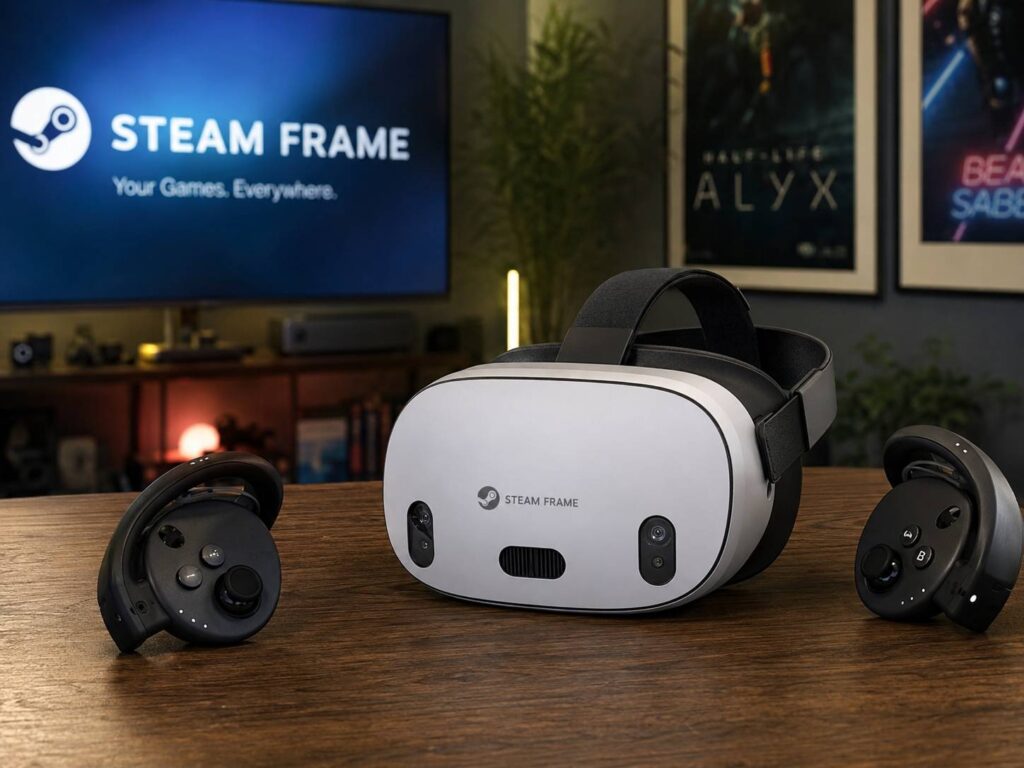
Valve’s next VR headset now feels much closer than it did a year ago. For a long time, people called it Valve Index 2, Deckard, or simply “the next Valve headset.” Now, the picture looks much clearer. Valve has presented the device as Steam Frame, a wireless VR headset built around Steam, SteamOS, PC streaming, and stand-alone play.
That matters. Steam Frame does not look like a small refresh of the old Valve Index. Instead, it looks like Valve’s attempt to make VR feel easier for normal Steam users. The headset aims to reduce cables, simplify setup, and make a player’s Steam library feel useful inside VR.
For PC gamers, that could make Steam Frame one of the most interesting VR releases of 2026.
Steam Frame is not just a new Valve Index
The Valve Index still has a loyal fan base. It offered strong tracking, great audio, smooth motion, and excellent controllers. For years, it stood as one of the best PC VR headsets for serious players.
Still, the Index belongs to an older VR setup. It needs a gaming PC, wired play, and external base stations. That setup works well, but it takes space, patience, and money. Many casual players never get that far.
Steam Frame moves in a different direction. It focuses on wireless use, inside-out tracking, SteamOS, and access to Steam games. So, the change is not only about sharper screens or lighter hardware. It is about lowering the effort needed to start playing.
That is the right move. VR needs less friction. Cables, sensors, messy menus, and separate stores still push people away. Steam Frame seems built to solve at least part of that problem.
Why Steam Frame now feels close
Valve does not release hardware often. The company usually waits until the product, software, and store experience make sense together. Steam Deck proved that this plan can work. It turned handheld PC gaming into something simple enough for everyday players.
Now, Steam Frame appears tied to the same idea. SteamOS, Steam Input, cloud saves, Proton, Steam compatibility labels, and PC streaming can all support one headset. So, Steam Frame does not feel like a lonely VR product. It feels like part of Valve’s bigger hardware plan.
That makes the timing more interesting. Steam Frame sits near Steam Deck, Steam Machine, and the newer Steam Controller concept. Together, these products point toward one clear goal: make Steam work well on more screens, in more rooms, and in more play styles.
My opinion is simple. This is the first Valve VR headset that feels aimed at regular Steam users, not only players with a full PC VR room.
What Steam Frame should bring to Steam users
Steam Frame seems built around three main uses.
The first use is VR gaming. Players should expect support for SteamVR games, plus headset-based VR titles that can run without a desktop PC. Games like Half-Life: Alyx, Beat Saber, Pavlov, and Boneworks remain key reasons to care about PC VR.
The second use is wireless PC streaming. This could become the biggest feature for many players. A strong gaming PC can do the heavy work, then Steam Frame can act as the headset. That setup keeps the headset lighter and more flexible.
The third use is flat-screen gaming inside VR. At first, that may sound less exciting. Still, many people like the idea of playing normal Steam games on a large virtual screen. It can turn a small bedroom, office, or travel setup into a private gaming space.
This is where Steam Frame starts to feel different. It is not only a headset for VR apps. It is a Steam device that happens to sit on your face.
Steam Frame versus Meta Quest 3
Most buyers will compare Steam Frame with Meta Quest 3. That makes sense. Both headsets focus on wireless VR, and both can run games without a PC.
Even so, the platform difference is huge. Quest 3 starts with Meta’s store, then reaches PC VR through Link, Air Link, or Steam Link. Steam Frame starts with Steam. For PC players, that matters a lot.
Many gamers already own large Steam libraries. They may not want to buy the same games again in another store. Steam Frame could make that choice easier, mainly for people who already trust Steam and use it daily.
Quest 3 still has clear strengths. It has a large app store, strong mixed reality features, wide availability, and a big user base. So, Steam Frame has plenty to prove. It needs strong comfort, good battery life, smooth wireless play, and a fair price.
Still, Valve has one major advantage: trust from PC gamers. Steam Deck built that trust by making PC gaming feel simple on a handheld. Steam Frame can do something similar for VR.
SteamOS could be the biggest advantage
The headset itself matters, but SteamOS may matter more. A headset with SteamOS can feel like part of the same system that powers Steam Deck and future Steam hardware.
That means one account, one store, one library, and one familiar interface. It can reduce the feeling that VR lives in a separate corner of gaming.
For players, that matters every day. They need to know which games work, which games need a PC, and which games feel good in a headset. Clear compatibility labels can help. Steam already did this well with Steam Deck Verified, and a similar idea for Steam Frame would make sense.
For developers, it matters too. A clear Valve headset gives studios a better target. It can help them test performance, controls, comfort, and store visibility with less guesswork.
What buyers should check before launch
Steam Frame looks promising, but buyers should watch a few details before they spend money.
Price comes first. Valve Index launched as a premium PC VR kit. Steam Frame needs a lower barrier if Valve wants to reach more than the old PC VR crowd. A high price would make the headset harder to recommend, mainly against Quest 3 and other wireless options.
Battery life comes next. Wireless VR feels great only when the battery lasts long enough. A short battery can break the flow fast. Valve needs a smart charging plan, a comfortable strap design, or both.
Comfort matters just as much. A headset can have great specs and still feel tiring after 30 minutes. Face pressure, heat, balance, lens clarity, and glasses support can decide whether people use it every day or leave it on a shelf.
Streaming quality is another key point. Steam Frame will need low latency, stable Wi-Fi performance, and clear image quality during PC VR streaming. For demanding games, this part may decide the whole product.
Desk and room setup will matter too. Many players use VR near a PC, monitor, chair, and work surface. A stable setup can make wireless play feel smoother. If you are planning a cleaner gaming or work area, this guide on how to choose the right standing desk can help you think about space, height, cable paths, and comfort before buying new gear.
Should you wait for Steam Frame?
For PC VR fans, waiting makes sense. Steam Frame is too important to ignore now. Buying an older PC VR headset right before a major Valve launch feels risky, mainly if you already own many Steam games.
For Quest 3 owners, the answer is less simple. Quest 3 remains a strong headset today. It has a large store, good mixed reality, and broad support. Steam Frame only becomes more tempting if your main gaming life already sits inside Steam.
For Valve Index owners, Steam Frame looks like the natural next step. It may not copy the Index formula, and that is fine. The market has changed. Wireless play, easier setup, inside-out tracking, better lenses, and stand-alone use now matter more for many buyers than base station tracking alone.
My honest view: Steam Frame does not need to win every spec battle. It needs to make Steam VR feel easier, faster, and more useful. If Valve gets the price, comfort, and launch software right, this headset could pull many PC gamers back toward VR.
Why Steam Frame matters for VR in 2026
VR still has a strange place in gaming. Many people like the idea, but fewer people use a headset every week. The hardware can feel expensive. The setup can feel annoying. The games can feel split across too many stores.
Steam Frame could help fix that for PC players. It brings VR closer to the platform they already use. It can make a Steam library feel more flexible. It can give developers a clearer reason to build for VR again.
At the same time, Steam Frame faces real pressure. Meta already has a strong wireless headset. Apple has pushed premium mixed reality in a different direction. Other brands keep chasing better displays, lighter builds, and stronger lenses.
Even so, Valve has a rare chance here. Steam Frame can sit between stand-alone VR and high-end PC VR. It can give players the freedom of wireless use, but still keep the depth of PC gaming.
That is why this launch feels bigger than one headset. Steam Frame could become the device that makes VR feel normal for Steam users. If Valve delivers the right mix of price, comfort, software, and streaming quality, 2026 could be the year PC VR gets interesting again.