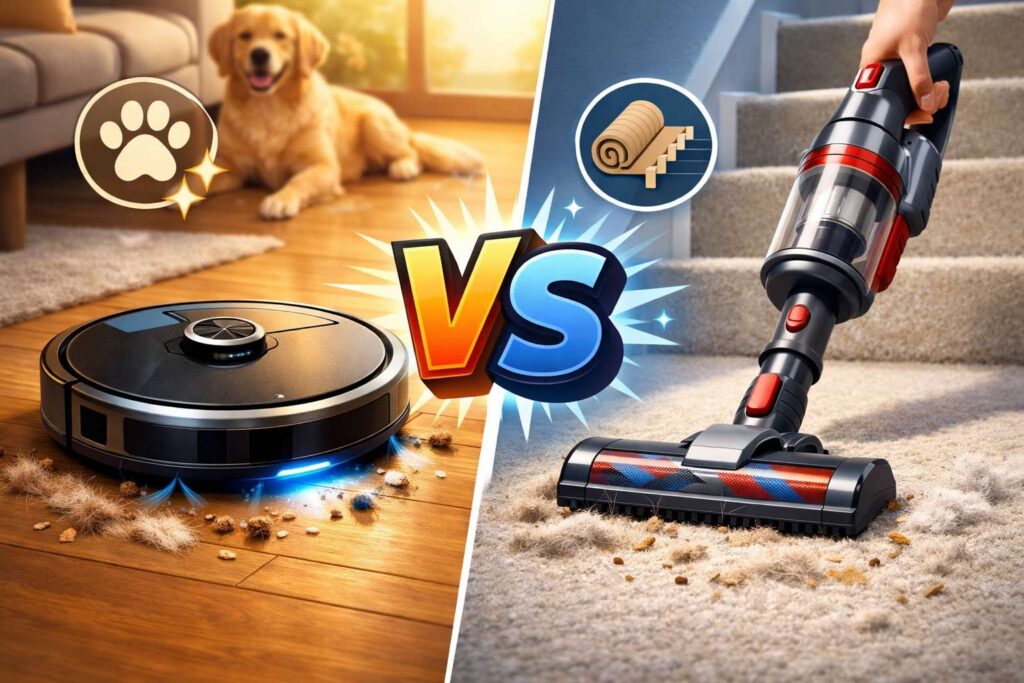
Buying a new vacuum looks easy at first. Then the questions start. Do you want a robot vacuum that cleans on its own, or a cordless vacuum that you control by hand? Do you need help with pet hair, thick rugs, stairs, or fast kitchen messes? And do you want one machine that does almost everything, or one machine that saves you time every day?
That is where this choice gets interesting.
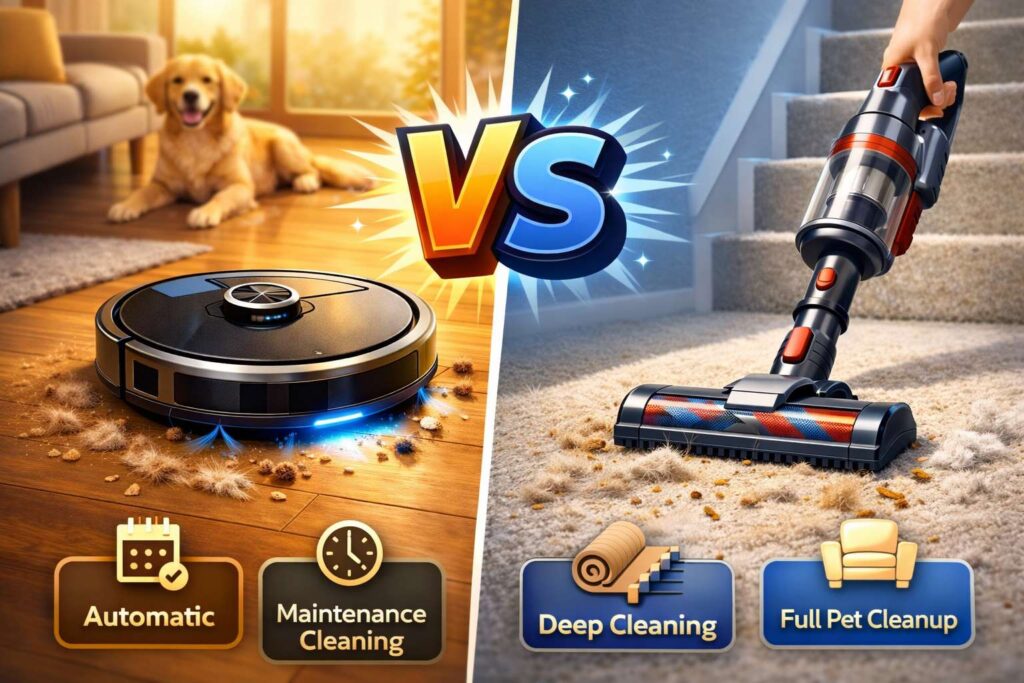
A robot vacuum and a cordless vacuum do not serve the same role, even though they clean the same home. One keeps your floors under control with very little effort from you. The other gives you stronger reach, better deep cleaning, and faster spot cleaning in places a robot cannot handle well.
So the short answer is simple. A cordless vacuum is the better first buy for most people. A robot vacuum is the better second buy for people who want less daily work.
Still, that does not mean a robot vacuum is a poor choice. In the right home, it can make a huge difference. It can run every day, pick up dust and crumbs, and keep pet hair from building up on the floor. Then your home feels cleaner all week, not just right after vacuum day.
Quick answer
Pick a cordless vacuum first if you need one vacuum that can clean almost everything. It works on stairs, sofas, rugs, corners, under furniture, and inside the car. It handles sudden messes fast. It gives you more control, and that matters in real life.
Pick a robot vacuum first if your main goal is daily upkeep. It is a strong fit for busy homes with hard floors, pet hair, and open spaces. It shines when you want clean floors with less effort.
So, which one wins? For most homes with room for just one machine, the cordless vacuum wins. For homes that already have a good main vacuum, the robot vacuum adds more day-to-day value.
What changes this choice
Your floors matter. Your home layout matters. Your habits matter too.
A small apartment with one rug and no stairs has very different needs from a two-floor house with pets, kids, and constant crumbs near the kitchen. A person who likes quick manual cleaning will often prefer a cordless vacuum. A person who hates routine chores will often love a robot vacuum.
Then there is clutter. Robot vacuums work best in tidy homes. They do better with open paths, fewer cords, and less stuff on the floor. Cordless vacuums care far less about that. You pick them up, point them where the dirt is, and clean.
That sounds obvious, but it matters.
Why robot vacuums work so well for daily mess
A robot vacuum is built for repeat cleaning. That is its main strength.
You can run it in the morning, after dinner, or every day of the week. It moves through rooms on its own and collects the dust, crumbs, and pet hair that show up again and again. So your floors stay under control with less effort from you.
That daily routine is the real value. A robot vacuum does not need to replace your main vacuum to be useful. It just needs to stop your floors from getting bad.
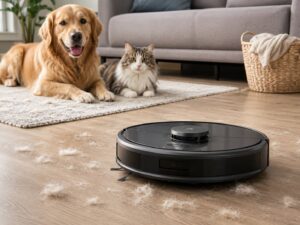
This is why robot vacuums feel great in homes with dogs or cats. Fur spreads fast. Dirt near doors builds up fast too. A robot vacuum can stay on top of that light debris before it turns into a bigger cleaning job.
Many models now map rooms, return to a dock, and avoid common obstacles better than older robots did. So ownership feels less annoying than it used to feel. Some models empty their own bins into a larger dock, and that cuts one more task from your week.
Still, a robot vacuum has limits. It cannot clean stairs. It struggles with some tight corners. It cannot grab the sofa, the car mats, or the cobweb near the baseboard. So it helps most on open floors, not everywhere in the home.
Why cordless vacuums stay the safer first buy
A cordless vacuum is far more flexible. That one point shapes the whole decision.
You can use it on hard floors, rugs, carpet, stairs, furniture, shelves, mattresses, curtains, and car interiors. Many models switch into handheld mode in seconds. So one machine can cover a lot of cleaning jobs.
That makes it the better main vacuum.
It is strong for fast spot cleaning too. A child drops cereal. The dog tracks in dirt. Coffee grounds hit the floor. You grab the cordless vacuum, clean the mess, and move on. There is no need to clear the floor first or wait for a scheduled run.
Then there is reach. A cordless stick vacuum can get behind chairs, along edges, and into spots that need direct attention. A robot vacuum cleans the floor surface. A cordless vacuum cleans the home in a wider sense.
So, even though a robot vacuum feels smarter, a cordless vacuum usually feels more useful.
Robot vacuum vs cordless vacuum for pet hair
Pet hair changes the whole buying decision.
A robot vacuum is great for daily fur pickup on floors. It can pass through the kitchen, hallway, living room, and dining area every day. That helps stop hair from collecting in visible clumps. So the home looks cleaner with less work.
Yet pet hair does not stay only on the floor. It sticks to sofas, stairs, pet beds, corners, and car seats. That is where a cordless vacuum pulls ahead. It is better for full pet cleanup, not just floor maintenance.
Long hair matters too. Tangles in the brush can slow any vacuum down. Many newer vacuums now use brush designs that reduce hair wrap, but manual cleaning power still matters most in homes with lots of fur and fabric surfaces.
So this part is easy to call. For floor fur every day, the robot vacuum helps a lot. For full pet hair cleanup across the whole home, the cordless vacuum wins.
Which one is better on carpets and rugs
Carpet is where the difference gets clearer.
A cordless vacuum gives you direct, repeated passes over high-traffic areas. You can work slowly. You can clean edges. You can hit the same patch again if needed. That makes it the better choice for deep carpet cleaning.
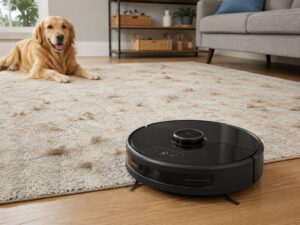
Rugs show the same pattern. A robot vacuum can keep many rugs looking tidy, yet a cordless vacuum gives you more force and more control. That matters for thicker rugs, pet hair, and dirt that sits deeper in the pile.
So, for buyers with lots of carpet, the cordless vacuum should come first.
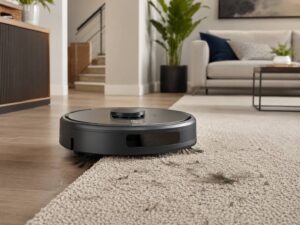
A robot vacuum still helps in carpeted homes. It can handle light daily debris and keep dust from piling up between deeper cleans. That is useful. It just is not the same as a strong manual clean.
Which one is better on hard floors
Hard floors are the best case for robot vacuums.
Dust, crumbs, light dirt, and pet fur are easier for a robot to pick up from tile, vinyl, laminate, and wood floors. So in homes with mostly hard flooring, a robot vacuum can do a very convincing job day after day.
A cordless vacuum still works very well on hard floors. In fact, it is better for corners, edges, and fast messes. Yet the robot vacuum feels more impressive here, since daily floor maintenance becomes almost automatic.
That is why robot vacuums suit homes with mostly hard floors better than homes with thick carpet throughout.
Stairs, sofas, cars, and quick messes
This section is short, since the answer is clear.
For stairs, the cordless vacuum wins.
For sofas, the cordless vacuum wins.
For car interiors, the cordless vacuum wins.
For quick messes in one small area, the cordless vacuum wins again.
A robot vacuum is a floor machine. A cordless vacuum is a more complete cleaning tool.
So buyers who live in apartments with stairs, townhouses, or homes with lots of soft furniture should think hard before choosing a robot vacuum as their only vacuum.
Maintenance, charging, and battery life
Neither type is maintenance free.
A robot vacuum needs brush cleaning, bin emptying on some models, filter care, and sensor cleaning. It has wheels, rollers, and a dock system to look after. So it saves floor-cleaning time, but it asks for regular upkeep in return.
A cordless vacuum needs its own care. You empty the dust bin. You clean the filter. You cut hair from the brush roll. You keep the battery charged. Over time, battery performance can drop, and that affects runtime.
Then there is charging style. A robot vacuum lives on its dock and stays ready. A cordless vacuum often sits on a wall mount or charging stand. Both are easy to live with, yet the robot feels more automatic once it is set up.
Still, the cordless vacuum feels simpler. You see the dirt. You clean it. Job done.
Small apartments vs larger homes
Home size changes the value of each machine.
In a small apartment, a cordless vacuum is often enough on its own. It stores easily, handles every room, and works on floors and furniture. That makes it a very practical first pick.
In a larger home, a robot vacuum starts to make more sense. It can cover more floor space and reduce the daily burden of keeping the place tidy. That is a big help in homes with pets, kids, and constant foot traffic.
Multi-floor homes still favor cordless vacuums as the first buy. You can carry them upstairs in seconds. A robot vacuum can still help, but it works best as part of a two-vacuum setup in that kind of home.
Cost and real value
Price matters, but value matters more.
A robot vacuum can feel expensive if you expect it to replace every other vacuum in the house. It probably will not. Yet it can feel worth every cent if it saves you time every single day.
A cordless vacuum often brings better value as a first purchase. It covers more jobs right away. So you get fewer gaps in what your vacuum can do.
That is the key point. A robot vacuum saves effort. A cordless vacuum covers more tasks. One gives you convenience. The other gives you versatility.
Who should buy a robot vacuum first
A robot vacuum is the right first buy for people who:
- have mostly hard floors
- want less daily cleaning work
- deal with light debris every day
- keep floors fairly clear
- want help with pet hair on open floor areas
It is a strong fit for busy households that want cleaner floors with less hands-on effort.
Who should buy a cordless vacuum first
A cordless vacuum is the right first buy for people who:
- need one vacuum for the whole home
- have stairs, rugs, sofas, or car-cleaning needs
- want stronger carpet cleaning
- deal with pet hair on furniture and stairs
- want fast cleanup for small messes
For most buyers, this is the safer purchase.
Final verdict
A robot vacuum is a great helper. A cordless vacuum is the better all-round vacuum.
So, if you are buying only one machine, choose the cordless vacuum. It handles more surfaces, more messes, and more parts of the home. It is the stronger first purchase for pet owners, carpeted homes, multi-floor homes, and anyone who wants one tool that can do almost everything.
Then, if you want less routine cleaning later, add a robot vacuum. That is where it shines. It keeps floors in check, saves time, and makes the whole house feel cleaner between deeper cleans.
That combination works so well for a simple reason. The cordless vacuum does the heavy work. The robot vacuum handles the daily layer. Put them together, and your home stays cleaner with less effort.