
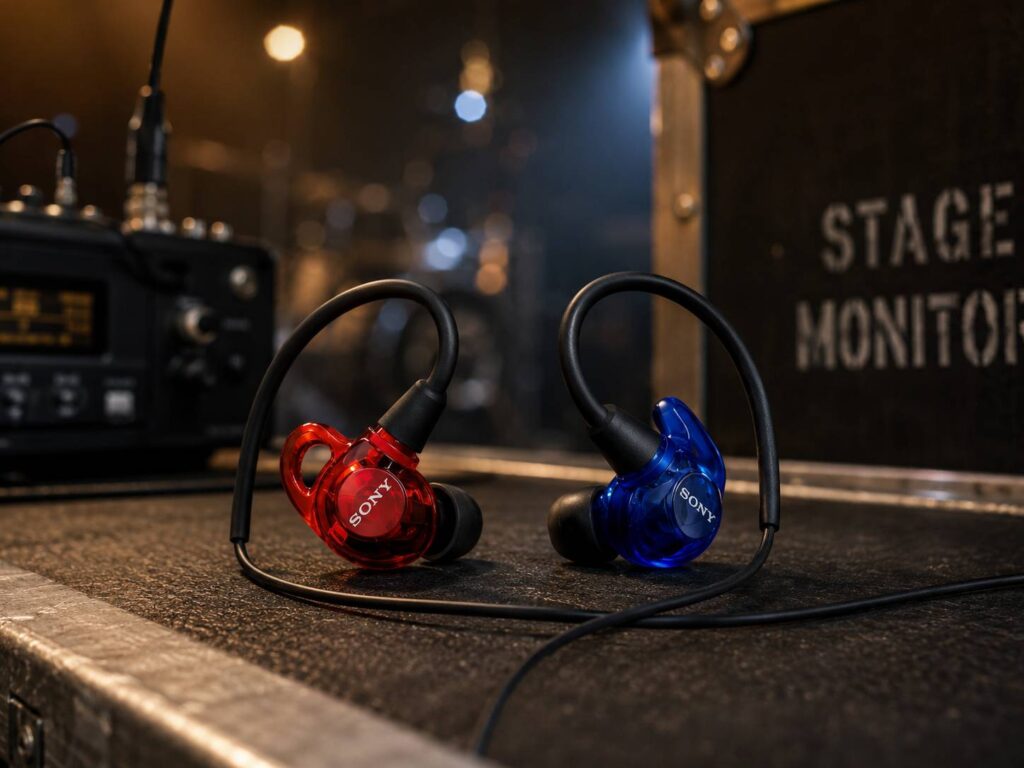
Sony has introduced the IER-M500, a new set of wired in-ear monitors aimed at musicians, singers, sound engineers, and other live performers. At $119.99 in the United States, the Sony IER-M500 enters the market as a more accessible alternative to expensive professional and custom-molded stage monitors.
The new model places fit, passive sound isolation, and dependable wired monitoring ahead of lifestyle features. There is no Bluetooth connection, active noise cancellation, or built-in microphone. Instead, Sony has focused on the details that matter during rehearsals and live shows.
For example, the IER-M500 uses a sealed housing, flexible ear hangers, a clothing clip, and Sony’s own fitting supporters. It comes with several fitting options too. As a result, performers have more ways to find a stable seal without ordering custom ear molds.
Sony developed the earphones with input from professional monitoring engineers. That choice gives the IER-M500 a clearer purpose than ordinary wired earbuds with a stage-ready label added to the box.
Sony IER-M500 Price and Release Date
The Sony IER-M500 costs $119.99 in the United States. Preorders are already open through Sony, with estimated deliveries starting around August 20, 2026.
Sony offers three finishes:
- Black
- Clear
- Red and blue
The red and blue version has a practical benefit beyond its appearance. Different colors make the left and right earpieces easier to identify backstage or under dim venue lighting.
At this price, the IER-M500 sits below many premium stage monitors. It is not the cheapest wired IEM available, but it comes from a company with a long history in professional recording, broadcast, and personal audio equipment.
That position should make it appealing to performers buying their first serious stage IEMs. It may work well as a backup set too, especially for touring musicians who do not want to risk damaging a much more expensive pair.
Built for Stage Performers, Not Casual Commuting
Regular earbuds and stage in-ear monitors serve different purposes. Everyday earbuds often focus on wireless convenience, strong bass, phone calls, and mobile apps. Stage monitors need to stay secure during movement and reproduce a monitor mix clearly.
The Sony IER-M500 follows that second path.
Its fully sealed structure blocks outside noise through a physical seal. So, there is no battery-powered noise cancellation system to charge or manage. The performer simply connects the cable to a mixer, headphone amplifier, audio interface, or wireless bodypack receiver.
In practice, good passive isolation can make vocals, click tracks, and instruments easier to hear in loud venues. It can also reduce the temptation to keep raising the monitor level above drums, amplifiers, and crowd noise.
Sony has not published a noise-reduction rating in decibels. For that reason, the IER-M500 should not be treated as certified hearing protection. The final isolation level will depend on ear shape, tip size, and the quality of the seal.
Still, the closed design looks more suitable for a loud stage than open earbuds or loose-fitting consumer earphones.
A More Adjustable Fit for Long Performances
Fit is one of the most important parts of any in-ear monitor. A poor seal weakens bass, lets in outside noise, and can make an otherwise capable earphone sound thin.
Sony includes its own fitting supporters with the IER-M500. These parts help hold each earpiece against the ear and reduce unwanted movement.
The package contains fitting supporters in five sizes. It also includes polyurethane ear tips in four sizes:
- Extra small
- Small
- Medium
- Large
So, users can adjust both the support and the ear tip instead of relying on one generic shape.
Flexible hangers route the cable over the ears. Then, the included clip attaches the cable to clothing. This setup reduces cable movement and limits the pull placed on the earpieces.
That design should help singers, guitarists, drummers, and keyboard players who move during a performance. It should also work well for theatre productions, worship teams, school bands, and small venues with shared equipment.
A universal-fit IEM will never match every ear perfectly. Custom molds still offer a more personal fit. Yet, Sony’s range of included sizes gives the IER-M500 a better chance of fitting more users than a simple three-tip earbud package.
Sealed Acoustic Design Aims for Clearer Monitoring
Sony describes the IER-M500 as delivering precise and balanced sound. The sealed structure and internal acoustic design aim to reduce outside noise and keep the monitor mix clear.
That goal matters more than exaggerated bass on stage. A singer needs to hear pitch, timing, and vocal texture. A drummer needs clear attacks and reliable low-frequency cues. Guitarists and keyboard players need enough midrange separation to pick out their own parts.
For that reason, a stage monitor should not bury vocals or instruments under boosted bass. It should present the mix in a predictable way.
Sony has not released an independent frequency-response measurement. Independent listening tests are not available yet either. So, the exact tonal balance cannot be confirmed at this stage.
On paper, the design choices make sense. A sealed monitor with an adjustable fit should provide more stable sound than a loose earbud. The final result will still depend on tuning and ear-tip selection.
Why Wired Monitoring Still Makes Sense
Wireless earbuds have become common for daily listening, but Bluetooth is not ideal for professional stage monitoring. It adds latency, requires batteries, and can face connection problems in crowded wireless environments.
The IER-M500 uses a wired connection instead. That keeps the signal direct and removes the need for charging.
Performers can connect it to a wired monitor output or pair it with a professional wireless bodypack system. In the second setup, the bodypack handles the wireless link, and the IER-M500 connects to the receiver through its cable.
This distinction matters. The Sony IER-M500 is not a complete wireless monitoring kit. Buyers still need a mixer output, audio interface, headphone amplifier, or wireless transmitter and receiver system.
For home recording, the wired format brings another advantage. Musicians can monitor vocals and instruments without the delay found in common Bluetooth earphones.

Detachable Cable Adds Practical Value
Stage cables deal with repeated bending, pulling, sweat, and quick equipment changes. For that reason, a removable cable is one of the most useful features an IEM can have.
The Sony IER-M500 uses a detachable connection described by Sony as durable and secure. If the cable becomes damaged, users can replace it instead of discarding the full set of earphones.
That can lower long-term ownership costs. It also lets performers keep a spare cable in a case or stage bag.
Sony says the IER-M500 is built for demanding use, including exposure to sweat and moisture. Still, the company does not list an official IP water-resistance rating. Users should wipe the earphones after performances and avoid treating them as waterproof.
The cable clip deserves attention too. It may seem like a minor accessory, but it can stop the cable from swinging or pulling during a set. Small practical details often matter more on stage than flashy consumer features.
Who Should Buy the Sony IER-M500?
The IER-M500 appears best suited to people who need a focused and affordable monitoring tool.
Potential buyers include:
- Singers moving away from floor monitors
- Guitarists and bassists who need a clearer personal mix
- Drummers using click tracks or backing tracks
- Keyboard players performing with dense arrangements
- Students buying their first professional IEMs
- Churches, theatres, and small venues with shared monitoring gear
- Touring performers who need a backup set
- Home musicians who need low-latency wired monitoring
The new model will make less sense for listeners seeking wireless convenience, phone controls, active noise cancellation, or a built-in microphone.
Casual music fans can still use it with a compatible device. Yet, its design and accessories clearly target professional and semi-professional performance.
How the IER-M500 Fits Into Sony’s Product Range
Sony already sells premium in-ear monitors, including models aimed at serious performers and demanding listeners. The IER-M500 gives the company a more affordable entry point into this category.
That strategy feels familiar. Sony often keeps features aimed at committed users, even when many competitors remove them. The same pattern appears in its mobile products, which continue to focus on cameras, audio, and manual controls. Our coverage of the Sony Xperia 1 VIII looks at another recent example of that user-focused direction.
With the IER-M500, Sony is not trying to turn stage monitors into fashionable wireless earbuds. It has kept the product simple and purpose-built.
That is the right choice here. Musicians need a stable fit, clear sound, replaceable parts, and a dependable connection. Extra apps and touch controls would add little value during a live set.
Sony IER-M500 Specifications
- US price: $119.99
- Availability: Preorder
- Estimated US delivery: August 20 to 21, 2026
- Design: Sealed wired in-ear monitor
- Colors: Black, clear, red and blue
- Fitting supporters: Five sizes
- Ear tips: Four polyurethane sizes
- Cable: Detachable
- Cable routing: Flexible over-ear hangers
- Included cable clip: Yes
- Target users: Musicians and stage performers
- Active noise cancellation: No
- Bluetooth: No
- Official IP rating: Not listed
Is the Sony IER-M500 Worth Watching?
The Sony IER-M500 looks like a sensible entry-level stage monitor. Its $119.99 price keeps it within reach of students, developing musicians, and small production teams.
The secure-fit system is its most interesting feature. Five supporter sizes and four ear-tip sizes give performers several ways to improve comfort and isolation. Then, the flexible hangers and clothing clip help keep the cable under control.
The detachable cable adds more value. Stage equipment takes abuse, and cable failures are common. Replacing one part is better than replacing the full product.
There are still unanswered questions. Sony has not published detailed acoustic measurements, and independent sound tests have not appeared yet. So, claims about the exact tuning or isolation strength would be premature.
Even so, the IER-M500 appears to fill a useful space in Sony’s audio range. It offers a stage-focused design without the high price of custom monitors or premium multi-driver systems.
For musicians who need dependable wired monitoring at a manageable price, this is one of Sony’s most interesting professional audio launches of 2026.