A lot ends up in indoor air. Dust builds up on shelves. Pollen gets inside through windows, clothes, pets, and shoes. Cooking smoke hangs in the kitchen. Pet dander spreads from room to room. Then there is wildfire smoke, traffic pollution, mold spores, and the dry, stale air that sits inside closed homes during winter or summer.
So, are air purifiers worth buying in 2026?
For many homes, yes. A good air purifier can make indoor air feel cleaner, reduce airborne particles, and help with dust, allergies, pet dander, smoke, and some odors. Still, the result depends on the unit you buy, the room size, the filter type, and the way you use it.
A weak purifier in a large room will disappoint you. A strong HEPA air purifier in a bedroom or home office can feel like money well spent. The trick is simple: buy for real performance, not for fancy words on the box.
What an Air Purifier Actually Does
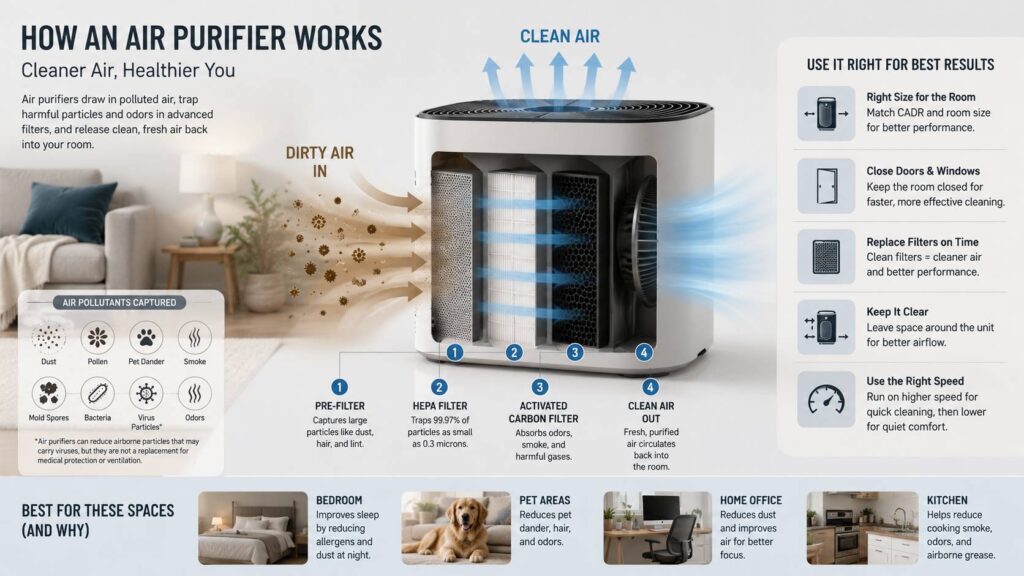
An air purifier pulls air into the unit, pushes it through one or more filters, then sends cleaner air back into the room. The fan moves the air. The filter catches particles. That sounds basic, but it works well when the purifier has enough power for the space.
A good air purifier can reduce:
- Dust floating through the room
- Pollen
- Pet dander
- Fine smoke particles
- Some mold spores
- Some cooking particles
- Light household odors, with enough carbon
- Some airborne irritants
Still, an air purifier does not clean your furniture, carpets, curtains, or bedding. It will not remove dust that has already settled. It will not fix a damp wall or a hidden mold problem. Plus, it will not clean your whole home from one corner.
That last point matters. One small purifier in the hallway will not make every room feel fresh. Portable air purifiers work best room by room.
Are Air Purifiers Worth It for Allergies?
For allergy sufferers, an air purifier can make a real difference. It helps most during pollen season, dusty months, and heavy pet shedding periods.
A true HEPA filter catches tiny airborne particles like pollen, dust mite debris, and pet dander. These particles move through the air, settle on soft surfaces, then rise again each time someone walks through the room or sits on the sofa.
The bedroom is usually the best place to start. You spend many hours there, and your face sits close to pillows, sheets, and blankets. Cleaner air during sleep can feel more useful than cleaner air in a hallway or guest room.
That said, a purifier will not replace cleaning. You still need to wash bedding, vacuum floors, wipe dust, and keep windows closed on high pollen days. Even so, a purifier can reduce the amount of airborne material you breathe each night.
My honest opinion: buy one for the bedroom first. Run it every night for two weeks. That gives you a fair test before you spend money on more units.
Are Air Purifiers Worth It for Dust?
Air purifiers help with airborne dust, but they do not stop dust from forming. This is one of the biggest misunderstandings.
Dust comes from skin flakes, fabric fibers, dirt, pollen, pet hair, and outdoor particles. Some of it floats. Some of it falls fast. A purifier can catch the floating part, but it cannot catch dust already sitting on your desk.
For this reason, you should treat an air purifier as one part of a cleaner home routine. It works better when you pair it with simple habits:
- Vacuum floors often
- Wash bedding every week
- Clean shelves with a damp cloth
- Replace HVAC filters on time
- Keep windows closed during bad outdoor air days
- Place the purifier in the room you use most
A small purifier on silent mode will not remove much dust. The fan needs to move enough air. That means medium speed often works better than the quietest setting.
Are Air Purifiers Worth It for Pet Owners?
Pet owners often get strong value from an air purifier. Cats and dogs spread dander, hair, litter dust, and odors. Some particles float in the air for a long time, then settle on fabric, floors, and shelves.
A true HEPA purifier helps with pet dander. A model with a thicker activated carbon filter helps more with odors. Thin carbon sheets can reduce mild smells for a short time, but they lose strength fast.
Placement makes a big difference. Put the purifier near the pet bed, litter box area, sofa, or the room where your pet spends the most time. Keep space around the intake and outlet. Do not hide the unit behind furniture.
For a home with pets, one purifier in the bedroom and one in the living room often works better than one large unit placed in a hallway. You clean the air where people and pets actually spend time.
Are Air Purifiers Worth It for Smoke?
Smoke is one of the strongest reasons to buy an air purifier in 2026. Wildfire smoke, cigarette smoke from neighbors, traffic pollution, and cooking smoke can all affect indoor air.
For smoke particles, check the smoke CADR rating. CADR means Clean Air Delivery Rate. It tells you how much clean air the purifier can deliver. A higher smoke CADR means the purifier can clear fine smoke particles faster.
For smoke smell, HEPA alone is not enough. You need activated carbon. More carbon usually means better odor control. A thin carbon layer can help with light smells, but it will not handle strong smoke smell for long.
During bad outdoor air days, keep windows closed. Then run the purifier in the room you use most. A strong purifier can reduce smoke particles in that room. It will not make indoor air perfect during heavy smoke, but it can help a lot.
Smart Air Purifier or Basic Air Purifier?
Smart air purifiers look tempting. They often include app control, air quality sensors, auto mode, filter reminders, and voice assistant support. Basic purifiers skip most of that and focus on the fan, filter, and manual controls.
So, which one makes more sense?
A smart model feels useful if you want remote control, air quality tracking, or automatic speed changes. A basic model can still clean the air very well if it has strong CADR, a true HEPA filter, and fair filter costs.
The smart features do not clean the air. The fan and filter do that. So, do not pay extra only for an app. Pay extra for better airflow, quieter operation, stronger filters, and lower running costs.
For a deeper comparison, read this guide on smart air purifier vs basic air purifier. It helps you decide whether the smart features are useful for your home or just nice extras.
What Air Purifiers Cannot Fix
Air purifiers do useful work, but they are not magic boxes. Ads often make them sound more powerful than they are.
An air purifier cannot:
- Remove mold growing inside walls
- Fix a water leak
- Clean dust already sitting on furniture
- Remove every odor from a home
- Make indoor smoking safe
- Replace fresh air in every situation
- Clean a full house from one small room
- Work well with clogged filters
- Perform properly behind a sofa or curtain
This is where real buyer issues start. Someone buys a purifier, runs it on the lowest speed, places it behind a chair, then expects a major change. That setup will not work well.
Air needs to move through the unit. Filters need replacement. Room size needs to match the purifier. Once those basics are right, the results become much better.
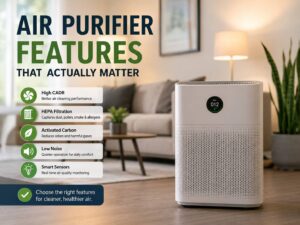
The Specs That Matter Most in 2026
Air purifier listings can feel confusing. Brands often show big room size claims, glossy photos, and long feature lists. Still, only a few specs really matter.
CADR rating
CADR is one of the most useful numbers. It shows how fast the purifier delivers clean air. Check smoke, dust, and pollen CADR. For fine particles, the smoke CADR is especially useful.
Room size
Match the purifier to the actual room. A 12 x 15 ft bedroom has 180 square feet. A 15 x 20 ft living room has 300 square feet. For allergies, pets, or smoke, choose a unit with some extra power.
True HEPA filter
Pick a true HEPA filter or a filter with clear particle removal claims. Be careful with vague labels like HEPA-type or HEPA-style. Those terms can mean weaker filtration.
Activated carbon
Carbon helps with odors, pet smell, cooking smell, and smoke smell. A thicker carbon filter works better than a thin deodorizing sheet.
Noise level
A purifier that annoys you will stay off. For bedrooms, check noise at low and medium speed. High speed is useful for quick cleaning, but medium speed often works better for daily use.
Filter cost
A cheap purifier can become expensive later. Check replacement filter prices before you buy. Then check how often the brand recommends filter changes.
Energy use
Many people run air purifiers for 8 to 24 hours per day. Lower power use matters over a full year.
Need help reading those specs? This guide on how to choose the right air purifier explains what to check before you buy.
HEPA, Carbon, Ionizers, and UV: What Should You Choose?
The best setup is simple: true HEPA plus activated carbon.
HEPA handles particles like dust, pollen, dander, and smoke particles. Carbon handles odors and some gases. Together, they cover both.
Ionizers need more care. Some units can produce ozone, and ozone can irritate the lungs. People with asthma, children, older adults, and pets should be extra careful with ozone-producing features.
UV sounds impressive, but it should not be the main reason to buy a purifier. In many small home units, air moves past the UV light too quickly for a major effect. Strong airflow and good filters matter more for daily use.
So, keep it simple. Choose real filtration, strong CADR, low ozone risk, fair filter costs, and a size that fits your room.
Best Rooms for an Air Purifier
Start where you need cleaner air most.
The bedroom is the best first choice. Cleaner air during sleep can feel more useful than cleaner air in a room you rarely use.
A home office is another strong choice. Dust, pet dander, and stale air can make long workdays feel worse. A quiet purifier near the desk can help keep the room more comfortable.
A nursery or child’s room can make sense too. Choose a quiet model with clear safety ratings, then keep cords away from small hands.
Living rooms need more power. Pets, cooking particles, open doors, and foot traffic all add to the workload. A small bedroom purifier will usually struggle in a large open living area.
Real Problems People Notice After Buying One
Air purifiers can help, but buyers often run into a few common problems.
The first issue is noise. Many units clean well on high speed, but high speed can sound too loud for sleep, TV, or calls. A larger purifier can help here. It can clean a room on medium speed, which often sounds calmer.
The second issue is filter cost. Some brands sell low-cost units, then charge a lot for replacement filters. Always check the yearly filter cost before purchase.
The third issue is weak odor control. A thin carbon layer will not remove strong litter box smell, heavy cooking smell, or smoke smell for long. For odors, carbon depth matters.
The fourth issue is room size confusion. Some brands claim huge coverage numbers based on slow air cleaning. CADR gives a better view of real performance.
The fifth issue is auto mode. Some sensors react well to dust or cooking particles, but they may miss certain smells. Manual speed control often gives more reliable results.
Are Expensive Air Purifiers Better?
Price can matter, but it does not tell the whole story. Some expensive purifiers perform very well. Others look premium but move too little air for the cost.
Pay more for:
- Higher CADR
- Quieter medium speed
- Better filter sealing
- More activated carbon
- Easy filter replacement
- Good build quality
- Lower power use
- Clear safety ratings
Do not pay extra only for colored lights, an app, or a stylish shell. Those features can feel nice, but they do not clean the air.
A strong mid-range purifier gives the best value. You do not need the most expensive model for a normal bedroom. You need enough airflow, a true HEPA filter, fair filter prices, and low noise.
Who Should Buy an Air Purifier in 2026?
An air purifier makes the most sense for:
- People with allergies
- People with asthma or sensitive lungs
- Pet owners
- Homes near busy roads
- Homes affected by wildfire smoke
- Bedrooms with dust problems
- Nurseries
- Home offices
- Apartments with neighbor smoke
- Rooms with poor airflow
People without allergies, pets, smoke, odor, or dust issues may notice a smaller change. Still, a purifier can help during pollen season, renovation work nearby, or bad outdoor air days.
Who Can Skip One?
Some homes do not need an air purifier right away.
Skip it for now if your home has clean air, good airflow, no pets, little dust, no smoke exposure, and no allergy symptoms. Spend money first on cleaning tools, HVAC filter upgrades, leak repairs, or better ventilation.
Do not buy an air purifier to hide a mold problem. Find the moisture source and fix it. A purifier can reduce some airborne mold spores, but it will not remove mold growth.
Do not expect one small unit to clean a full open-plan home. Buy by room. That simple rule prevents most disappointment.
Final Verdict: Are Air Purifiers Worth Buying in 2026?
Yes, air purifiers are worth buying in 2026 for many homes. They make the most sense in bedrooms, pet homes, allergy-prone homes, smoke-affected rooms, nurseries, and home offices.
They work best with realistic expectations. A good purifier reduces airborne particles. It can help with dust, pollen, dander, smoke particles, and light odors. It will not replace cleaning, ventilation, moisture control, or filter changes.
My real opinion is simple: start with one good purifier for the bedroom. Choose true HEPA, strong CADR, fair filter costs, and quiet medium-speed performance. Run it every night for two weeks. Then judge the difference.
Cleaner air while you sleep can be reason enough.