
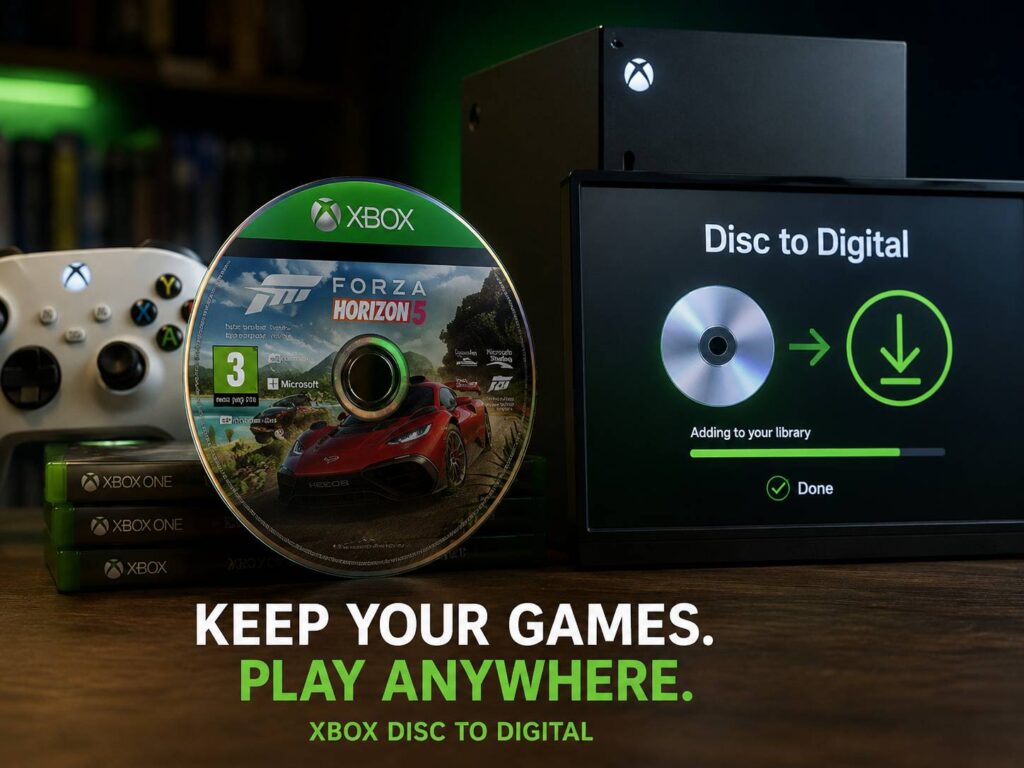
Physical Xbox games still matter to a lot of players. Some people buy discs to collect them. Others like the option to sell, lend, or keep games without relying only on a digital store. The problem is simple: Xbox hardware, gaming habits, and the wider industry keep moving toward digital access.
That is why the reported Xbox disc-to-digital feature feels so interesting. It has not launched publicly, and Microsoft has not shared full rules yet. Still, the idea speaks directly to one of the biggest worries among Xbox fans. What happens to physical game libraries as more consoles, handhelds, and cloud services move away from discs?
A smart disc-to-digital system would give Xbox players a better path forward. It would not erase the value of discs. It would make them more useful in a digital-first setup.
What Xbox Disc-to-Digital Means
The reported feature would let players use a physical Xbox disc to unlock a digital entitlement for the same game. In plain English, your disc would act like proof that you own the game.
Reports say the system would work with Xbox One and Xbox Series X discs. Original Xbox and Xbox 360 discs do not appear to be part of the plan right now. That detail matters, especially for collectors with older libraries.
The process sounds fairly simple. A player inserts a supported disc into an Xbox console, installs the game, and launches it. The console then links a digital entitlement to the game through the player’s Microsoft account.
This is not the same as giving everyone a free permanent copy with no strings attached. The entitlement would stay tied to the disc. Sell the disc, and the digital access should move away from your account. Lend it to a friend, and that friend should get the access tied to that disc instead.
That rule makes sense. It protects publishers from duplicate copies, and it keeps the physical disc meaningful.
Why This Feature Matters for Xbox Players
Xbox already has one major all-digital console: the Xbox Series S. It gives players a lower-cost entry point, but it cannot read physical discs. That leaves disc owners with a frustrating gap.
A player may own dozens of Xbox One discs and still feel locked out of using them on a Series S, a handheld PC, or cloud gaming. Disc-to-digital would reduce that friction.
This matters even more as Xbox pushes its games across more screens. Players now expect their library to follow them from console to PC, handheld, TV, tablet, and cloud. Physical discs do not fit neatly into that model.
A disc-to-digital feature would bridge old and new habits. You keep the disc, but the game becomes easier to access across modern Xbox services.
That is the real appeal. It is not only about saving space on a shelf. It is about keeping past purchases relevant.
The Link Between Discs, Cloud Gaming, and Play Anywhere
Xbox already offers strong digital benefits for supported titles. Xbox Play Anywhere lets players buy a supported digital game once and play it across Xbox console, PC, and supported gaming handhelds. Xbox Cloud Gaming now lets eligible players stream select owned games too.
Disc-based games sit outside many of those perks. A physical copy usually needs a disc drive. That limits where and how you can play it.
Disc-to-digital could change that for supported games. A converted disc might open the door to Play Anywhere features or cloud access, depending on the title and Microsoft’s final rules.
That part matters for players who are watching Xbox move toward portable and cross-device gaming. Imagine owning a physical Xbox Series X game, converting it through a verified system, then playing it on a supported handheld or through cloud streaming. That would make physical libraries feel much less stuck in the past.
This is where the feature could become more than a convenience tool. It could become a preservation tool for modern Xbox games.
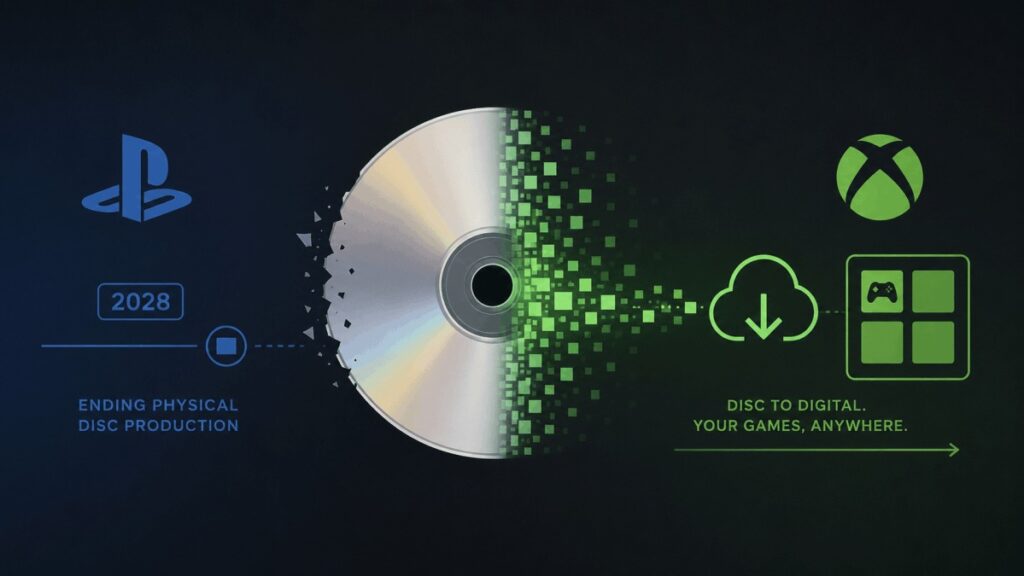
Why Physical Game Libraries Need a Safety Net
Physical media gives players real benefits. You can keep a game on your shelf. You can buy used copies. You can lend games to family. You can resell titles that no longer interest you.
Yet discs have weak points too. They scratch. Drives wear out. Retail stock disappears. Some modern discs still need huge updates. Many games rely on online services, patches, accounts, or extra downloads.
The bigger issue is hardware. A disc collection only works when you have a console with a working disc drive. Once the industry moves deeper into digital-only devices, that condition becomes harder to meet.
That is why a disc-to-digital system makes sense now. It gives physical buyers a safety net without asking Microsoft to keep every future Xbox built around a disc drive.
Collectors would still keep their cases and discs. Casual players would get easier access. Xbox would gain a cleaner way to support older purchases on newer hardware.
What Microsoft Needs to Get Right
The feature needs clear rules. Players should not have to guess which discs work, which games qualify, or what happens after a disc changes hands.
Microsoft should explain these points before launch:
- Which Xbox One and Xbox Series X discs qualify
- Whether bundle discs and multi-disc games work
- How digital access moves after resale or lending
- Whether DLC and deluxe editions convert correctly
- Which games gain cloud gaming or Play Anywhere support
- What happens with damaged discs
- Whether family sharing works the same way as other digital games
A simple checker inside the Xbox dashboard would help. A player could insert a disc and get a clear result: eligible, not eligible, or already owned digitally.
That kind of clarity would build trust fast. Confusing rules would hurt the feature before it gets a fair chance.
The Collector Angle
Collectors should not treat disc-to-digital as a reason to dump physical games. Based on current reporting, the disc remains part of the license story. The disc still matters.
That is good news for people who care about ownership. It means the physical copy does not become worthless after conversion. It stays tied to access, resale, and collection value.
The smarter move is to keep discs in good condition, store cases properly, and protect the Microsoft account linked to the library. Players who want themed hardware may also be watching special models like the Xbox Series X25 Limited Edition, since collectible consoles and physical libraries often appeal to the same crowd.
A strong disc-to-digital system would support that audience rather than push it away.
The Honest Problem With Digital Ownership
Digital games are convenient, but they come with concerns. Players worry about account bans, store removals, licensing changes, closed servers, and lost access. Those fears are not imaginary. Game storefronts and online services change over time.
Disc-to-digital does not solve every one of those problems. It still relies on Microsoft’s account system. It still depends on platform rules. It will not save games that need dead servers to function.
Even so, it would be a practical improvement over the current split between discs and digital access. It gives players more ways to use what they already bought.
That matters. People do not want to buy the same game twice just to play it on newer hardware.
Why This Could Be a Smart Move for Xbox
Xbox has spent years building a message around access. Play on console. Play on PC. Play on supported handhelds. Stream select games from the cloud. Keep your library close.
Disc-to-digital fits that message better than a hard break from physical media. It tells players that Xbox can move forward without leaving disc buyers behind.
My view is direct: this feature should launch, but only with fair rules and a clear public explanation. It should not feel like a workaround. It should feel like a normal part of the Xbox library system.
Physical games may become less common, but many players still own them. A disc-to-digital feature would help Xbox respect those purchases and prepare for a future where disc drives play a smaller role.
For players, that means less fear. For Xbox, it means more trust. For physical game libraries, it could be the bridge that keeps them alive a little longer.