Buying a vacuum should feel simple. In real life, it rarely does. One brand pushes air watts. Another leads with huge Pa numbers. A third talks up battery life, smart sensors, laser lights, or a self-empty dock. That mix can make any vacuum look impressive at first glance.
Real cleaning tells a different story. A vacuum works well only if it fits your floors, your home size, your dust level, and the way you clean each week. Filtration matters. Floorhead design matters. Weight matters. Runtime matters. Clean dust disposal matters too. Flashy headline numbers sit lower on the list.
That is the real gap between useful vacuum specs and marketing fluff. A big number can look exciting on a product page. Daily use exposes what counts.
Start with your home, not the headline
A small flat with hard floors needs one kind of vacuum. A family home with rugs, stairs, pets, and long hair needs another. Going straight to the power claim skips that step, and that shortcut leads to bad buys.
Floor type should shape your shortlist first. Hard floors need a head that picks up fine dust and larger crumbs without scattering debris. Carpet needs agitation, brush action, and steady airflow at the floor. Pet homes need tools that lift hair fast and avoid brush wrap. Allergy homes need strong filtration and a cleaner emptying process.
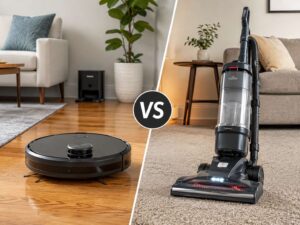
Room size matters too. A cordless model with short real-world runtime can feel annoying in a large house. A bulky upright can feel tiring in a home with many stairs. A robot vacuum can help with daily upkeep, yet it will not replace deep cleaning in every room. For that broader format comparison, see robot vacuum vs cordless vacuum.
Filtration is one of the most useful specs
Filtration deserves more attention than it gets. Suction is only half of it, because poor filtration can push fine dust back into the air. That makes the room look clean and feel less clean at the same time.
A HEPA filter sounds great, yet the wording matters. Some brands say the vacuum has a HEPA filter. That does not always mean the whole machine seals well. A better sign is sealed HEPA filtration, full-machine filtration, or a claim that exhaust air passes through the filter path without leaking around it.
This point matters most for allergies, asthma, pet dander, and fine dust. A vacuum that traps dirt in the bin but leaks dusty exhaust through gaps does not do the full job. Strong pickup and weak sealing make a poor pair.
Bagged vacuums often do well here. They keep dust more contained during disposal. Bagless vacuums can work very well too, yet the emptying design needs to stay clean and simple. A messy dust cup can cancel out part of the benefit.
The cleaner head matters more than raw suction
The motor does not tell the whole story. The cleaner head, floor nozzle, or brush roll does much of the real work. That part touches the floor. That part lifts hair. That part agitates carpet. That part decides whether fine dust gets picked up or pushed around.
A vacuum with strong suction and a poor head can disappoint fast. A vacuum with a well-designed head can feel far better in normal use, even if the headline power number looks smaller.
Soft rollers suit hard floors well. They pick up dust and larger bits with less scatter. Motorized brush rolls help on carpet and pet hair. Anti-tangle designs save time in homes with long hair. Edge-cleaning ability matters too, since baseboards and corners collect dust fast.
This is one reason shoppers get confused by spec sheets. A brand can brag about suction, yet the floor tool may still be average. That kind of mismatch is common in crowded product categories. The same thing happens in other appliance guides. Headline features grab attention, yet day-to-day use tells the truth. You can see that pattern in air fryer vs toaster oven, where cooking claims matter less than real kitchen fit.
Runtime needs context
Cordless vacuums love the phrase up to 60 minutes or up to 90 minutes. Those numbers sound great, yet they come from the lowest power mode.
Low power mode gives the highest runtime figure. Medium mode and auto mode usually cut that number down. Max mode cuts it even more. Carpet cleaning can drain the battery faster than hard floor cleaning. Pet hair and heavy dirt can change results too.
So the better question is simple. How long will this vacuum run in the mode I will actually use in my home?
That answer matters more than the box claim. Replaceable batteries deserve extra credit here. A second battery can make a cordless vacuum far more practical in a larger home. Fast charging helps too, yet spare battery support often matters more than charging speed alone.
Corded models still hold an edge for long cleaning sessions. They remove battery stress from the equation. That does not make cordless models worse. It just means convenience and endurance rarely peak at the same time.
Weight, balance, and reach shape daily use
A vacuum can clean well and still annoy you every week. Weight plays a big part in that. So does balance. A heavy cordless model can feel awkward on stairs or above shoulder height. A well-balanced canister can feel easier to use, even if the total weight number looks higher on paper.
Reach matters just as much. Cord length, hose length, wand length, and operating radius change how smoothly a vacuum moves through a room. Short reach means more outlet changes, more stops, and more hassle. Long reach makes big spaces less tiring.
Storage matters too. Some homes have room for a full-size upright or canister. Other homes need a slim stick vacuum that mounts on the wall. That is not just a convenience detail. A vacuum that stores badly often gets used less.
Dust disposal is not a minor detail
Bin size gets plenty of attention. The emptying process deserves just as much. A large bin sounds useful, yet a dusty and awkward emptying system can turn routine cleaning into a mess.
Bagged vacuums often win on clean disposal. Pull the bag out, seal it, then drop it away. Bagless models save money on consumables, yet they ask you to empty the bin and clean parts more often. That can be fine in many homes. It is less appealing in allergy-prone homes or houses with lots of pet hair and fine dust.
Self-empty docks help in robot vacuums and some cordless systems. Those docks can add real value. They keep you away from the dirt longer and cut the number of manual empties. The dock matters only if it works well and seals the debris path cleanly. A fancy dock that clogs or leaks dust loses much of its appeal.
Noise deserves a quick look
Noise does not sell vacuums, yet it changes the cleaning experience a lot. A loud vacuum can feel tiring in a small flat. It can disturb kids, pets, or neighbors. A quieter model can make quick cleanup easier to fit into daily life.
Brands do not always publish noise figures, which is frustrating. Still, any model that clearly lists a dB level gives you one more solid point for comparison. That matters more than vague talk about quiet performance.

Robot vacuum specs need a different reading
Robot vacuum marketing often turns into a suction arms race. Every new model seems to push a bigger Pa number. That number has value, yet it should not lead your decision.
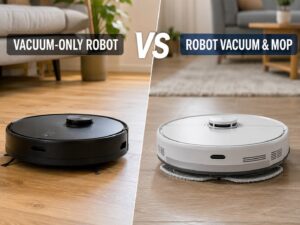
Navigation quality matters more. Smart mapping matters. Obstacle avoidance matters. Dock performance matters. Brush design matters. Mopping systems matter too, mainly in combo models. A robot with lower headline suction and better navigation can clean more of your home with less babysitting.
That is the real goal with a robot vacuum. You want coverage, consistency, and fewer stuck moments. A robot that tangles on cords, misses rooms, bumps into pet bowls, or struggles with rugs will waste your time no matter how high the suction claim goes.
Specs that often drift into marketing fluff
Some numbers sound precise but tell only part of the story. Air watts can help, yet the test method matters. Pa numbers can help, yet floorhead design still shapes pickup. Motor wattage sounds powerful, yet input power alone does not tell you how well the vacuum cleans real floors.
Smart sensors can be useful. Laser lights can help spot fine dust. App controls can help with robot scheduling and maps. Dirt sensors can help auto-adjust suction. Those features are nice extras, not core proof of deep cleaning.
The same rule works again and again. A fancy feature has value only if the basics are already strong.
How to read a vacuum spec sheet the smart way
Start with floor type support. Check the cleaner head next. Look at filtration after that. Then read the runtime claim with care. Move on to weight, reach, dust disposal, and noise. Put headline suction numbers near the end of the process, not at the start.
That order keeps you grounded in daily use. It stops you from buying a vacuum that looks powerful in an ad and feels awkward at home.
A few plain questions can guide the choice:
Will this vacuum suit my floors?
Will the filtration keep fine dust contained?
Will I finish a normal clean without charging again?
Will emptying stay clean and easy?
Will the weight annoy me on stairs?
Will this dock or sensor save time, or just raise the price?
Those questions cut through the hype fast.
The best vacuum spec is fit
The best vacuum is not the one with the biggest number on the box. It is the one that matches your home and your cleaning routine.
Pet owners should care about brush design, hair pickup, and bin or bag handling. Allergy buyers should care about sealed filtration and clean disposal. Large homes should care about honest runtime, cord reach, or battery support. Small flats should care about storage, weight, and noise. Robot vacuum buyers should put navigation and dock quality high on the list.
That is how you separate real value from vacuum marketing fluff. Start with the job. Check the core specs. Treat flashy claims with caution. A vacuum that fits your space will feel better every week, and that matters more than any giant headline number.