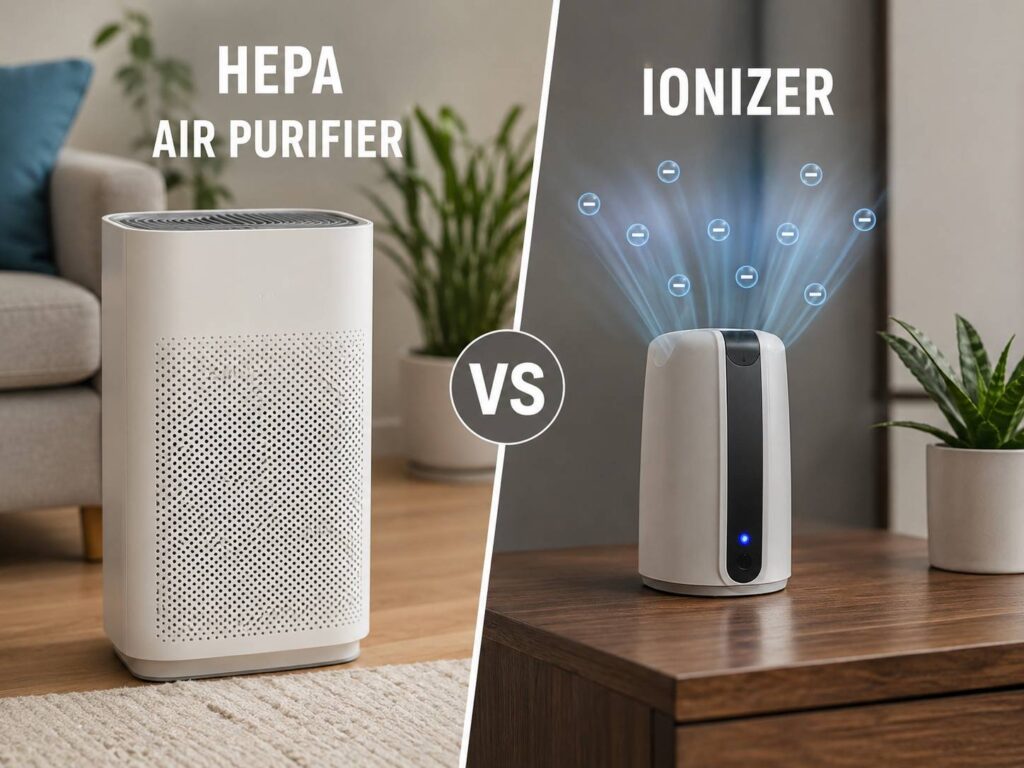
Indoor air can look clean and still carry dust, pollen, pet dander, smoke particles, mold spores, cooking smells, and fine pollution. That is why it pays to compare a HEPA air purifier vs ionizer before choosing a device for a bedroom, living room, office, nursery, or allergy-prone home.
At first, both devices sound like they do the same job. They both promise cleaner air. They both target airborne particles. Still, the way they work is very different, and that difference matters a lot in daily use.
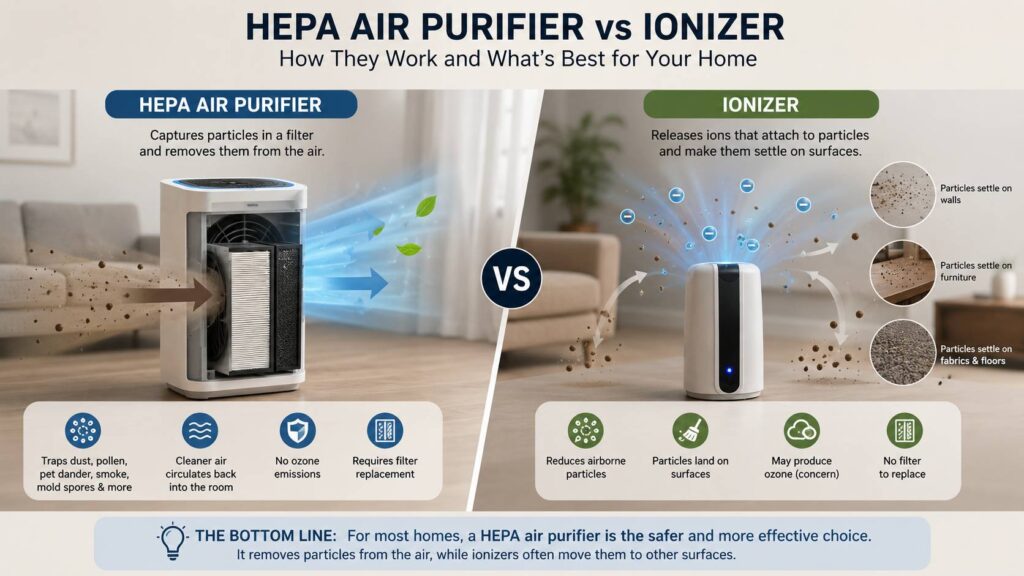
A HEPA air purifier pulls air through a physical filter and traps particles inside the machine. An ionizer releases charged particles into the air. These charges attach to dust, pollen, smoke, or other airborne particles, then make them cling to nearby surfaces or collector plates.
For most homes, a true HEPA air purifier is the better choice. It is easier to understand, easier to maintain, and usually safer for daily use. Ionizers can help reduce some particles in the air, but they can create extra cleaning work. Some models can also produce ozone, which is a concern for indoor air.
What Is a HEPA Air Purifier?
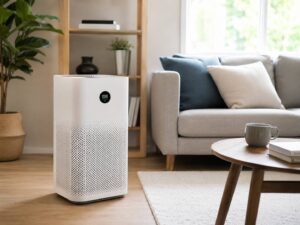
A HEPA air purifier uses a fan and a dense filter to clean the air. The fan pulls dirty air into the unit. Then the filter traps small particles before the air moves back into the room.
The main benefit is simple: the dirt stays in the filter. It does not just fall onto your desk, sofa, bed, or curtains.
A true HEPA air purifier can help reduce:
- Dust
- Pollen
- Pet dander
- Mold spores
- Smoke particles
- Fine particle pollution
- Some airborne germs attached to particles
This makes HEPA filtration a strong choice for people with allergies, pets, asthma triggers, or dusty rooms. It can also help during wildfire smoke days or after cooking, but odors need a carbon filter too.
Still, a HEPA purifier is not magic. It only cleans the air that passes through it. So, if the purifier is too small for the room, you will not get great results. This is one of the most common mistakes buyers make.
A small purifier on a nightstand may work in a small bedroom. Put the same unit in a large living room, and it will struggle. The fan cannot move enough air, and the filter cannot clean the space fast enough.
What Is an Ionizer?
An ionizer cleans air in a different way. Instead of pulling particles through a thick filter, it releases charged ions into the room. These ions attach to airborne particles. Once the particles carry a charge, they can stick to walls, floors, furniture, curtains, screens, or collection plates inside the device.
At first, this can make the air feel fresher. The air may seem less dusty, and some particles may leave the breathing zone. Still, many of those particles have not fully left the room. They have moved from the air to nearby surfaces.
That is where real-life problems start. People often notice more dust on shelves, TV screens, walls, or furniture near the ionizer. In some cases, the area around the device gets dirty faster than expected.
Some air purifiers include an ionizer as an optional mode. Other devices are standalone ionic air cleaners. A few models combine filters, ionization, UV lights, and carbon layers. The packaging can sound impressive, but the main question stays the same: does the device trap particles safely and clearly?
For daily home use, a filter-based system is usually easier to trust.
HEPA Air Purifier vs Ionizer: The Main Difference
The core difference is simple. HEPA filters capture particles. Ionizers charge particles.
A HEPA air purifier removes particles from the air and holds them in a filter. You replace or clean that filter later. The process is easy to see and easy to maintain.
An ionizer changes how particles behave. It can make them clump together or settle onto surfaces. Some devices use charged collector plates to pull those particles in. Other units let the particles land around the room.
This is why a HEPA purifier often feels more practical. You know where the dust goes. You can open the unit, replace the filter, and restart the purifier.
With an ionizer, the result can feel less clear. You may need to wipe surfaces more often. You may also need to check ozone claims, safety labels, and certification details before feeling comfortable with the product.
Which One Is Better for Allergies?
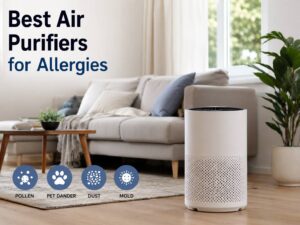
For allergies, a true HEPA air purifier is usually the stronger option. It can trap common allergy triggers such as pollen, pet dander, dust mite debris, and mold spores.
People with seasonal allergies often notice the biggest benefit in the bedroom. That makes sense. You spend many hours there, and cleaner air during sleep can make mornings more comfortable.
For better results, place the purifier where airflow is not blocked. Keep it away from curtains, walls, and furniture. Run it for long periods, not just for 20 minutes before bed.
An ionizer may reduce some airborne allergens, but it can also push them onto surfaces. Later, those particles can move again through cleaning, walking, vacuuming, or pets jumping onto furniture.
For allergy control, I would pick HEPA filtration every time. It gives a cleaner, more predictable result. For a deeper buyer’s guide, this article on how to choose the right air purifier is a useful next read.
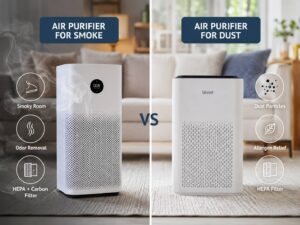
Which One Is Better for Dust?
Dust is one of the biggest reasons people buy air purifiers. A HEPA purifier can reduce airborne dust, especially the light dust that floats around a room and shows up in sunlight.
Still, no air purifier will remove every speck of dust from your home. Dust also comes from fabric, skin flakes, pets, open windows, carpets, shoes, and HVAC systems. So, you still need regular cleaning.
A HEPA purifier helps most with dust that moves through the air. A pre-filter helps even more. It catches larger particles such as hair, lint, and bigger dust pieces before they reach the main filter.
Ionizers can make dust settle faster. That may sound good, but it often creates a new issue. Instead of floating in the air, dust sticks to walls, shelves, and electronics. The room may need more wiping, especially near the ionizer.
For people who hate dusting, a HEPA purifier with a washable or replaceable pre-filter is usually the better buy.
Which One Is Better for Smoke?
Smoke is more difficult than regular dust. It contains fine particles and gases. A HEPA filter can trap many smoke particles, but smells and gases need activated carbon.
A good purifier for smoke should have:
- True HEPA filtration
- A strong activated carbon filter
- High smoke CADR
- Good airflow
- A sealed body design
- Replacement filters that are easy to buy
Cigarette smoke, wildfire smoke, and cooking smoke all need strong filtration. Thin carbon sheets usually do not handle odor well for long. They can help a little, but they saturate fast.
Ionizers are not my first choice for smoke. Some can reduce visible particles, but they do not handle odor well. More than that, ozone concerns become more serious in rooms with smoke. You do not want to add another lung irritant to air that is already poor.
For smoke, choose a HEPA purifier with real carbon. Run it before the room gets too bad, not only after the smell spreads.
What About Odors and Cooking Smells?
HEPA filters are great for particles, but they are not built mainly for odors. Cooking smells, pet odors, chemical smells, and smoke smells come from gases and odor molecules. Activated carbon handles those better.
If smells matter to you, check the carbon filter before buying. Some purifiers only use a thin black sheet. That can help with mild odors, but it will not perform like a thick carbon filter.
A proper odor-focused purifier should have a separate carbon filter with decent weight. Filter price matters here too. Carbon loses power over time, so it needs replacement.
Ionizers may create a “fresh” smell, but that is not always a good sign. A sharp electric smell can be a warning sign. If a device makes the room smell strange, turn off the ion mode and check the manual.
A clean room should smell neutral, not chemically fresh.
Safety: Why Ozone Is a Big Concern
Ozone is the main safety issue in the HEPA air purifier vs ionizer debate. Some electronic air cleaners can produce ozone. Ozone can irritate the lungs, throat, and airways.
This matters more for children, older adults, people with asthma, and anyone with breathing problems. Pets can be affected too.
A standard HEPA air purifier does not need ozone to clean air. It uses a fan and a filter. That makes it a safer choice for bedrooms, nurseries, and daily use.
Some ionizers produce very low ozone. Some models meet safety limits. Still, buyers need to check the exact product, not just trust marketing terms. Be careful with phrases like “activated oxygen,” “ozone cleaning,” or “fresh air generator.”
If a purifier has an ion mode, I prefer models that let you turn it off. Better yet, choose a strong HEPA purifier and skip ionization completely.
CADR and Room Size Matter More Than Fancy Features
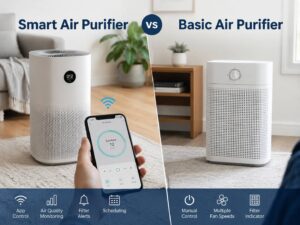
It is easy to get distracted by smart apps, colorful air quality lights, auto mode, quiet mode, UV lights, and touch screens. Those features are nice, but they do not matter as much as airflow and filtration.
CADR stands for Clean Air Delivery Rate. It shows how fast a purifier can clean air. A higher CADR means the purifier can clean a larger room or clean the same room faster.
For a bedroom, a mid-range purifier may work well. For an open living room, you need a stronger model. For smoke, pets, or allergies, stronger airflow helps a lot.
Here is a simple way to think about it:
- Small bedroom: compact HEPA purifier with a decent CADR
- Medium bedroom: stronger HEPA purifier, run on medium speed
- Living room: larger purifier with high CADR
- Smoke or allergy room: high CADR plus activated carbon
- Pet home: HEPA filter plus washable pre-filter
A purifier that is too small will run constantly and still underperform. A larger purifier can clean more air at a lower speed, which often means less noise.
Real Problems People Notice After Buying
Air purifiers can help a lot, but the wrong model can annoy you fast.
One common issue is noise. A purifier may clean well on high speed, but high speed can sound too loud for sleep, work, or TV. Then people use sleep mode all day, and cleaning power drops.
Another issue is filter cost. Some cheap purifiers look affordable at checkout, then replacement filters cost more than expected. Always check filter price before buying.
Room placement causes problems too. A purifier pushed into a corner cannot pull air well. Curtains, walls, and furniture can block airflow. Leave space around the intake and outlet.
Ionizers bring their own issues. Dust may stick to walls. Dark furniture may show a film. The smell can be off-putting, and the extra surface cleaning can make ion mode more trouble than it is worth.
From a practical point of view, HEPA purifiers are easier to live with.
Best Choice for Pet Owners
Pet owners should usually choose a HEPA air purifier with a strong pre-filter. The pre-filter catches fur and larger debris. The HEPA filter captures smaller dander particles.
Pet dander can stay airborne for a long time. It also sticks to bedding, sofas, rugs, and clothes. A purifier helps, but it works best with regular vacuuming and washing pet bedding.
Ionizers are not ideal for pet homes. Charged particles can settle onto floors, walls, and furniture. If pets move around often, those particles can get stirred back into the air.
For homes with cats, dogs, or multiple pets, look for:
- True HEPA filtration
- Washable pre-filter
- Activated carbon for odors
- Strong CADR
- Reasonable replacement filter prices
- Quiet operation on medium speed
Pet owners should avoid tiny purifiers with weak fans. Fur and dander need steady airflow.
Best Choice for Bedrooms and Nurseries
For bedrooms and nurseries, a HEPA air purifier is the safer pick. It can run for hours with steady filtration and no need for charged particles.
Noise matters a lot here. A purifier that sounds fine during the day can feel too loud at night. Check the noise rating, but also read user feedback. Some units make a soft fan sound. Others create a high-pitched hum, which can be more annoying.
A display-off mode helps in bedrooms. Bright lights can disturb sleep. A child lock can help too, especially in nurseries or kids’ rooms.
For babies, children, or sensitive sleepers, skip ozone-related features. Choose a simple HEPA purifier from a trusted brand with easy filter replacement.
Best Choice for Allergies in 2026
For allergies, HEPA filtration is still the most reliable route. It targets pollen, dust mite particles, mold spores, and pet dander. It also works without adding charged particles to the room.
The best allergy air purifiers usually have strong CADR, true HEPA filtration, quiet operation, and a design that does not leak air around the filter. A sealed design matters just as much. If air slips around the filter, cleaning performance drops.
For allergy buyers comparing current options, this guide to the best air purifiers for allergies in 2026 can help narrow the search.
A good allergy purifier should not feel complicated. It should run quietly, move enough air, and make filter changes simple.
Buying Checklist: HEPA Air Purifier vs Ionizer
Use this quick checklist before you buy:
- Choose true HEPA filtration for allergies, pets, dust, and smoke particles.
- Pick activated carbon if odors matter.
- Check CADR instead of trusting room size claims alone.
- Buy a purifier that fits your real room size.
- Check filter prices before purchase.
- Avoid ozone generators for occupied rooms.
- Treat ion mode as optional, not required.
- Choose a model with enough airflow on a quiet speed.
- Leave open space around the purifier.
- Replace filters on time.
The best air purifier is not always the one with the longest feature list. It is the one that cleans your room well, runs quietly enough to use every day, and does not create new problems.
Final Verdict: HEPA Air Purifier vs Ionizer
A HEPA air purifier is the better choice for most homes. It captures particles inside a filter, works well for common indoor air problems, and avoids the main safety concerns linked to ozone-producing devices.
An ionizer can reduce some airborne particles, but it often moves them onto surfaces instead of trapping them. It may also create ozone, depending on the design. That makes it harder to recommend as a main air-cleaning device.
For allergies, dust, pet dander, smoke particles, and bedrooms, choose a true HEPA air purifier with enough CADR for your room. Add activated carbon if odors matter. Skip ozone-based cleaning claims and keep the filter fresh.
For daily use, HEPA filtration is the cleaner, safer, and more practical answer.