
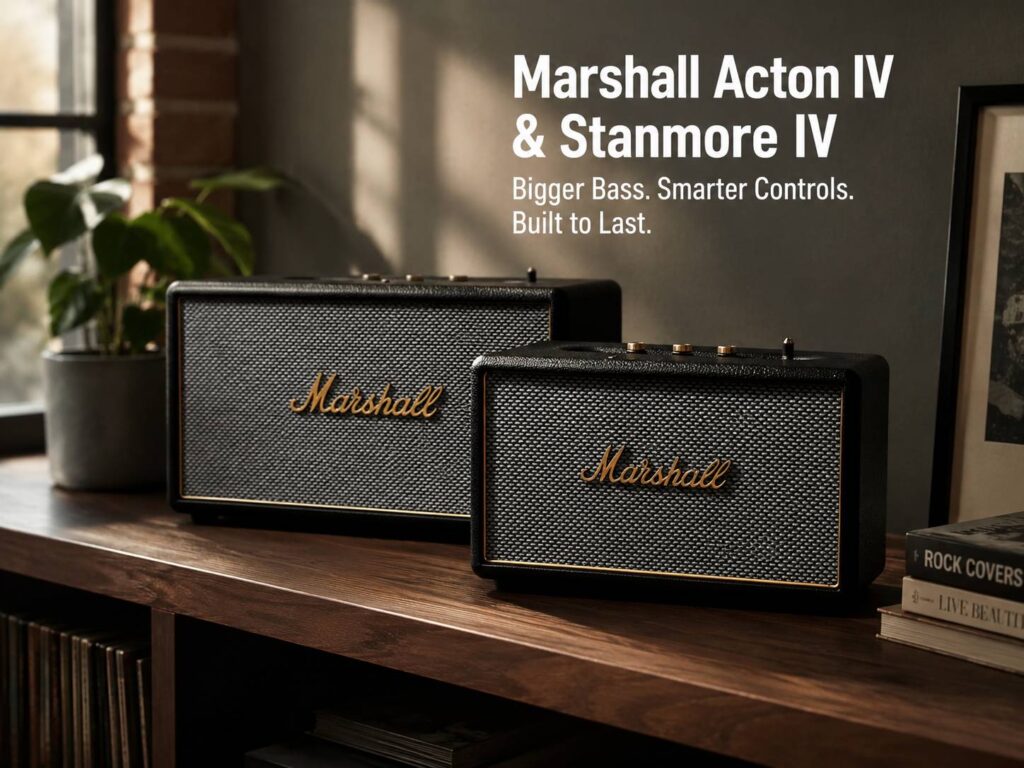
Marshall Acton IV and Stanmore IV are the latest updates to the brand’s home speaker lineup, and they feel like upgrades made for real everyday use. Marshall has kept the familiar amp-style design, which is probably the right call. The look is still a big part of the appeal. This time, the bigger changes sit inside the speaker and around the controls.
Both models bring stronger bass, upgraded sound spread, new physical controls, Auracast support, and easier repair options. That mix makes them more than a simple yearly refresh. These speakers are still made for people who want a stylish Bluetooth speaker at home, but they now feel a bit more practical too.
What’s new with Marshall Acton IV and Stanmore IV?
The main change is the sound system. Marshall has upgraded the tweeters and added waveguides to help audio spread across a wider area. That should make the speakers easier to enjoy from different spots in the room, not just from one perfect listening position.
The bass system has been improved too. Both speakers use a redesigned bass port that helps air move more smoothly through the cabinet. In normal terms, that means the low end should feel fuller, cleaner, and less boomy.
Marshall has made a smart design tweak with the power cable as well. The cable now connects from underneath instead of sticking out from the back. It sounds like a tiny change, but it helps the speaker sit closer to a wall. On a shelf, desk, or TV unit, that makes a real difference.
The top control panel still keeps the classic Marshall feel. You get proper physical controls for volume, bass, treble, source, playback, and power. The new M-button adds a more modern touch without turning the speaker into an app-only device.
Bigger bass, but still the same Marshall personality
Bass is probably the upgrade most people will notice first. A home speaker needs more body than a small portable model, especially in a living room or open kitchen. The new Acton IV and Stanmore IV should sound richer at lower volumes and stronger when turned up.
Acton IV uses one 4-inch woofer and two 0.75-inch tweeters with waveguides. Stanmore IV steps things up with a larger 5-inch woofer and the same tweeter setup. That gives Stanmore IV more room to push deeper bass and higher volume.
On paper, Acton IV covers 37 Hz to 38,000 Hz and reaches 95 dB SPL at 1 meter. Stanmore IV goes from 36 Hz to 38,000 Hz and reaches 97 dB SPL at 1 meter. The numbers are close, but the bigger cabinet on the Stanmore IV should give it a fuller sound in larger rooms.
My take is simple: Acton IV is the better pick for bedrooms, offices, small lounges, and apartments. Stanmore IV makes more sense as the main speaker in a living room.
The M-button makes daily use easier
The new M-button is one of the more useful changes. It can open a favorite EQ setting or start Spotify Tap, depending on how you set it up. That gives you quick access to the sound or playback mode you use most.
This is the kind of feature that feels small at first, then becomes handy after a few days. Many wireless speakers hide every useful control inside an app. Marshall still gives you real buttons and knobs, which feels better in a shared space.
Anyone in the room can adjust the volume, change the tone, pause music, or switch sources without needing a phone. That is exactly how a home speaker should work.
Auracast makes multi-speaker audio more flexible
Acton IV and Stanmore IV both support Bluetooth 5.3 with Auracast. This gives them a cleaner path into multi-speaker playback. Compatible speakers can play together, and Marshall’s Heddon music streaming hub can act as the broadcaster.
For people who want music in more than one room, this is a useful step. You can start with one speaker, then add more over time.
Marshall says Acton III and Stanmore III can join this type of setup through Heddon too. That is good news for existing Marshall owners who do not want to replace everything at once.
Wired inputs are still here
Marshall did not make Acton IV and Stanmore IV Bluetooth-only speakers. Both models include AUX and RCA inputs. That gives them more value for turntables, CD players, desktop audio gear, and other wired setups.
The RCA input is especially nice to see. Many buyers who like the Marshall look are probably using, or planning to use, vinyl gear. You still need a turntable with a built-in preamp or a separate phono preamp, but the connection is ready.
It is good to see Marshall keeping useful ports. Some brands remove them just to make products look cleaner. Here, the speakers still look polished, but they remain flexible.
Repairability is the upgrade that matters later
One of the best changes is repairability. Marshall says Acton IV and Stanmore IV support replaceable parts, including knobs, feet, and the front grille. The brand also points to authorized repair service for more serious issues.
That matters more than a flashy spec sheet. A damaged knob or worn grille should not make a speaker feel ready for the bin. Home speakers often stay in one room for years, so replaceable parts make the purchase feel safer.
This fits nicely with Marshall’s recent focus on longer-lasting audio products. The brand has also moved in this direction with portable speakers, including the Marshall Stockwell III with 40 hours of playtime and a replaceable battery. For buyers tired of disposable tech, that is a welcome shift.
The cabinets use FSC 100% certified MDF wood components. Acton IV contains 13% recycled material by weight, and Stanmore IV contains 16% recycled material by weight. Those numbers are not huge, but the repair angle is the bigger win here.
Acton IV vs Stanmore IV: which one fits your home?
Choose Marshall Acton IV if you want:
- A compact speaker for a desk, bedroom, kitchen, or small living room
- Strong sound without taking up too much space
- The Marshall design at a more practical size
- Bluetooth, Auracast, AUX, RCA, and app control in one smaller speaker
Choose Marshall Stanmore IV if you want:
- Bigger sound for a living room
- Deeper bass and more volume
- A stronger speaker for parties or open spaces
- A more serious home audio centerpiece
The easiest way to choose is by room size. Acton IV is the everyday speaker. Stanmore IV is the room-filler.
Small design changes make setup cleaner
The new bottom cable placement is easy to overlook, but it helps. Many speakers have power cables sticking straight out of the back, which forces them away from the wall. Marshall’s new setup lets the speaker sit closer to the surface behind it.
That makes Acton IV and Stanmore IV easier to place on shelves, counters, desks, and media units. It also helps the setup look cleaner.
The Marshall app adds EQ presets and placement compensation. That means you can adjust the sound based on where the speaker sits. A speaker tucked near a wall will not sound the same as one placed in an open space, so these controls matter.
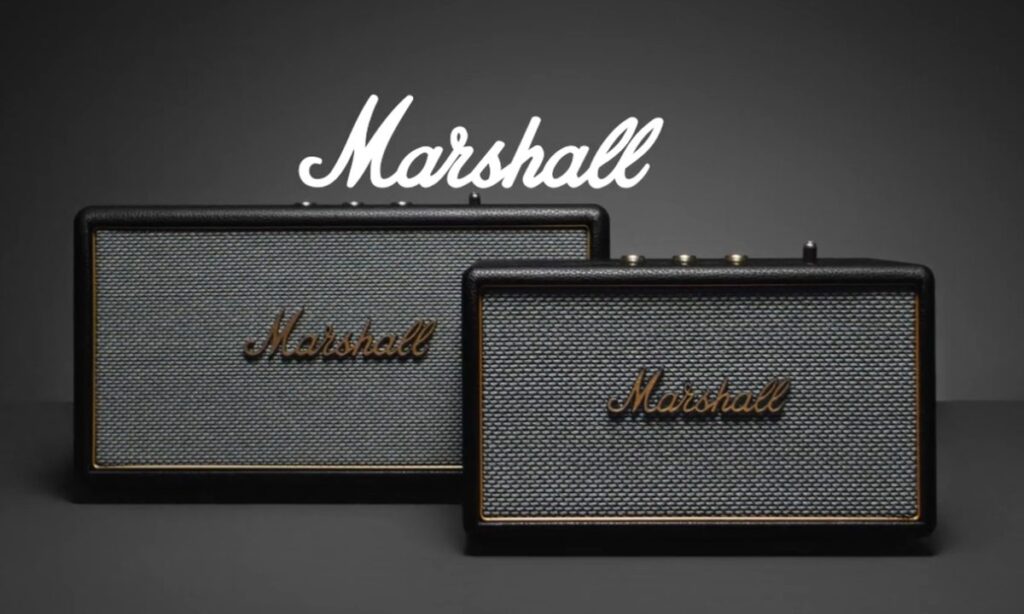
Both models come in black and cream. The classic grille, brass-style controls, and amp-inspired body are still here. Marshall clearly knows that people buy these speakers for the look as much as the sound.
Are Marshall Acton IV and Stanmore IV worth it?
Marshall Acton IV and Stanmore IV look like strong upgrades for anyone who wants a home Bluetooth speaker with style and real controls. They are not portable speakers, and they are not trying to be. These are plug-in speakers made to stay in one place and sound good every day.
The best part is that Marshall improved the things people actually use. Better bass, wider sound, easier wall placement, wired inputs, quick controls, Auracast, and replaceable parts all make sense.
Acton IV is likely the better buy for most people. It is smaller, easier to place, and still powerful enough for normal rooms. Stanmore IV is the one to pick if you want stronger bass and more volume from a single speaker.
Final thoughts
Marshall Acton IV and Stanmore IV do not completely change the formula, and that is a good thing. They keep the classic Marshall look, the physical controls, and the home speaker feel. Then they add better bass, smarter wireless features, cleaner setup, and more repairable parts.
That makes them feel more useful than the previous generation. Acton IV looks ideal for smaller spaces. Stanmore IV feels better suited to larger rooms and louder listening.
For buyers who want a speaker that looks good, sounds full, and does not feel disposable, these new Marshall models are easy to like.