
Sourdough baking looks simple from the outside. Flour, water, salt, and patience can turn into a beautiful loaf with a crisp crust and soft center. Then the starter gets involved, and the whole routine starts to feel a little more demanding.
A sourdough starter needs feeding, watching, and timing. Miss a feed, use it too early, or leave it sitting too long, and your baking plan can fall apart before the dough even reaches the bowl. That is the part Sourdough Sidekick tries to fix.
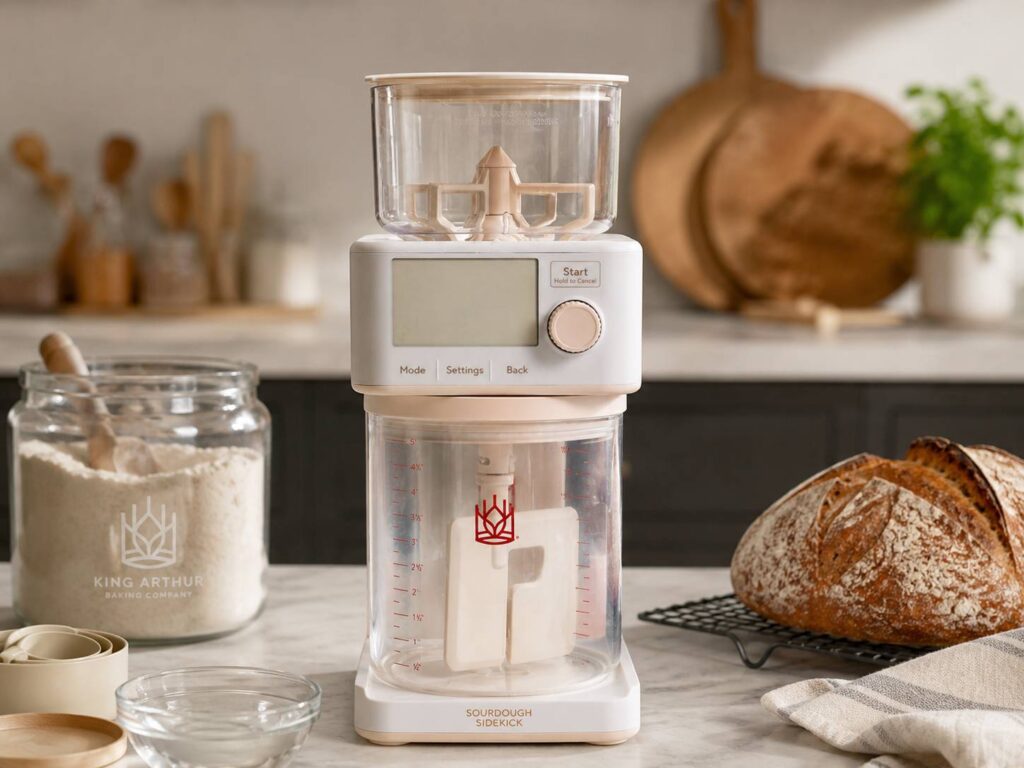
This small countertop appliance focuses on one job: feeding your sourdough starter so it stays active and ready. It does not mix dough, shape loaves, or bake bread. Instead, it handles the repetitive starter-care work that many home bakers find annoying.
Why Sourdough Starter Care Feels So Tricky
Starter care sounds easy until real life gets in the way. You plan to feed it in the morning, then forget. The kitchen gets warmer than expected, so the starter peaks too soon. A cooler room slows everything down, and suddenly your dough schedule no longer works.
Those little changes matter. Sourdough starter is alive, and it reacts to temperature, flour type, water amount, and feeding ratio. A strong starter can make dough rise well and give bread better flavor. A weak or mistimed starter can lead to flat loaves, dense crumbs, or a long, frustrating bake day.
Sourdough Sidekick gives bakers a more steady routine. It dispenses flour and water into the starter crock, then mixes the feed for you. That means fewer reminders, fewer rushed feedings, and less guesswork around timing.
The idea feels practical. It does not try to remove the craft from sourdough baking. It simply takes over the part that feels repetitive.
How Sourdough Sidekick Works
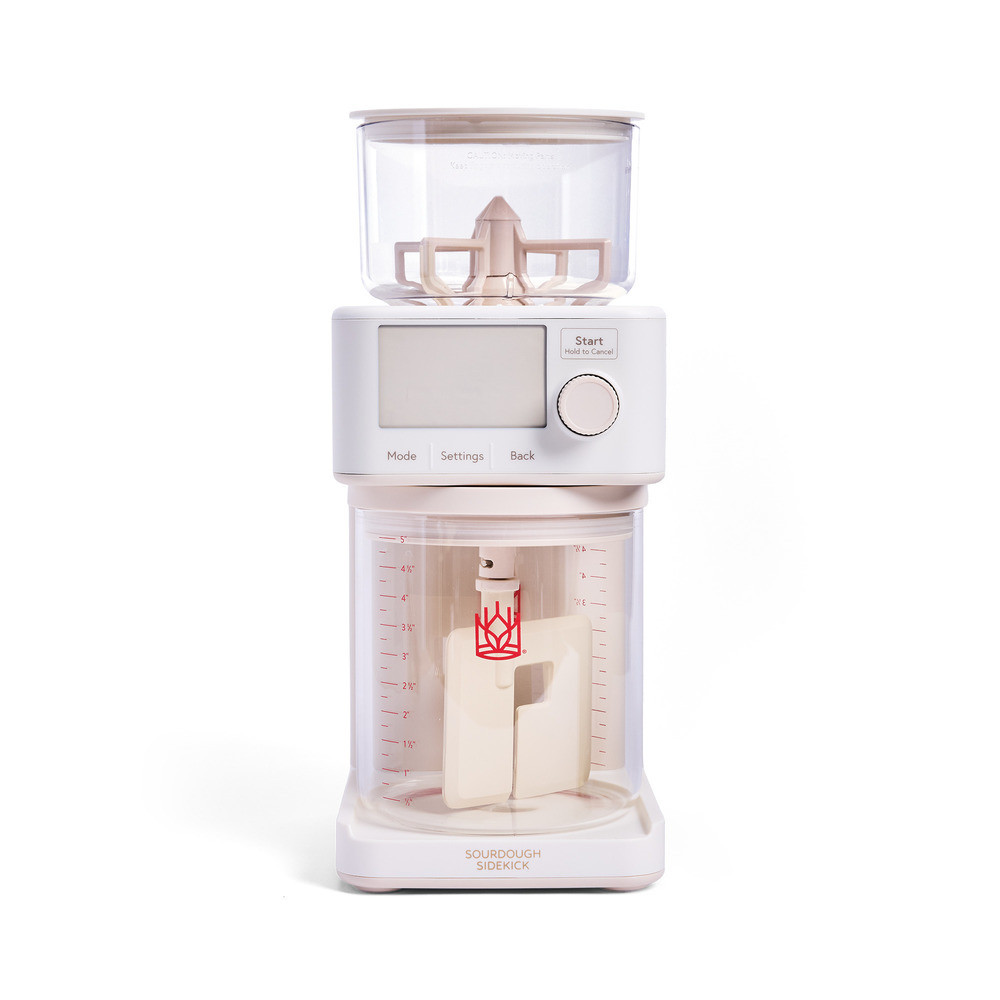
Sourdough Sidekick looks like a compact feeding station for starter. Flour sits in a hopper, water goes into a removable tank, and the starter stays in a glass crock below. The machine adds the right amount of flour and water, then mixes everything with a paddle.
The appliance includes three main modes:
- Auto Mode: You choose how much starter you need and the time you want it ready.
- Ratio Mode: You choose your feeding ratio and feeding schedule.
- Custom Mode: You set more exact feeding amounts and timing.
Auto Mode will likely appeal most to beginners and busy home bakers. You tell the device when you want your starter ready, and it works toward that goal. That can help reduce the stress of planning a loaf around peak starter activity.
Ratio Mode suits bakers who already follow a routine, such as 1:1:1 or 1:2:2 feedings. Custom Mode gives more control to people who like testing hydration, flour blends, or different feeding patterns.
The Best Feature Is Better Timing
Starter timing can make or break a loaf. A starter that has not peaked yet may lack strength. One that has fallen too far can become too acidic and less active. That timing window is one of the biggest pain points in sourdough baking.
Sourdough Sidekick tries to make that window easier to hit. In Auto Mode, it can adjust its later feedings based on room temperature. That matters in real kitchens, where conditions rarely stay the same all day.
A warm room can speed up fermentation fast. A cool room can delay it by hours. Air conditioning, winter drafts, sunlight, and oven heat can all change the pace. A device that reacts to those changes can help bakers get closer to a ready-to-use starter at the planned time.
This does not make sourdough foolproof, but it does remove some of the most common timing mistakes.
Less Starter Discard, Less Waste
Starter discard is one of the less glamorous parts of sourdough baking. Some bakers turn it into pancakes, crackers, waffles, pizza dough, or muffins. Others throw it away and feel bad about wasting flour.
Sourdough Sidekick can help reduce that problem, mainly in Auto Mode. Instead of building up large amounts through repeated feedings, it works toward the amount of starter needed for your bake. That can mean less excess starter and a tidier routine.
Discard will not vanish from every setup. Feed ratios, baking frequency, and starter size still matter. Still, the machine gives bakers more control over how much starter they maintain.
That feels like a useful improvement. Flour prices add up, and many people do not want another container of discard sitting in the fridge.
Who Should Care About This Appliance?
Sourdough Sidekick makes the most sense for people who already bake bread often or want to bake more often. A person who makes one loaf every few months can still keep starter in the fridge and refresh it before baking.
This appliance fits better for:
- Weekly sourdough bakers
- Beginners who feel unsure about starter feeding
- Busy people who forget feedings
- Bakers who dislike discard waste
- People who want starter ready at a planned time
- Home bakers who enjoy sourdough but hate the daily maintenance
It may also help people with limited energy or hand mobility. Feeding starter is not hard, but it is still one more kitchen task. A tool that handles that step can make bread baking feel less tiring.
My honest opinion: this is not a gadget for everyone. It is a focused tool for people who love sourdough enough to keep baking, but not enough to enjoy feeding starter all the time.
The Counter Space Question
Every kitchen appliance needs to justify its spot. Sourdough Sidekick has a clear purpose, but it still takes up counter space. That makes it different from multi-use appliances that handle several jobs.
Some buyers already know this trade-off well. A compact oven, food processor, blender, or air fryer can earn its space through frequent use. The same logic applies here. For example, many shoppers compare appliances before buying, and this guide to air fryer vs toaster oven shows how much value depends on daily habits, available space, and the type of cooking you actually do.
Sourdough Sidekick follows the same rule. Buy it only if starter care is a real friction point in your routine. If your starter already fits neatly into your schedule, the machine may feel unnecessary. If you keep forgetting feeds and wasting flour, it starts to look much more useful.
Why It Is Not a Bread Machine
A bread machine tries to handle the full loaf process. You add ingredients, choose a program, and let the machine mix, rise, and bake. Sourdough Sidekick takes a narrower path.
It only helps with starter care. After that, the baking remains yours. You still mix the dough, manage bulk fermentation, shape the loaf, score it, and bake it.
That choice makes sense for sourdough fans. Many bakers enjoy the hands-on parts. They like reading dough texture, adjusting fermentation, and getting better with each loaf. The boring part is not always the dough. Often, it is the feeding schedule before baking even begins.
Sourdough Sidekick supports that routine without taking over the bread itself.
A Clever Tool for Serious Home Bakers
Sourdough Sidekick feels like a smart answer to a very specific problem. It will not turn a beginner into a master baker overnight. It will not fix poor dough handling, weak flour, bad shaping, or underproofing. Bread still needs skill and attention.
Yet starter care is one of the easiest places to lose momentum. A neglected starter can delay baking by a day or more. A mistimed starter can make a loaf harder to manage. A messy discard routine can make the whole hobby feel wasteful.
This device helps with those problems. It gives bakers a more planned way to feed starter and reach peak activity. It can cut down on wasted flour, reduce mental load, and make sourdough easier to fit around normal life.
For casual bakers, it may be too specialized. For regular sourdough makers, it has a clear appeal. The best part is that it respects the craft. It does not promise push-button artisan bread. It simply handles the starter, so the baker can focus on the loaf.