A keyboard does more than enter words on a screen. It shapes how your desk feels every day. It affects comfort, speed, sound, and even how tired your hands feel after a long session. So, the choice between a mechanical keyboard and a membrane keyboard matters more than it seems.
You may want the best keyboard for gaming, a quiet keyboard for office work, school, or late-night use, or just a reliable board that feels good and lasts. So, before you spend money, it helps to know what changes from one type to the other.
This guide breaks the topic down in plain language. You will see how each keyboard works, where each one shines, and which type gives better value for your setup.
What is the main difference?
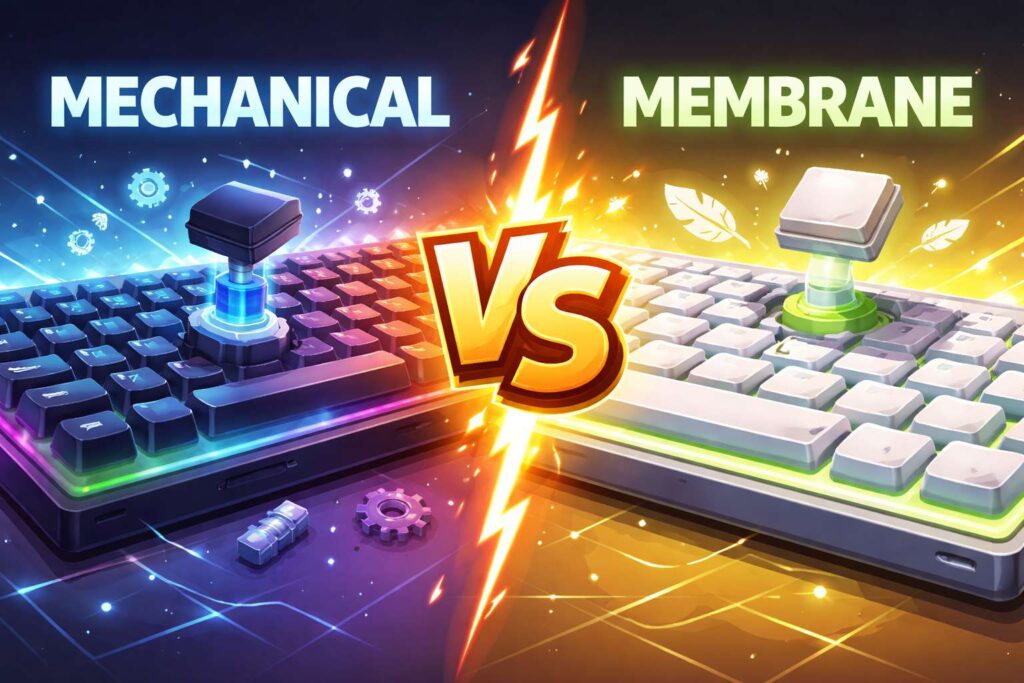
A mechanical keyboard uses a separate switch under each key. You press a key, the switch activates, and the input registers. So, each key has its own mechanism, and that gives the board a more defined feel.
A membrane keyboard works in a softer way. It uses rubber domes and membrane layers under the keys. You press down, the layers meet, and the keyboard sends the input. So, the construction stays simpler and cheaper.
That one design change affects almost everything. It shapes the typing feel. It changes the sound. It influences lifespan, repair options, and price. So, once you understand the build, the rest of the comparison becomes easier.
How a mechanical keyboard feels to type on
Most mechanical keyboards feel more precise. A key press has a clearer start and finish. That can make typing feel faster and more satisfying.
Mechanical boards come with different switch types too. Linear switches feel smooth from top to bottom. Tactile switches add a bump during the key press. Clicky switches add a stronger sound and a sharper feel. So, mechanical keyboards give you more choice over how the board behaves under your fingers.
For writers, coders, gamers, and office workers, that extra control matters. A keyboard is one of the tools you touch most often. So, the feel of the keys can make a normal workday feel much better or much worse.
If you move to a mechanical keyboard after years on cheap office boards, you notice the difference right away. The keys feel cleaner. The response feels steadier. The whole board feels more deliberate.
Still, not every mechanical keyboard feels the same. A low-cost model with poor switches may disappoint you. A well-built model with the right switch type can feel excellent for years.
How a membrane keyboard feels to use
Membrane keyboards feel softer and less sharp. That can feel pleasant from the start. The press feels light, familiar, and easy to understand. So, for basic home use, school tasks, and general office work, a membrane board often does the job without fuss.
People who use laptops a lot may find membrane keyboards more familiar at first. The feel is often closer to what they already know. So, the learning curve stays small.
That said, membrane boards often feel less defined during long typing sessions. The response can feel mushy next to a mechanical board. Then, over time, some keys may start to feel uneven.
Yet that does not make membrane keyboards bad. It just means they fit different needs. For web browsing, email, documents, and light daily use, many membrane boards work perfectly well.
Which keyboard is quieter?
Noise plays a big role in keyboard shopping. A loud keyboard can annoy coworkers, wake family members, or get picked up on calls. So, sound deserves real attention.
Mechanical keyboards often make more noise. Clicky switches are the loudest example, yet even tactile and linear boards can make a noticeable sound. The case, keycaps, desk surface, and typing style all affect the final noise level.
Still, not every mechanical board is loud. Silent switches, sound dampening, and better case design can cut noise a lot. So, a quiet mechanical keyboard is possible if you choose carefully.
Membrane keyboards are usually quieter by default. The soft dome design helps absorb some of the noise. So, for dorm rooms, shared offices, bedrooms, and video calls, membrane often feels like the safer choice.
At the same time, keyboard sound can be part of the appeal, with the deeper tone and more solid feedback of a mechanical board. So, your room and your routine should guide this part of the decision.
Mechanical vs membrane keyboard for gaming
Gaming is one of the clearest reasons people choose mechanical keyboards. The keypress feels more direct, and repeated inputs tend to feel more consistent. So, for fast-paced games, a good mechanical keyboard usually gives a better experience.
That matters in shooters, racing games, rhythm games, action games, and competitive online titles. Timing counts in those games. A clearer keypress can help the keyboard feel more predictable.
Many gaming keyboards use mechanical switches for that reason. They often include features like anti-ghosting, N-key rollover, macro support, and RGB lighting. So, if you search for the best gaming keyboard, you will see a lot of mechanical options.
Membrane keyboards still work for gaming. Casual players can enjoy them without trouble. Story games, turn-based games, city builders, and life sims do not demand much from a keyboard. So, if you just play now and then, a membrane board can be enough.
The gap gets easier to feel once gaming becomes a daily hobby. Then the cleaner response of a mechanical board starts to stand out more.
Which one is better for work and typing?
For work, comfort matters just as much as performance. You may spend hours answering emails, writing documents, entering data, or switching between apps. So, the keyboard you choose can shape how your whole day feels.
Mechanical keyboards often win for heavy typing. The keys feel more exact, and that can help you keep a better rhythm. So, for writing, coding, and editing, they are worth the short adjustment period.
A good home office setup depends on more than the keyboard, of course. Desk comfort matters too. So, if you are building a workspace from scratch, it helps to pair your keyboard research with this guide to the best affordable office chair guide for 2026.
Membrane keyboards still make sense for office use. They stay quieter, they cost less, and they work well in shared spaces. So, front desk staff, students, and home users with lighter workloads may find membrane the smarter buy.
Low-profile mechanical keyboards deserve attention here as well. They keep the cleaner switch feel, yet they sit lower on the desk. So, they can feel more natural for users who dislike tall keyboards.
Durability and lifespan
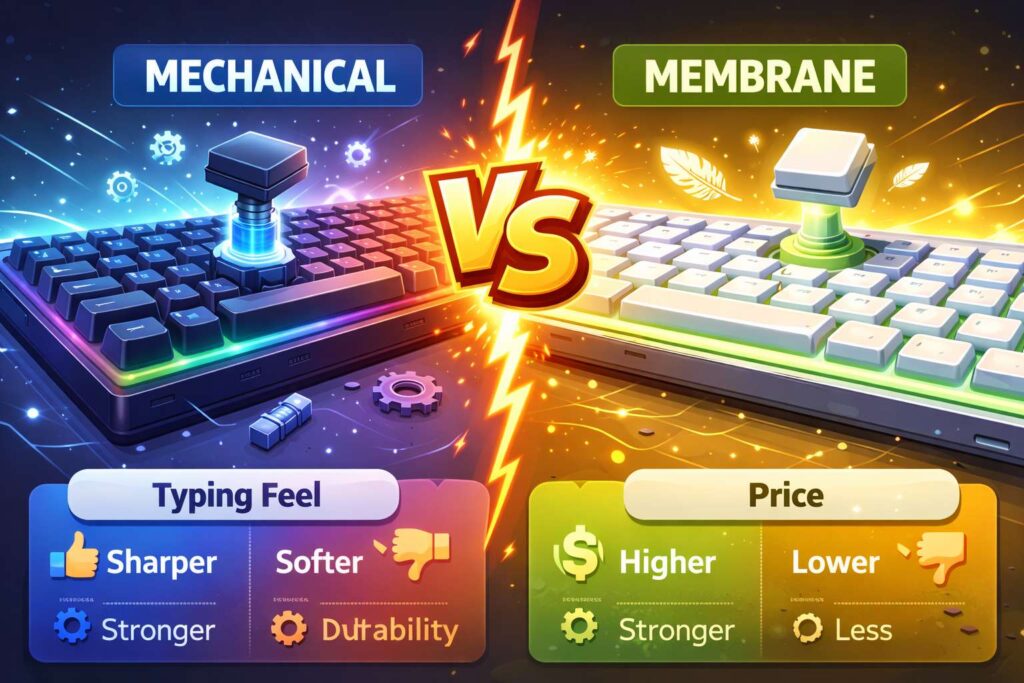
Mechanical keyboards usually last longer. That is one of their biggest strengths. Each key has its own switch, and many models are built for years of daily use. So, if you type a lot or game often, a mechanical board can give stronger long-term value.
Membrane keyboards tend to wear down faster. The rubber dome structure softens with use. Then the typing feel may become less consistent and less pleasant.
This changes the price story. A membrane keyboard often costs less on day one. A mechanical keyboard can cost less over time if you use it heavily for years. So, the cheaper option at checkout is not always the cheaper option in real life.
For lighter use, the durability gap matters less. If the keyboard only handles browsing, online shopping, and a few documents each week, a membrane board may last long enough to feel like a great value.
Customization and repair options
Mechanical keyboards give buyers more room to personalize their setup. Many let you swap keycaps, choose different layouts, and pick from several switch styles. So, buyers who care about feel and design often lean toward mechanical boards.
Some models are hot-swappable. That means you can replace switches without soldering. So, you can change the feel later or fix a bad switch without replacing the whole keyboard.
Membrane keyboards offer fewer upgrade options. Most are built as simple closed units. So, when one starts to fail, replacing it is usually easier than repairing it.
That may not matter to casual users. If you never plan to change keycaps or switches, a keyboard that works is enough. Yet enthusiasts and heavy users often get far more value from the flexibility of a mechanical board.
Price and daily value
Membrane keyboards win the price battle up front. You can buy a decent one for far less than a good mechanical model. So, they make sense for student desks, shared family computers, office bulk orders, and backup setups.
Mechanical keyboards cost more. In return, you often get better build quality, stronger durability, better switch feel, and more repair options. So, the higher price can make sense for anyone who uses a keyboard for hours each day.
Daily value matters here. A keyboard is not a decoration. It is a tool you touch constantly. So, a better typing experience can justify a higher price if the board becomes part of your routine for years.
Home setup choices often follow the same logic. Buyers compare value, convenience, and long-term use across many categories. So, if you are refreshing your workspace or cleaning setup too, this comparison of robot vacuum vs cordless vacuum is worth reading next.
Common mistakes buyers make
Looks are easy to focus on first. RGB lights, bold product names, and flashy packaging can grab attention fast. Yet feel matters more than branding once the keyboard is on your desk every day.
Not all mechanical keyboards are loud. Silent mechanical options exist, and many are far quieter than the old stereotype suggests.
Others think every membrane keyboard feels cheap. That is not true either. A good membrane board can feel comfortable, quiet, and perfectly fine for normal daily work.
Size is another area buyers ignore. Full-size, TKL, 75 percent, and compact layouts all change how your desk works. So, keyboard size matters almost as much as switch type.
Then there is the budget trap. The cheapest keyboard may save money today. Yet a bad keyboard can feel frustrating every single day after that. So, daily comfort deserves real weight in the final decision.
Which keyboard should you buy?
Pick a mechanical keyboard if you care about typing feel, gaming performance, longer lifespan, and customization. It suits gamers, writers, coders, and heavy daily users.
Choose a membrane keyboard if you need a lower price, a quieter setup, and a simple board for everyday tasks. It suits students, shared workspaces, home users, and light office use.
So, the answer is not hard once you match the keyboard to the job.
For gaming, mechanical is usually the better pick.
For long typing sessions, mechanical often feels better too.
For quiet rooms and tighter budgets, membrane stays very appealing.
Final verdict
Mechanical keyboards are the better choice for most heavy users. They feel more precise, last longer, and give you more control over the typing experience. So, if you spend a big part of your day at a keyboard, a mechanical board often gives the better return.
Membrane keyboards still have a clear place. They are quieter, cheaper, and easy to recommend for light use, schoolwork, office tasks, and shared spaces. So, they remain a smart option for many buyers.
The clean answer is simple. Mechanical wins for feel, performance, and long-term value. Membrane wins for price, quiet use, and simplicity.