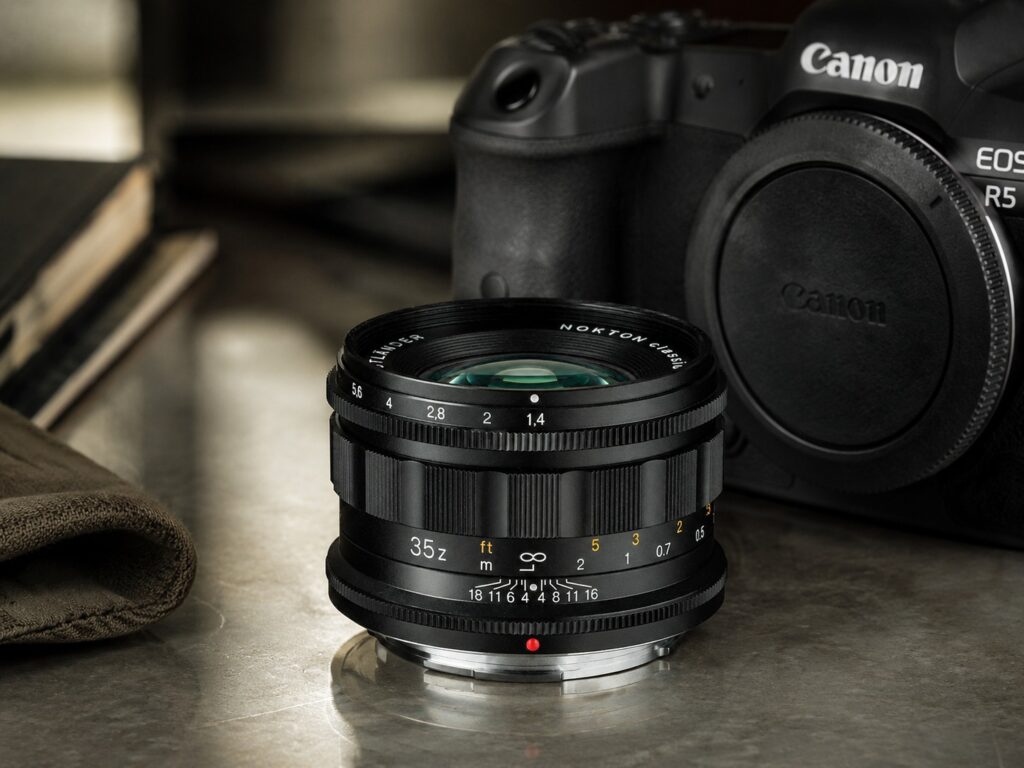
Voigtlander has brought its NOKTON Classic 35mm F1.4 lens to Canon RF mount, and this release gives Canon EOS R users something different from the usual modern prime lens. It is compact, bright, manual focus, and full of character. So, for photographers who want a more personal shooting feel, this lens should stand out right away.
Many new mirrorless lenses focus on perfect sharpness, fast autofocus, and clean correction. And yes, those things matter. But not every photographer wants every image to look polished in the same way. Some people want softer highlights, smoother mood, and a lens that adds a little personality before the editing even starts.
That is where the Voigtlander NOKTON Classic 35mm F1.4 RF feels interesting. It brings a classic 35mm field of view, a fast f/1.4 aperture, and native RF support to Canon mirrorless cameras. At the same time, it keeps the slower, more tactile feel that many manual-focus fans still love.
Why This Canon RF Release Stands Out
Canon RF users already have strong lens options. Still, many RF lenses are large, expensive, or built mainly for autofocus speed. The Voigtlander NOKTON Classic 35mm F1.4 RF takes a different path. It is small, simple, and focused on feel.
The 35mm focal length remains one of the most useful choices for everyday photography. It works for street scenes, travel, portraits, family photos, product shots, and low-light city images. And since this lens opens to f/1.4, it can create strong subject separation in a small body.
For full-frame Canon EOS R cameras, 35mm gives a natural view that feels close to real life. On Canon APS-C RF bodies, the field of view becomes tighter, so it works more like a normal prime. That makes it useful for portraits, detail shots, and casual video work.
So, this lens does not only target collectors or manual-focus purists. It can also fit creators who want a small lens for daily shooting.
A Classic Lens Style With Modern RF Support
The NOKTON Classic 35mm F1.4 RF is not trying to look like every modern lens. Instead, it aims for a classic rendering style. Wide open at f/1.4, it should give images a softer and more atmospheric feel. Then, as you stop down, the image becomes cleaner and sharper.
That makes the lens flexible in a creative way. For example, a portrait at f/1.4 can look gentle and less clinical. A street scene at f/5.6 can look more controlled and detailed. So, the same lens can give you two different moods.
This type of rendering will not please everyone. Some photographers want corner-to-corner sharpness at every aperture. Still, others prefer a lens that reacts more like older glass. In my opinion, that is the real appeal here. The NOKTON Classic 35mm F1.4 RF does not try to hide its character.
And that character can save time in editing. Instead of forcing mood through presets, the lens can create part of that look in-camera.
Manual Focus Gives the Lens Its Personality
The Voigtlander NOKTON Classic 35mm F1.4 RF is manual focus only. That will turn away some buyers, and that is fair. Autofocus matters for weddings, sports, children, pets, and fast work. But this lens was not built for that type of shooting.
Instead, it suits photographers who enjoy slowing down. Manual focus makes you think more about distance, framing, timing, and light. And with a good focus ring, that process can feel very satisfying.
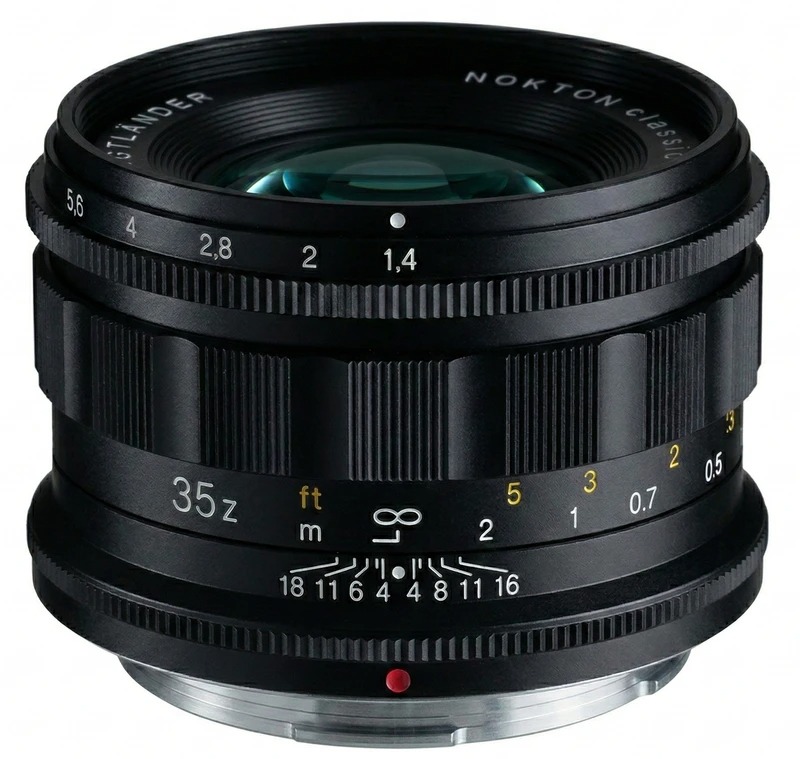
Voigtlander uses an all-metal helicoid focus mechanism, which should give the lens a smooth and precise feel. That matters more than it sounds. A manual lens can become frustrating if the focus ring feels loose or uneven. A well-made focus ring makes small adjustments easier, especially at f/1.4.
At the same time, the lens is not fully old-school. It includes electronic contacts for Canon RF cameras. So, compatible Canon bodies can record EXIF data and support focus assistance features. That gives users a better experience than a basic adapted manual lens.
Key Specs Canon EOS R Users Should Know
The Voigtlander NOKTON Classic 35mm F1.4 RF has a compact design, but the spec sheet still looks useful for daily shooting:
- Focal length: 35mm
- Maximum aperture: f/1.4
- Minimum aperture: f/16
- Lens construction: 8 elements in 6 groups
- Angle of view: 62.9 degrees
- Aperture blades: 10
- Minimum focus distance: 0.27 m
- Maximum magnification: 1:5.5
- Filter size: 58 mm
- Weight: 260 g
- Size: 71 mm diameter by 37.6 mm length
- Lens hood: included
- Focus type: manual focus
- Electronic contacts: supported
- EXIF recording: supported
- 3-axis image stabilization communication: supported on compatible Canon bodies
- Planned release: July 2026
- Japan suggested retail price: 90,000 yen before tax
The 260 g weight is one of the best parts of this lens. Many fast full-frame primes feel heavy on smaller mirrorless bodies. This one should balance well on cameras like the Canon EOS R8, EOS RP, EOS R6 series, and EOS R5 series.
And since it takes 58 mm filters, users can find ND filters, protection filters, and diffusion filters without much trouble.
What Kind of Photography Fits This Lens Best?
This lens makes the most sense for photographers who care about mood, size, and control. It should work well for:
- Street photography
- Travel photography
- Environmental portraits
- Low-light indoor scenes
- Night city shots
- Documentary-style work
- Everyday Canon EOS R shooting
- Creative video clips
- Detail shots with shallow depth of field
For example, the 35mm view works well in a small cafe, on a city street, or inside a home. Then, the f/1.4 aperture helps separate the subject from the background. And with 10 aperture blades, out-of-focus highlights should stay smoother as you stop down.
This lens also fits a creator setup where shooting, editing, and publishing all happen from the same desk. A compact prime like this pairs well with a work area built for comfort and control, much like choosing between an electric standing desk vs manual standing desk for a daily editing space.
Still, this is not a lens for everyone. If you need fast autofocus, this is not the best pick. If you shoot action, it will slow you down. But for slower creative work, that slower rhythm can become a strength.
How It Compares With Modern Autofocus 35mm Lenses
A modern autofocus 35mm lens will suit many Canon users better. Autofocus helps with moving subjects, paid sessions, and quick family photos. It also lowers the risk of missed focus.
Still, the Voigtlander offers a different kind of value. It is small, tactile, bright, and built around image character. So, it does not need to beat every autofocus lens on speed. It only needs to give Canon RF users a lens with a more personal feel.
For video users, the manual focus ring can be a real advantage. Smooth focus pulls often feel better with a physical manual ring. And for photographers, the manual aperture ring gives the lens a more traditional shooting style.
At the same time, the electronic RF support keeps it from feeling too basic. EXIF data, focus assistance, and stabilization communication all help the lens feel more native on Canon bodies.
Who Should Pay Attention to This Lens?
The NOKTON Classic 35mm F1.4 RF is best for users who already know what they want from a manual lens. It suits people who enjoy the process of taking a photo, not only the final file.
This lens should appeal to:
- Canon EOS R shooters who want a compact 35mm f/1.4 lens
- Photographers who like vintage-style rendering
- Street photographers who prefer small gear
- Portrait shooters who want softer wide-open images
- Video creators who use manual focus
- Travel photographers who want a light prime
- Creators who want a lens with character
It is not the right choice for every Canon user, though. Beginners who rely on autofocus may find it frustrating. Event photographers may not want the risk. Sports shooters should look elsewhere.
Still, that clear identity is a good thing. The lens does not pretend to be a fast professional autofocus prime. It offers a different experience, and that makes it more interesting.
Why This Lens Could Become a Favorite for Canon RF Fans
The Canon RF system has grown a lot, but users still want more compact third-party lenses with personality. The Voigtlander NOKTON Classic 35mm F1.4 RF helps fill that space.
It gives Canon users a bright f/1.4 aperture, a small metal body, close focusing to 0.27 m, and native-style communication with compatible cameras. And more than that, it gives photographers a reason to slow down.
In my opinion, this is the kind of lens that can build a loyal following. It will not win everyone over on spec sheets alone. But once the right user picks it up, the handling and rendering may matter more than autofocus speed.
For everyday creative work, that can be enough. A lens does not always need to be perfect. Sometimes, it needs to make you want to take more photos.
Final Thoughts
The Voigtlander NOKTON Classic 35mm F1.4 RF brings a welcome change to the Canon RF system. It is compact, bright, manual, and built for photographers who value feel and character.
It will not replace a modern autofocus 35mm lens for everyone. Still, it gives Canon EOS R users another kind of choice. And that choice matters.
For street photography, travel, portraits, low-light scenes, and creative video, this lens looks like one of the more interesting Canon RF prime releases of 2026. It has a clear purpose, a classic look, and enough modern support to feel at home on current Canon mirrorless cameras.