
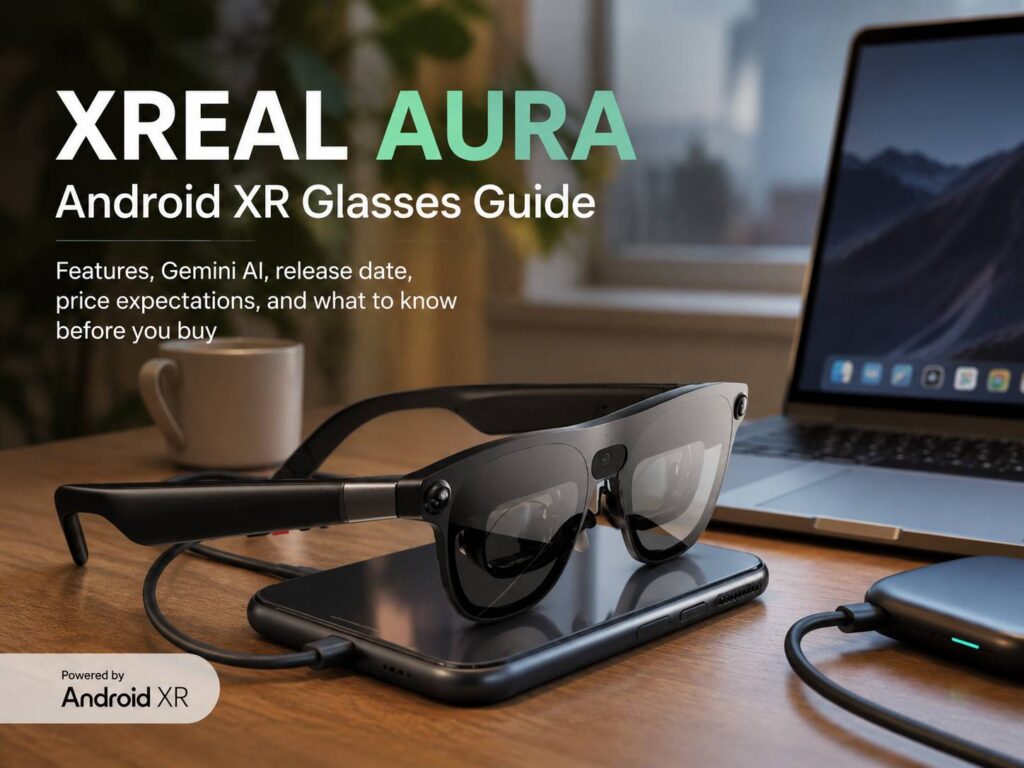
XREAL AURA gives Google’s Android XR plan a product that feels easier to understand. It is not just another developer demo or a distant concept. It is a real glasses-style device with a launch window, clear hardware goals, and a strong link to Gemini.
That matters for buyers. Android XR sounds broad on paper, since it covers headsets, smart glasses, spatial apps, AI help, and mixed reality. Still, most people need to see a device before the idea feels real. XREAL AURA helps fill that gap.
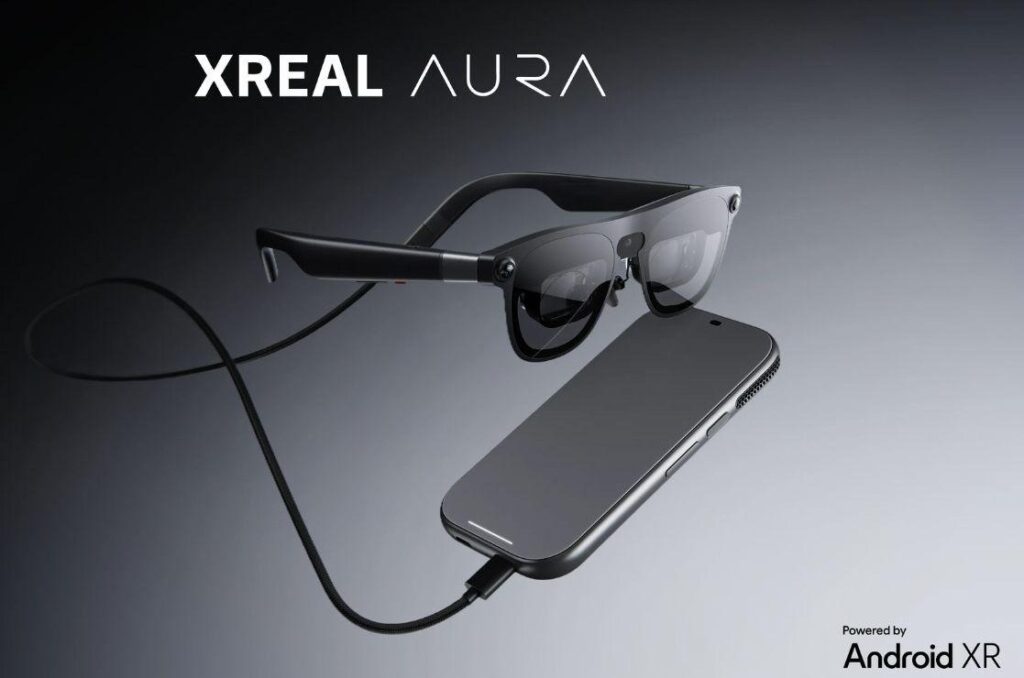
The glasses use Android XR and bring Gemini into a wearable setup. They feature an optical see-through display, so digital content appears over the real world instead of fully blocking it. XREAL lists a 70-degree field of view, a split-compute design, Snapdragon Reality Elite, and the XREAL X1S Spatial Coprocessor.
So the message is clear. Google wants Android XR to move beyond bulky headsets, and XREAL wants to make smart glasses that feel useful for work, travel, media, and AI help.
Why XREAL AURA Matters for Android XR
Android XR needs real hardware in more than one shape. A headset works well for games, movies, training, and deep mixed reality. Glasses fit shorter tasks better. They make more sense for travel screens, quick voice commands, hands-free help, maps, translation, and light productivity.
XREAL AURA sits in that second group. It does not try to replace your phone or laptop. Instead, it acts like a wearable spatial display with AI features layered on top.
That choice feels practical. Many buyers still hesitate with XR headsets. They cost a lot, take up space, and feel too heavy for daily use. Glasses are easier to picture in normal life. You put them on, connect the compute puck, and then use floating screens or Gemini tools in front of you.
This is why AURA matters. It makes Android XR feel less like a tech showcase and more like something people can buy, carry, and use.
What XREAL AURA Brings to the Table
XREAL AURA uses a glasses-style design with a separate compute puck. The puck handles the main processing and power needs, so the glasses can stay lighter on the face.
Key features include:
- Android XR support
- Gemini built into the XR experience
- 70-degree optical see-through display
- XREAL X1S Spatial Coprocessor
- Snapdragon Reality Elite platform
- Dual-chip, split-compute design
- World-facing sensor array
- Hand tracking and 6DoF tracking support
- Electrochromic dimming
- DP-in support for laptops, PCs, and handheld consoles
- Developer support through the Android XR program
The 70-degree field of view stands out. Many AR glasses feel limited by a small display area. A wider view gives apps more room, so floating windows feel less cramped. For work, that can mean a better portable desk. For video, it can mean a larger private screen. For guided tasks, it can make digital instructions easier to follow.
Still, the specs only tell part of the story. The real test will come from comfort, battery life, price, app quality, and how well Gemini works during normal use.
Gemini Turns the Glasses Into More Than a Screen
XREAL AURA is not just a wearable monitor. Gemini gives the glasses a stronger reason to exist.
A floating screen is useful, but many people already own laptops, tablets, and large phones. AI help inside your field of view adds a different value. You can ask for help, look at something, and get an answer without reaching for another device.
That same idea already appears in other Google products. For example, Gemini on Google TV can fix picture settings by voice, which shows how Google wants Gemini to handle practical tasks through natural commands. XREAL AURA takes that idea into a wearable XR space.
The best use cases feel simple:
- Ask Gemini what an object is.
- Get live help during a repair.
- Follow cooking steps without touching a screen.
- Translate signs or text in front of you.
- Open apps with voice commands.
- Take notes from what you see.
- Use floating screens for work or video.
- Get guided help during travel.
This is where Android XR gets interesting. AURA can become useful in short bursts, not just long sessions. That matters, since people wear glasses differently than headsets. Glasses need to help fast, then get out of the way.
The Split-Compute Design Is a Smart Trade
XREAL uses a separate compute puck with AURA. Some buyers will dislike the extra piece, but the trade makes sense.
Weight matters more than almost anything for XR glasses. People can accept a heavy laptop in a backpack. They will not accept heavy glasses pressing on their nose for an hour. A puck gives XREAL more room for power, battery, cooling, and Android XR features without making the glasses too bulky.
This setup feels right for 2026. Fully standalone XR glasses still face hard limits around battery life, heat, chip power, and display brightness. A separate puck does not solve every issue, but it gives the product a better chance to feel wearable.
DP-in support adds another practical benefit. Owners of laptops, gaming handhelds, and compatible PCs can use AURA as a private screen. That is easy to understand. It also gives buyers a clear use case from day one, even before the Android XR app library grows.
What Buyers Should Watch Before Launch
XREAL AURA looks promising, but several details still need close attention.
Price comes first. AURA needs to land in a range that makes sense beside smart glasses, XR headsets, and premium display glasses. A high price can push buyers toward full headsets. A fair price can make AURA one of the more tempting Android XR products of 2026.
Battery life comes next. Gemini, sensors, display brightness, and spatial apps can drain power fast. The compute puck should help, but buyers need real numbers from daily use.
Comfort will matter just as much. The glasses need to feel stable, light, and balanced. Nose pressure, cable pull, lens clarity, heat, and prescription support can make or break the experience.
App support is the final big piece. Android XR has strong developer tools, and that gives the platform a good base. Still, buyers need apps that feel ready at launch. Maps, YouTube, spatial video, workspaces, learning apps, and casual games can help AURA feel useful right away.
XREAL AURA Fits the Wider XR Market
XREAL AURA enters a market full of bold claims, but buyers still want clear reasons to spend money.
Apple Vision Pro showed how premium spatial computing can look, but its price and size limit its reach. Meta Quest headsets offer strong VR value, but they remain headset-first devices. Samsung Galaxy XR brings Android XR into the headset category. XREAL AURA pushes the same platform toward lighter glasses.
That mix helps Google. Android XR can now cover more than one device type. Headsets can handle deep mixed reality sessions. Wired XR glasses can handle lighter daily tasks. AI glasses can focus on quick help and hands-free commands.
For buyers, the point is even simpler. AURA makes Android XR easier to imagine outside a living room or office. You can picture it on a train, in a hotel room, at a desk, or beside a handheld console.
My Honest View on XREAL AURA
XREAL AURA looks like one of the most practical Android XR devices announced so far. It has a clear purpose, and it does not try to hide every compromise.
The compute puck is a trade, but it helps keep the glasses lighter. The 70-degree optical see-through display gives apps more room. Gemini adds a reason to use the product beyond watching video. DP-in support gives buyers a clear screen-first use case from the start.
That mix feels stronger than a pure concept product. It gives AURA a real chance with buyers who want XR, but do not want a large headset.
Still, XREAL has to get the basics right. Price, comfort, battery life, prescription support, and app quality will decide the final story. Strong specs will not matter much if the glasses feel awkward after 30 minutes.
My view is simple. XREAL AURA is not the final form of Android XR glasses, but it looks like an important step toward products real people can use.
What XREAL AURA Means for 2026
XREAL AURA turns Android XR into something more concrete. It gives developers a glasses-style target. It gives Google a stronger hardware story. It gives buyers a device that feels easier to understand than a full mixed reality headset.
The strongest part is the full mix: Android XR, Gemini, a 70-degree optical see-through display, split compute, hand tracking, 6DoF support, and DP-in for PCs and handheld consoles.
If XREAL gets the final price and comfort right, AURA can become one of the first Android XR glasses that normal buyers take seriously in 2026. It brings Google’s XR push closer to real life, and it gives the smart glasses market a product worth watching.