
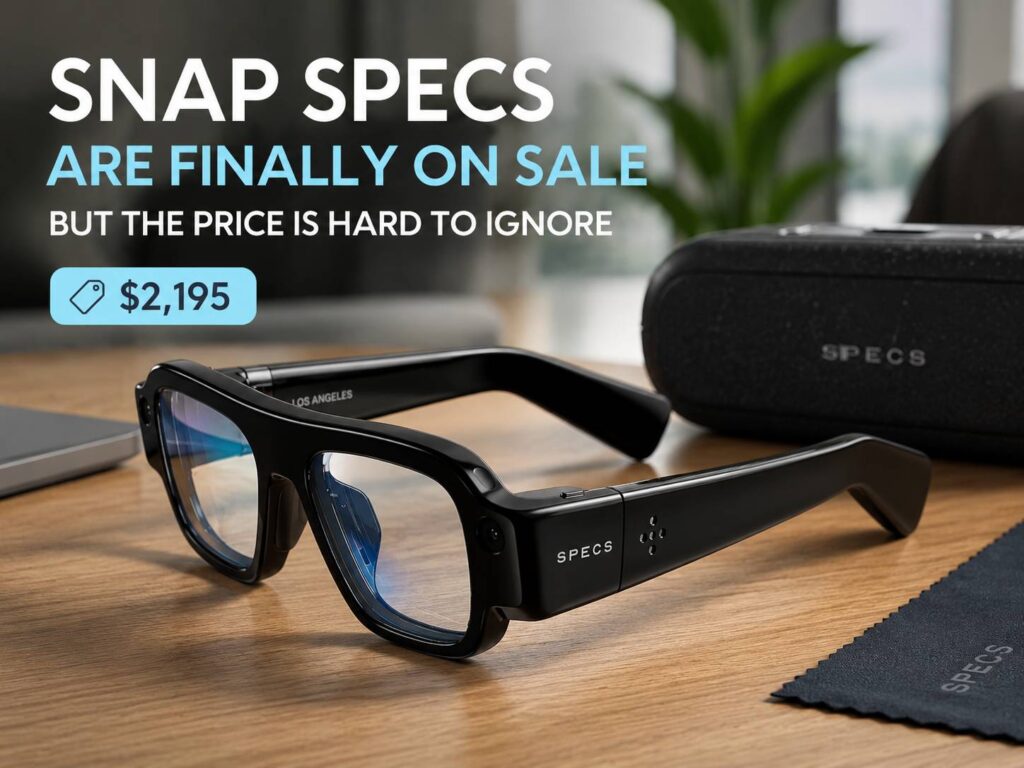
Snap SPECS are finally moving from developer demos to a real consumer product. The new augmented reality glasses are available for reservation, and the price is the first thing most people will notice. Snap lists SPECS at $2,195, with a $200 refundable deposit at reservation.
Shipping starts in fall 2026 in the United States, United Kingdom, and France. That timing gives Snap more room to build interest, show real demos, and prove that these glasses can do more than impress people in short videos.
Still, the price changes the whole conversation. SPECS are not cheap camera glasses. They are not simple Bluetooth frames either. Snap wants buyers to see them as a wearable computer for augmented reality, with apps, calls, media, directions, AI tools, and hands-free controls built into one device.
That sounds exciting. It also raises a fair question: who is this product really for?
Snap Is Selling AR Glasses, Not Basic Smart Glasses
Snap SPECS are built for augmented reality. Digital objects appear inside your real view, so the glasses can show apps, tools, games, directions, and media without blocking the world around you.
That makes SPECS very different from regular smart glasses. Many smart glasses focus on music, calls, camera capture, or AI voice support. SPECS go further. They use see-through displays and spatial features, so they feel closer to a small AR headset shaped like eyewear.
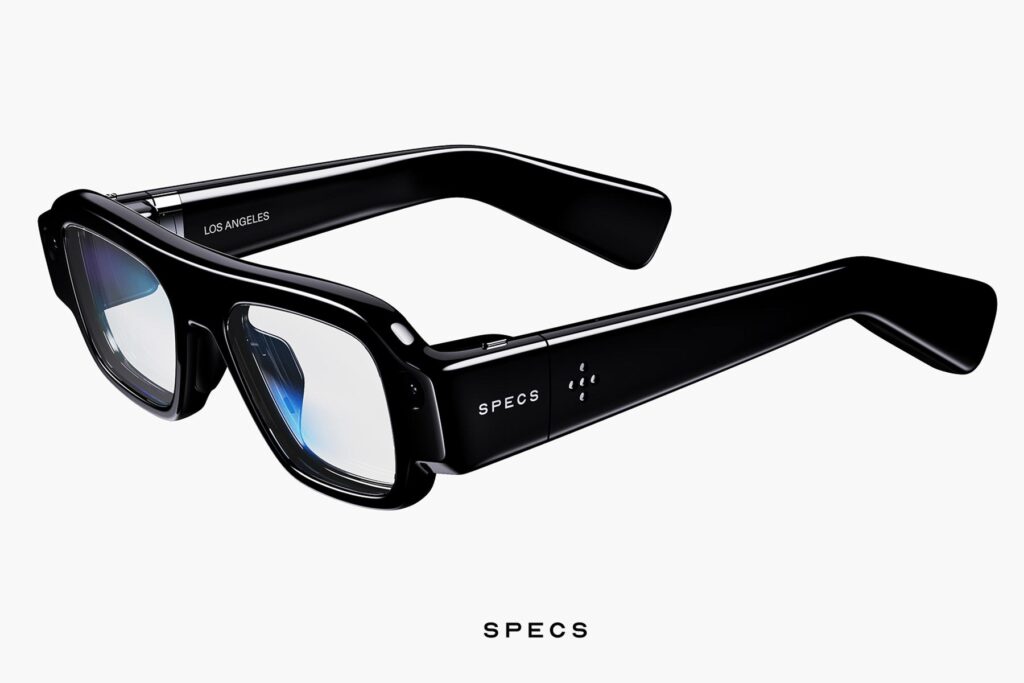
The smaller 47 mm frame weighs 132 grams. The larger 52 mm frame weighs 136 grams. That is heavier than normal glasses, but much lighter than most mixed reality headsets. You will feel them on your face, yet they do not look like a full headset.
Snap says SPECS have a 51-degree field of view and support 16 million colors. The company compares the display to a 115-inch cinema screen viewed from about 10 feet away. For work, Snap says it feels closer to a 24-inch desktop monitor.
That comparison matters. People already use screens all day. A private screen in glasses can make sense for travel, work, study, and light entertainment. Readers interested in display comfort and smoother screen use can also check this guide on whether programmers need a 144Hz monitor, since it explains why refresh rate and screen feel matter during long sessions.
The Price Will Stop Many Buyers
The $2,195 price puts SPECS in premium gadget territory. Many buyers will compare them with a laptop, tablet, flagship phone, gaming PC, or high-end monitor setup.
That is a hard fight for Snap. A phone solves daily needs. A laptop handles work. A tablet works well for media, reading, and travel. SPECS need to prove they belong in that same budget range.
My honest view: Snap priced SPECS for early adopters, developers, creators, and tech fans with money to spend. The price fits the hardware story better than it fits the average shopper.
That does not make the product weak. It does mean the first wave of buyers will be small. People who buy SPECS early will pay for access to a new AR platform, not just a finished everyday device.
For most people, the smarter move is to watch the first real-world feedback after shipping begins. Comfort, battery life, app quality, heat, screen clarity, and outdoor use will matter more than demo videos.
What Buyers Get for $2,195
Snap packed a lot of hardware into SPECS. The glasses use dual Snapdragon processors. One handles computer vision, and the other runs Lenses. That split helps the glasses manage AR features without needing a separate tether or external puck.
SPECS support hand tracking, voice control, gesture control, open-ear audio, camera capture, AI tools, and prescription-ready inserts. The lenses can shift from clear to tinted in about 10 seconds, which helps indoors and outdoors.
Battery life reaches up to four hours of mixed use. The charging case adds four more charges, so Snap claims up to 20 total hours away from a wall outlet.
That sounds useful for travel days or short work sessions. It still does not sound like all-day eyewear. Four hours of mixed use means SPECS need charging breaks, and that matters for anyone who expects glasses to last from morning to night.
The package includes the glasses, charging case, charging cable, cleaning cloth, quick-start guide, and nose pad kit. Snap lists free shipping, free returns, and a one-year limited warranty.
The Best Use Cases Feel Practical
SPECS become more interesting once you ignore the futuristic sales pitch and focus on simple daily tasks.
Live translation in your line of sight can help travelers. Heads-up directions can help in a new city. Spatial measurements can help with furniture, rooms, and quick planning. A private display can help someone watch a video, review notes, or work without opening a larger screen.
These ideas feel grounded. They do not ask people to change every habit. They add help in small moments.
Hands-free calls, timers, web browsing, private video, and guided learning sound useful too. None of these features alone justifies $2,195 for most buyers. Together, they show where AR glasses can become normal over time.
That is the strongest part of SPECS. They point toward a future where glasses handle quick digital tasks without making you pull out a phone every few minutes.
Developers Will Shape the Product
SPECS need great software. Without strong apps, even the best hardware turns into an expensive demo device.
Snap already has years of AR experience through Lenses and Lens Studio. That gives SPECS a better starting point than a brand-new platform with no creator base. Developers can build games, tools, learning apps, productivity features, and AI-powered experiences for the glasses.
This first consumer launch gives developers a real target. It also gives Snap a test group outside controlled demos. That feedback will show what people use, what they ignore, and what feels awkward in public.
For developers, SPECS look exciting. For regular buyers, the app library needs to prove itself first.
Privacy Needs Clear Answers
Smart glasses always raise privacy concerns. SPECS include cameras, microphones, AI features, and recording tools. People near the wearer need to know when recording starts.
Snap uses an LED indicator during recording. That is a good step, but clear signals matter in real life. A small light means less if people cannot spot it from a normal distance.
The controls need to feel simple too. Users should know what each app can access. Recording should be obvious. Data settings should be easy to find.
Public comfort will shape how people react to SPECS. A powerful product can still face resistance if people feel watched or unsure.
Snap SPECS Look Exciting, but the Price Keeps Them Niche
Snap SPECS are one of the most interesting AR launches tied to 2026. They offer a standalone design, a wide see-through display, dual processors, adaptive tint, hand tracking, voice control, and a charging case that extends total use time.
The product sounds far more advanced than basic smart glasses. It also feels more wearable than a bulky mixed reality headset. That middle ground gives Snap a strong story.
Still, $2,195 is a serious barrier. Most people will not buy SPECS to test a new category. They will wait for reviews, cheaper models, better battery life, and a stronger app library.
My opinion is clear: Snap SPECS are worth watching, but not worth rushing into for most shoppers. Early adopters and developers will find the most value. Everyone else should treat this launch as a preview of where AR glasses are heading.