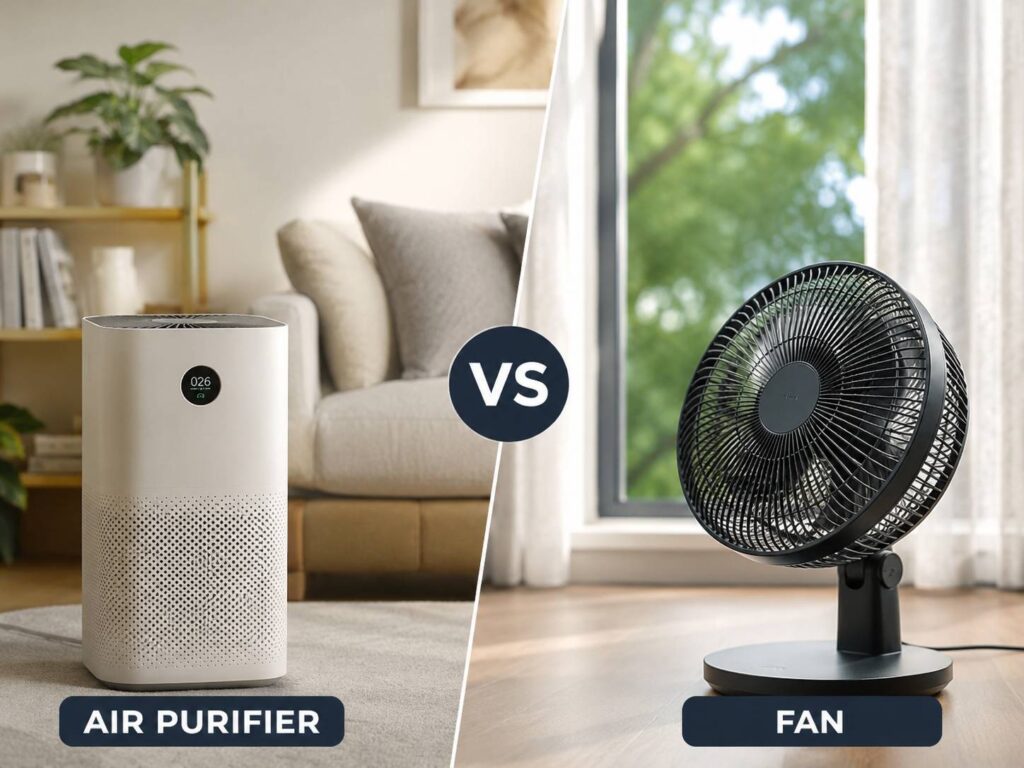
An air purifier and a fan can both make a room feel better, but they solve very different problems. A fan moves air around your body, so the room feels cooler and less still. An air purifier pulls air through filters, then traps fine particles like dust, pollen, pet dander, smoke particles, and some indoor pollution.
That difference sounds simple, yet it matters a lot when you are trying to sleep better, reduce allergies, remove dust, or make a hot room more comfortable. A fan can make you feel cooler fast, but it will not clean the air. An air purifier can make indoor air feel fresher, but it will not cool you like a strong fan.
So, the real question is not always “air purifier vs fan.” The better question is this: do you need cleaner air, better airflow, or both?
Air Purifier vs Fan: The Main Difference
A fan is made for airflow. It pushes air across the room and across your skin. This helps sweat evaporate, so your body feels cooler. It can also move stale air out of a room when placed near a window.
An air purifier is made for filtration. It pulls air into the machine, passes it through one or more filters, then sends cleaner air back into the room. Most good air purifiers use a pre-filter for larger particles and a HEPA-style filter for smaller particles. Some models also use activated carbon to reduce odors.
Here is the easiest way to separate them:
- A fan helps with heat and airflow.
- An air purifier helps with dust, pollen, smoke, and allergens.
- A fan moves air around the room.
- An air purifier captures airborne particles.
- A fan can stir up dust if the room is dirty.
- An air purifier can reduce airborne dust over time.
For comfort, a fan often feels better right away. For air quality, an air purifier does the real work.
What an Air Purifier Actually Does
An air purifier cleans indoor air by moving it through filters. The fan inside the purifier pulls dirty air in, the filters trap particles, and cleaner air comes out.
A good air purifier can help reduce:
- Dust floating through the room
- Pollen from open windows
- Pet dander
- Fine smoke particles
- Some cooking particles
- Mold spores in the air
- PM2.5 from outdoor pollution
- Light household odors, if the purifier has activated carbon
The most useful number to check is CADR, which stands for Clean Air Delivery Rate. A higher CADR means the purifier can clean more air in less time. Room size matters too. A small purifier in a large living room will often run hard and still feel weak.
It is easy to buy an air purifier that is too small. It looks nice, fits on a shelf, and costs less, but it struggles in real use. A better choice is a model rated for your actual room size, with enough power to run at medium speed without sounding too loud.
Filter replacement also matters. A purifier with expensive or hard-to-find filters becomes frustrating after a few months. Before buying, check the price of replacement filters and how often they need to be changed.
What a Fan Actually Does
A fan does not clean air. It moves air.
That can still make a huge difference. A room with still air can feel heavy, warm, and uncomfortable. Once a fan starts moving air, the same room can feel much easier to sit or sleep in.
A fan can help with:
- Warm bedrooms
- Stuffy home offices
- Poor airflow
- Air conditioner support
- Damp areas that need drying
- Moving fresh air through a room
- Pushing cooking smells toward a window
The downside is dust movement. If your room has dust on furniture, shelves, floors, curtains, or bedding, a fan can lift those particles into the air. That is why you may sneeze more after turning on a fan.
A dirty fan can make this worse. Dust collects on blades and grills. Once the fan runs, that dust can spread across the room. For this reason, fan cleaning is not just about looks. It affects how the air feels too.
Which One Is Better for Allergies?
An air purifier is the better choice for allergies.
A fan can make you feel cooler, but it will not trap pollen, dust mite particles, or pet dander. In fact, a fan can make allergy symptoms worse if it blows dust from floors, rugs, bedding, or shelves.
For allergy control, look for an air purifier with:
- A true HEPA or high-grade particle filter
- CADR matched to your room size
- A good seal around the filter
- Low noise on medium speed
- Easy filter replacement
- No ozone-producing feature, or a setting that lets you turn it off
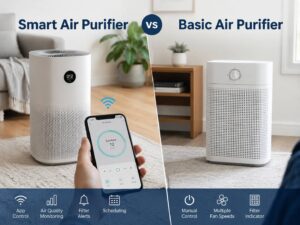
If allergies are your main concern, a simple filter-based purifier is usually the safer choice. Fancy extras matter less than strong filtration, good airflow, and daily use.
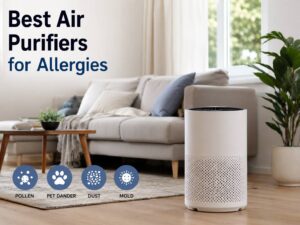
For more buying help, see this guide to the best air purifiers for allergies in 2026. It can help you compare real options if pollen, dust, or pet dander are your main problems.
Which One Is Better for Dust?
An air purifier helps more with airborne dust. A fan only moves dust around.
That said, no purifier can remove every bit of dust from your home. Dust settles on floors, shelves, bedding, curtains, carpets, and electronics. It also comes from skin flakes, fabric fibers, outdoor dirt, pets, and open windows.
A purifier can reduce the dust floating in the air, but you still need basic cleaning habits:
- Vacuum with a good filter
- Wash bedding often
- Wipe shelves with a damp cloth
- Clean fan blades and grills
- Replace HVAC filters on time
- Keep windows closed on high pollen days
- Run the purifier long enough each day
Do not expect visible dust to disappear overnight. That rarely happens. You may still see dust on dark furniture, even with a purifier running. The real improvement often shows up in breathing comfort, fewer allergy symptoms, and less dusty air in sunlight.
Which One Is Better for Smoke and Cooking Smells?
An air purifier is better for smoke particles. A fan helps only if it pushes bad air outside.
Smoke is one of the clearest cases where filtration matters. Wildfire smoke, cigarette smoke, and heavy cooking smoke can leave fine particles in indoor air. These particles can irritate your eyes, throat, nose, and lungs.
A purifier with strong particle filtration can reduce smoke particles. For smells, though, you need activated carbon. HEPA-style filters catch particles, but they do not remove gases and odors very well. Activated carbon helps absorb some odors from cooking, pets, and smoke.
A fan can help during cooking if it points air toward a window or works with a kitchen exhaust fan. Still, this only works well when outdoor air is cleaner than indoor air. During wildfire smoke or heavy outdoor pollution, opening a window can make the room worse.
Which One Is Better for Cooling?
A fan is better for cooling comfort.
An air purifier has a fan inside, but that does not make it a cooling fan. The airflow is usually weaker and shaped for filtration, not for blowing air across your body.
A fan can make you feel cooler because:
- It moves air across your skin.
- It helps sweat evaporate.
- It spreads cool air from an air conditioner.
- It reduces the heavy feeling of still air.
A fan does not lower the actual room temperature by itself. It changes how the air feels on your body. That still makes a big difference, especially during sleep, work, or hot afternoons.
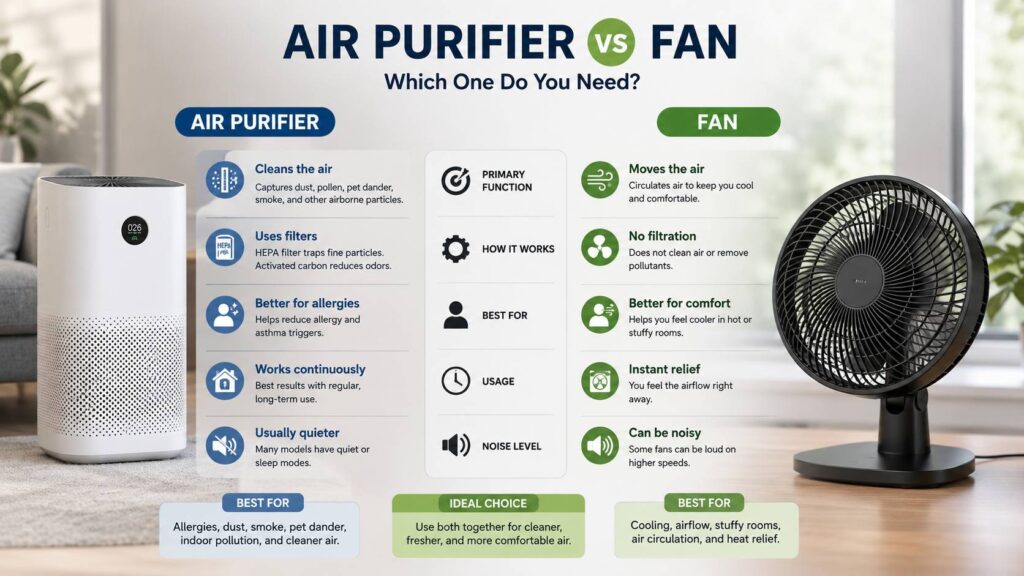
If your room is too warm, buy a fan first. If your room feels dusty, smoky, or irritating, buy an air purifier first. If both problems bother you, use both devices together.
Can You Use an Air Purifier and Fan Together?
Yes, and this can work very well.
The air purifier cleans the air. The fan improves comfort. You just need to place them properly.
Do not put a strong fan directly in front of the air purifier intake. It can disturb the purifier’s airflow. Keep the purifier away from walls, curtains, large furniture, and tight corners. Give it space to pull air in and push cleaned air out.
A practical setup looks like this:
- Place the air purifier near the main room area.
- Aim the fan toward people, not directly into the purifier.
- Keep windows closed during high pollution or pollen days.
- Open windows only when outdoor air is clean.
- Use kitchen and bathroom exhaust fans during cooking or showers.
In bedrooms, keep the purifier a few feet away from the bed. Run it on a quiet setting overnight. Use a fan for gentle airflow, but avoid blasting air straight at your face all night if it dries your eyes or throat.
Air Purifier vs Fan for Bedrooms
Bedrooms are tricky because comfort and air quality both affect sleep.
Choose an air purifier if you wake up with:
- Stuffy nose
- Sneezing
- Dust irritation
- Pet allergy symptoms
- Dry throat from poor air
- Smoke or pollution concerns
Choose a fan if you wake up feeling:
- Hot
- Sweaty
- Restless
- Uncomfortable in still air
For many bedrooms, the best setup is both. Run the purifier through the night on a quiet mode, then use a fan for soft airflow. This gives you cleaner air and better comfort.
Noise matters here. Some people like fan noise because it feels steady and calming. Some air purifiers create soft white noise too. Cheaper models can buzz, click, or change pitch, which gets annoying at night. For a bedroom, always check noise ratings and real user feedback before buying.
Air Purifier vs Fan for Pet Owners
Pet owners usually get more value from an air purifier.
Dogs and cats add dander, hair, odors, and dust movement. A fan can blow pet hair around and lift dander into the air. An air purifier can trap airborne dander, but it will not clean pet hair from sofas, carpets, and blankets.
For homes with pets, look for:
- A washable or easy-clean pre-filter
- Strong particle filtration
- Good room coverage
- Activated carbon for light odors
- Replacement filters that are easy to find
Place the purifier where your pet spends the most time. For many homes, that means the living room during the day and the bedroom at night.
One honest issue: pet hair can clog pre-filters fast. Clean the pre-filter often or airflow drops. Once airflow drops, the purifier cleans less air, even if the main filter still has life left.
Air Purifier vs Fan for Small Apartments
Small apartments often need both cleaner air and better air movement.
Cooking smells spread fast. Dust builds up quickly. Outdoor pollution can enter through windows. Laundry moisture can make the space feel heavy. A fan helps move air, but an air purifier helps clean the air that stays inside.
For a small apartment, one well-sized purifier often works better than two tiny units. Put it in the area where you spend the most time. If your apartment has an open layout, choose a purifier rated for the full space, not just one corner.
A compact fan can help move cool air from one area to another. It can also push cooking smells toward a window. Just remember that airflow is not the same as filtration.
Air Purifier vs Humidifier vs Fan
People often compare air purifiers, humidifiers, and fans because all three affect how a room feels. Still, each one has a separate job.
An air purifier filters particles from the air. A fan moves air around the room. A humidifier adds moisture to dry indoor air.
A humidifier can help when the air feels too dry, especially in winter. It may help with dry skin, dry throat, or static electricity. Yet too much humidity can create mold risk and make dust mites worse. For that reason, humidity control needs balance.
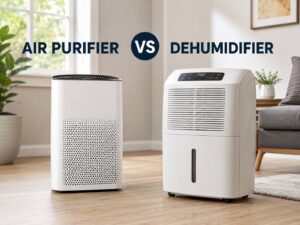
If dry air is part of your problem, read this full guide on air purifier vs humidifier. It explains which device fits each room problem better.
Running Costs and Maintenance
Fans are usually cheaper to buy and maintain. Most need only basic cleaning. Wipe the blades, clean the grill, and check for rattling or dust buildup.
Air purifiers cost more over time. You need replacement filters, and prices vary by brand. Some filters last around 6 months. Others last closer to 12 months. Heavy dust, pets, smoke, and daily use can shorten filter life.
Before buying an air purifier, check:
- Replacement filter price
- Filter availability
- CADR rating
- Room size rating
- Noise level
- Energy use
- Warranty
- Whether optional ionizer features can be turned off
A cheap purifier can become expensive if filters cost too much. A premium purifier can also be a bad buy if replacement filters are hard to find. The best choice is one you can run daily without worrying about noise, filter cost, or power use.
Common Mistakes People Make
Expecting one device to fix every room problem leads to frustration.
Common fan mistakes include:
- Expecting a fan to clean air
- Running a dusty fan
- Blowing air across dirty floors
- Opening windows during high pollution
- Pointing strong airflow at the face all night
Common air purifier mistakes include:
- Buying a model too small for the room
- Running it only for short bursts
- Forgetting to replace filters
- Blocking the intake or outlet
- Expecting it to cool the room
- Choosing extra features over filter performance
A fan solves comfort. An air purifier solves air quality. Once you separate those jobs, the decision becomes much easier.
Which One Should You Buy First?
Buy a fan first if your room feels hot, stuffy, or still. It is the quicker and cheaper fix for comfort.
Buy an air purifier first if your problem is dust, pollen, pet dander, smoke, or poor indoor air quality. It gives you real filtration, which a fan cannot provide.
For a bedroom with allergies, I would choose an air purifier first. For a hot home office, I would choose a fan first. For a pet-friendly living room, I would choose an air purifier. For a small apartment in summer, I would use both.
Final Verdict: Air Purifier vs Fan
An air purifier and a fan are not the same type of product. A fan moves air. An air purifier cleans air.
A fan is better for cooling comfort, airflow, and stuffy rooms. An air purifier is better for allergies, dust, smoke particles, pet dander, pollen, and indoor air quality.
If you want cleaner air, choose an air purifier. If you want to feel cooler, choose a fan. If you want cleaner air and better comfort, use both in the same room with smart placement.
The best choice starts with the problem. Heat needs airflow. Dirty air needs filtration. Once you know which problem matters more, the air purifier vs fan decision becomes simple.