
Small kitchen appliances look easy to shop for. A blender, air fryer, toaster oven, coffee maker, rice cooker, food processor, or stand mixer can feel like a quick win. Yet many people still buy the wrong one. They see a sale, pick the nicest photo, or chase extra features. Then the appliance lands on the counter and turns into clutter.
A better purchase starts with a simple idea. Buy for the way you cook now, not for a version of life that sounds nice in your head. That shift saves money, frees up space, and cuts down on regret.
This guide covers the most common mistakes people make when buying small kitchen appliances. It will help you compare options with more care, spot weak points early, and pick products that fit your kitchen and your routine. So whether you are reading an air fryer buying guide, comparing coffee makers, or trying to find the best small kitchen appliances for a small home, this will keep you on track.
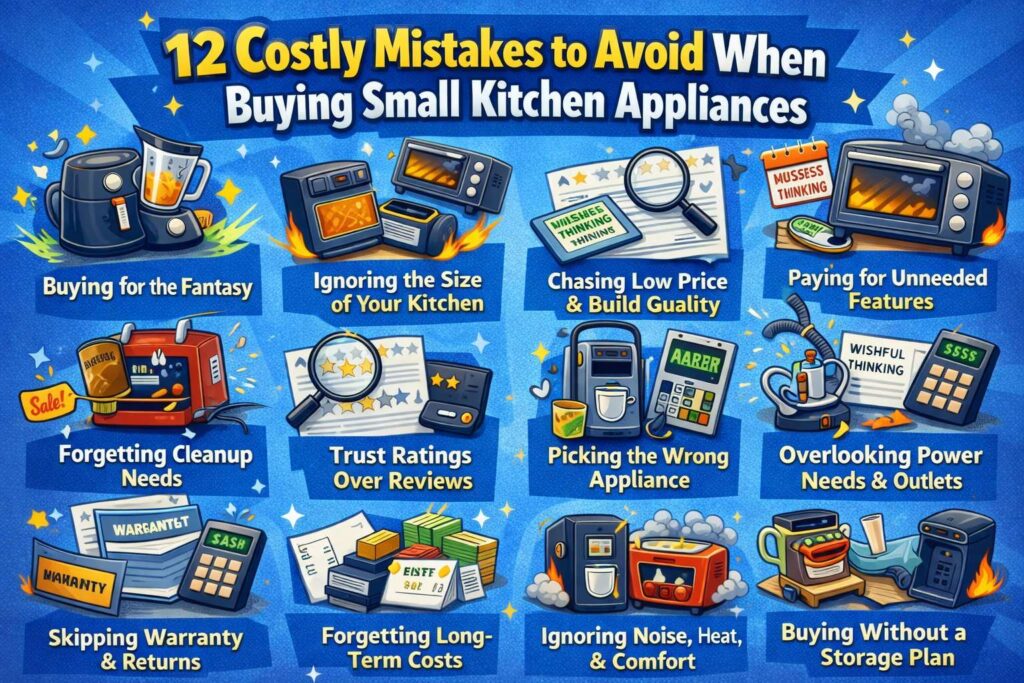
1. Buying for the fantasy version of your life
Many shoppers buy for habits they do not actually have. They picture fresh smoothies every day, homemade bread every weekend, or café-style coffee every morning. Then real life gets in the way. The blender stays in the cabinet. The waffle maker comes out twice a year. The stand mixer turns into a heavy decoration.
Start with your last month in the kitchen. Think about what you cooked, reheated, chopped, toasted, or brewed. Then match the appliance to that pattern. A compact rice cooker might earn its place every week. A huge food processor might not.
That one step changes everything. You stop buying for wishful thinking, and you start buying for real use.
2. Ignoring the size of your kitchen
Product photos hide scale. A toaster oven can look neat online and feel massive on a real counter. A coffee maker can block cabinet doors. A stand mixer can fit the counter but still feel annoying once you need to move it.
Measure first. Check width, depth, and height. Then go one step further. Look at lid clearance, door swing, basket pull-out space, and cord length. An air fryer needs room in front. A blender needs space above. A toaster oven door drops down, so that matters too.
Small kitchens make these mistakes obvious fast. A good appliance should fit your space without turning meal prep into a juggling act.
3. Chasing low price and ignoring build quality
Cheap appliances can look like smart deals. Then the buttons loosen, the coating chips, the handle wobbles, or the motor starts sounding rough after a few weeks. Price matters, but price alone tells you very little.
Look at the parts that take the most stress. Check the hinge, basket handle, control dial, carafe lid, blade base, and nonstick surface. Read user reviews for repeat complaints, not just star ratings. One glowing review means very little. Twenty people pointing out the same weak part tells you a lot.
This rule works for all kinds of products. The same logic shows up in other buying guides too. Our breakdown of vacuum specs that matter most follows that same pattern. Specs matter, but the right specs matter more.
4. Paying for features you will never use
Extra features look exciting on a product page. Smart app controls. Ten cooking presets. Voice commands. More brew modes. More speed settings. More attachments. Yet most buyers end up using the same two or three functions every time.
A clear dial and a good timer often beat a crowded touch panel. A blender with strong blades and easy cleanup can be a better buy than one with a long list of settings. A coffee maker with reliable daily performance can beat a model packed with tech.
Focus on the job first. Then pick the feature set that supports that job. Everything else is just extra cost.
5. Forgetting that cleanup decides real value
A small kitchen appliance can work well and still be a bad buy. Cleanup decides a lot more than people expect. Tight corners trap food. Lids collect residue. Filters clog. Grease settles into hard-to-reach areas. Then the appliance starts to feel like work.
Check the removable parts before you buy. Look at the basket, tray, lid, blade assembly, and drip area. See how easy it is to wipe the inside. Think about daily cleanup, not just the first week.
This matters a lot with air fryers and toaster ovens. If you are comparing those two, our guide on air fryer vs toaster oven can help you sort out cooking style, cleanup, and everyday use.
6. Trusting star ratings too much
A high rating can pull people in fast. Still, ratings do not tell the full story. Some products collect early praise, then show problems after a few months. Others hide weak customer support behind a pretty average score.
Read the three-star and four-star reviews first. Those reviews often give the best mix of praise and criticism. Look for patterns. Does the basket coating wear fast? Does the machine run loud? Do parts crack after normal use? Do replacement filters cost too much?
Patterns matter more than hype. One smart review can teach you more than a full row of stars.
7. Picking the wrong appliance for the job
A lot of shoppers buy overlap without noticing it. They pick an air fryer, then learn a toaster oven would handle more of their meals. They buy a blender, then expect it to chop and slice like a food processor. They choose a single-serve coffee machine, then feel frustrated on weekends when guests show up.
Match the tool to the task. A blender works best for liquids, smoothies, soups, and sauces. A food processor handles chopping, slicing, shredding, and dough better. A toaster oven helps with toast, reheating, and small baked meals. An air fryer shines with crisp food and quick dry heat cooking.
That sounds obvious, but many people skip this step. Then they blame the product when the real issue was product fit.
8. Overlooking power needs and outlet setup
Kitchen appliances use real power, and older kitchens can struggle with that. Buyers often look at wattage for speed, but they forget where the appliance will plug in and how often it will share an outlet.
Think about your counter setup before you buy. A fast toaster oven or air fryer may not feel convenient if it forces you to unplug other things every day. Cord length matters too. So does where steam or heat will go during use.
A good buy should fit the kitchen you already have. It should not force a daily workaround.
9. Skipping the warranty and return details
Many people read the warranty only after a problem shows up. By then, the return window may be closed, and the repair process may feel slow or expensive.
Read the support details before checkout. Look at the length of the warranty, what parts it covers, who pays shipping, and how easy it is to file a claim. A low-cost appliance with poor support can end up costing more than a mid-range model with better service.
Customer support matters most when the appliance has moving parts, heat, pressure, or water. Coffee makers, blenders, air fryers, and toaster ovens all fall into that group.
10. Forgetting the long-term cost
The sticker price is only the start. Many appliances carry extra costs after the sale. Filters, pods, replacement blades, bowls, trays, seals, and cleaning products all add up. Then there is the cost of replacement parts or shipping for warranty service.
Think about two years of ownership, not just day one. A cheaper coffee machine that needs costly pods can lose value fast. A low-cost air fryer with poor coating can force an early replacement. A blender with hard-to-find parts can become useless after one broken jar or lid.
A better question is simple. What will this appliance cost over time, and will I still feel good about that number a year from now?
11. Ignoring noise, heat, and daily comfort
Performance gets most of the attention. Yet the daily feel of an appliance matters just as much. A loud blender can annoy everyone in the house. A toaster oven that throws off a lot of heat can make a small kitchen uncomfortable. Sharp beeps, stiff baskets, awkward lids, and slippery controls all chip away at the user experience.
Read reviews with that in mind. Look for comments about noise, heat, smell, button feel, and balance. These details do not always show up in the product spec table, but they shape daily use in a very real way.
Comfort is not fluff. Comfort often decides whether the appliance becomes part of your routine or ends up pushed to the back of a shelf.
12. Buying without a storage plan
A product can be good and still fail in your kitchen. Storage is often the reason. Big appliances that live in hard-to-reach cabinets get used less. Heavy machines that need two hands to move start feeling like chores. Long cords, awkward shapes, and bulky accessories make the problem worse.
Plan the home for the appliance before you buy it. Will it stay on the counter? Will it fit in a lower cabinet? Will the accessories stay together, or will they scatter across drawers? Think through the full picture.
Convenience drives use. Friction kills it.
What smart buyers do instead
Smart buyers slow down a little. They measure the space. They think about what they actually cook. They read reviews with more care. They compare cleanup, not just power. They look at support, long-term cost, and replacement parts.
They keep one main question in mind. Will this appliance make daily life easier, or will it create one more thing to manage?
That question helps with almost every purchase. A small kitchen appliance should earn its footprint. It should fit your meals, your kitchen, and your budget. Then it should keep doing that job without drama.
Buy with that standard, and you will avoid most of the mistakes people make when buying small kitchen appliances.