
Insta360 Steps Into a Tough Camera Fight
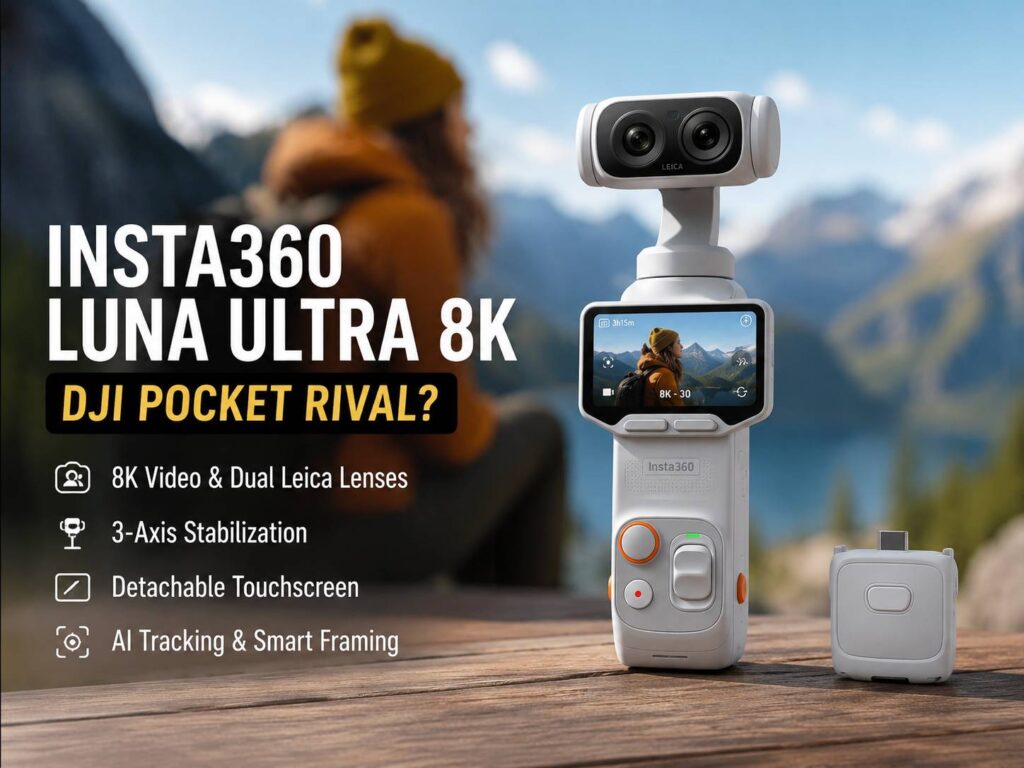
Insta360 Luna Ultra 8K enters one of the most interesting creator camera battles of 2026. DJI has owned the pocket gimbal camera space for years, and the Osmo Pocket series became a common pick for vloggers, travelers, and solo creators. Now, Insta360 wants a real share of that space.
So, what makes the Luna Ultra stand out? The short answer is simple: 8K video, dual Leica lenses, strong stabilization, smart tracking, and a detachable screen. That mix gives it more than one headline feature.
Still, specs alone do not win this category. A pocket camera has to turn on fast, frame faces well, handle movement, record clean audio, and stay easy to use. DJI already does those things very well. For that reason, Insta360 had to bring something different, not just something familiar.
And it did. The Luna Ultra does not feel like a plain DJI copy. It feels like Insta360 looked at the pocket camera format and asked a better question: what else can a tiny gimbal camera do?
The Dual-Lens Setup Gives Luna Ultra Its Biggest Advantage
The main camera uses a Leica Summicron lens with a 1-inch 8K sensor. Next, Insta360 adds a second telephoto camera with a 1/1.3-inch sensor. That second lens gives the camera up to 12x zoom, with up to 6x lossless zoom.
That matters more than it sounds. Most pocket gimbal cameras work best at wide angles. They capture a room, a street, a desk setup, or a walking vlog. Still, wide shots can look flat after a few minutes. A tighter lens adds variety. It can frame a product, a face, a meal, a pet, or a building detail without forcing the creator to walk closer.
For example, a travel creator can film a wide city scene, then zoom in on a sign, a statue, or a person across the street. A tech creator can show a desk setup, then switch to a tighter shot of a keyboard, camera, or phone. That makes the final video feel less repetitive.
So, the dual-lens system is not just a spec sheet trick. It gives creators more shot types from one small camera.
8K Video Sounds Big, but Cropping Is the Real Win
The Luna Ultra records up to 8K at 30fps. It can shoot 4K at up to 120fps and 1080p at up to 240fps. Plus, it supports Dolby Vision and 10-bit I-Log, so editors get more room for color work.
Most viewers still watch social clips at 1080p or 4K. So, the main value of 8K is not always the final resolution. The real value is cropping.
A creator can record one wide 8K clip, then cut a vertical Reel, a YouTube Short, and a regular YouTube segment from the same footage. That saves time. It also helps solo shooters who cannot repeat every moment.
Then again, 8K video needs more storage and stronger editing hardware. It can drain battery faster too. For casual users, 4K will still make more sense most of the time. For creators who crop footage often, 8K gives Luna Ultra a clear practical edge.
DJI Still Has the Safer Pocket Camera Workflow
DJI remains the brand to beat here. The Osmo Pocket 4 brings a 1-inch sensor, 4K/240fps slow motion, a 2-inch rotatable screen, 3-axis stabilization, strong subject tracking, and built-in storage.
That gives DJI a clean strength: trust. Creators know what to expect from DJI’s pocket cameras. The setup feels fast. Tracking works well. The app support has years behind it. The Osmo Pocket line has already earned its place in creator bags.
Still, the Luna Ultra brings a more flexible camera idea. DJI gives users a polished one-lens pocket camera. Insta360 gives users a dual-lens 8K pocket camera with more reach.
My real opinion is this: DJI still looks safer for people who want the simplest filming tool. Insta360 looks more exciting for creators who want more framing choices and stronger crop options.
The Detachable Screen Could Help Solo Creators a Lot
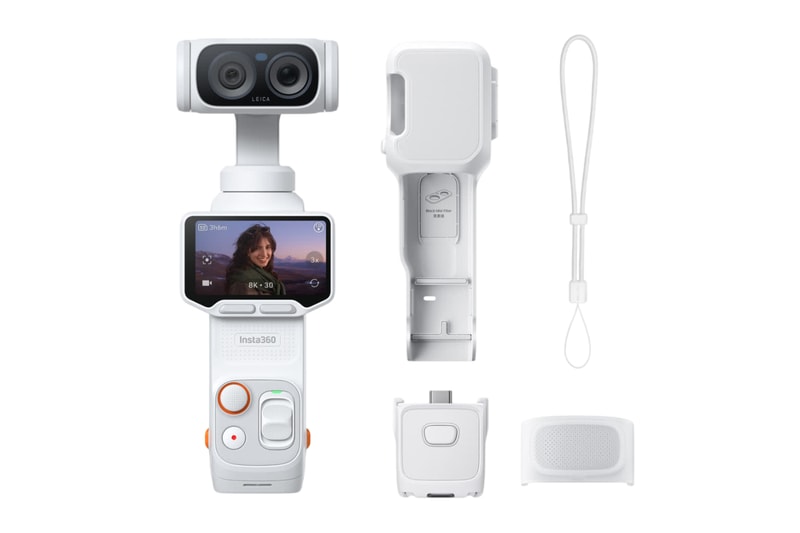
The Luna Ultra includes a 2-inch detachable OLED touchscreen. It can work as a remote screen and controller from a distance in open conditions.
That feature feels very practical. A creator can place the camera on a table, shelf, tripod, counter, or low-angle mount, then frame the shot without standing behind the camera. That helps with desk videos, cooking clips, product shots, tutorials, and talking-head content.
For creators who work alone, this can save time. Instead of recording a test clip, checking the frame, moving the camera, and recording again, they can see the shot right away.
This fits the way modern creators work. Many people now film across several formats: YouTube, TikTok, Instagram, Shorts, product clips, and video calls. And for people building a simple creator setup, camera quality still makes a big difference, just like the difference between a webcam and laptop camera can change how polished a desk video looks.
Tracking and Audio Will Decide the Real Winner
Insta360 lists Deep Track 5.0, auto tracking, active zoom tracking, group tracking, and smart framing for the Luna Ultra. Those tools sound strong, and they fit the target user well.
Still, real-world tracking matters more than feature names. A pocket camera must keep a face sharp during movement. It must handle walking shots, hand gestures, crowded rooms, and quick turns. It must not lose focus every time the subject leans forward.
Audio matters too. Luna Ultra includes four microphones, with three on the main gimbal and one on the detachable touchscreen. It supports wind reduction and voice enhancement. It can also connect with Insta360 wireless mics.
That makes sense for vlogging. Bad audio can ruin a clip faster than slightly soft video. So, creators should care about mic support just as much as resolution.
Battery Life and Storage Look Strong on Paper
Insta360 lists up to 240 minutes of runtime at 1080p/24fps with the screen and Wi-Fi off. It also lists fast charging to 80% in about 23 minutes with the right charger.
Those numbers look good for a compact gimbal camera. Still, real use will vary. 8K recording, tracking, screen use, wireless control, and hot weather will drain power faster. That is normal for a small camera with this much inside.
The Luna Ultra also includes built-in storage and microSD support up to 1TB. That helps a lot, since 8K footage can fill space fast. For serious creators, a large, fast microSD card will feel less like an extra and more like a basic part of the kit.
Who Should Pay Attention to Insta360 Luna Ultra?
The Insta360 Luna Ultra 8K makes the most sense for creators who want a small camera with more reach than a standard pocket gimbal. It fits travel creators, product shooters, solo vloggers, tech channels, family video makers, and short-form creators.
It also fits people searching for terms like:
- Insta360 Luna Ultra 8K camera
- Insta360 Luna Ultra vs DJI Osmo Pocket 4
- best pocket gimbal camera 2026
- DJI Pocket alternative
- 8K vlogging camera
- Leica gimbal camera
- compact camera for YouTube Shorts
- best travel vlogging camera
- pocket camera with zoom
- creator camera with detachable screen
For casual users, DJI may still feel easier. For creators who want more control in a small body, Luna Ultra looks very tempting.
A Real DJI Rival, Not Just Another Pocket Camera
The Insta360 Luna Ultra 8K brings a strong mix of features: 8K video, dual Leica lenses, telephoto zoom, 3-axis stabilization, I-Log color, Dolby Vision, smart tracking, and a detachable screen.
That list makes the camera easy to notice. More than that, it gives Insta360 a clear identity in this category. DJI still has the smoother track record, but Insta360 now has a pocket camera that feels bold and useful.
So, the real question is not whether Luna Ultra beats DJI on every point. It does not need to. It needs to give creators a reason to pause before buying an Osmo Pocket. Based on the feature set, it does exactly that.
For people who want the safest pick, DJI remains hard to ignore. For people who want 8K footage, tighter shots, remote framing, and a more flexible pocket camera, Insta360 Luna Ultra 8K is one of the most interesting creator cameras of 2026.