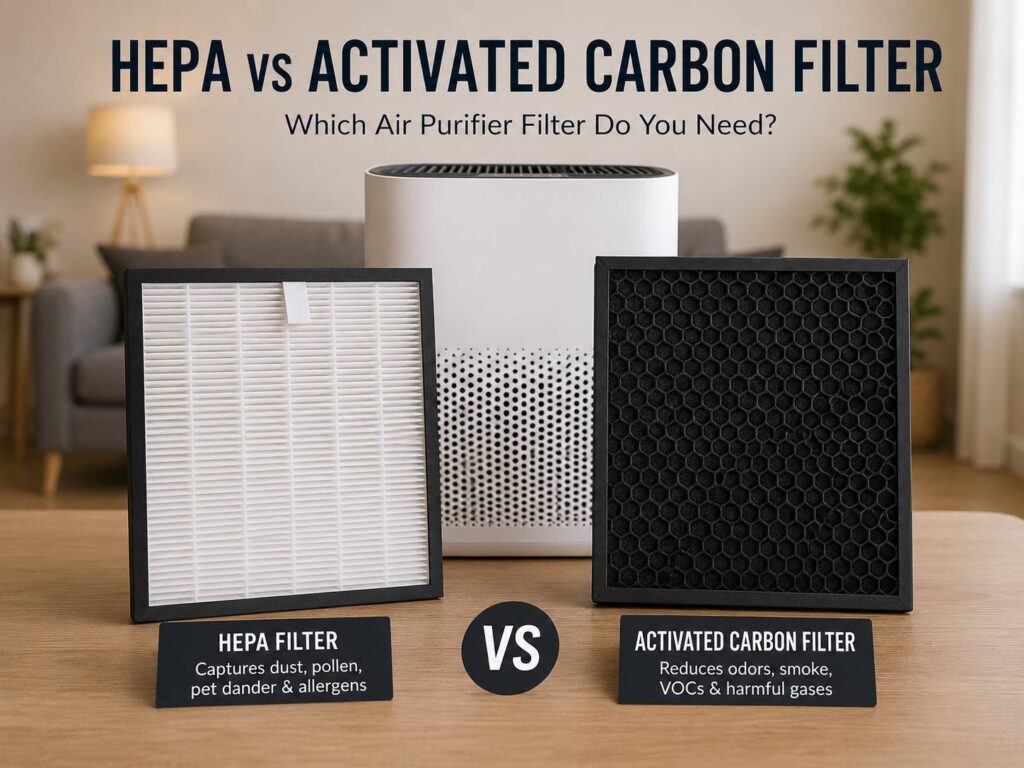
HEPA vs Activated Carbon Filter: The Clear Difference
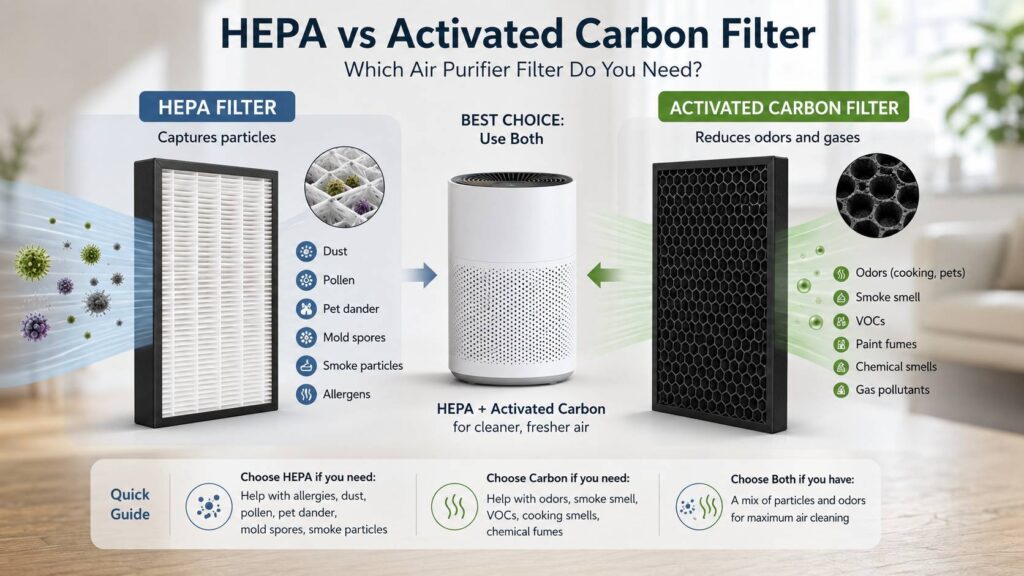
HEPA and activated carbon filters do different jobs. A HEPA filter captures tiny particles. An activated carbon filter traps many smells, gases, and vapors.
That simple difference matters a lot. If your room feels dusty, a HEPA filter usually helps more. If your room smells like pets, smoke, cooking, paint, or cleaning sprays, activated carbon does the heavier work.
So, one filter is not always better than the other. Each one solves a different air problem. In many homes, the best choice is an air purifier that uses both.
A HEPA filter works like a dense net. Air moves through the filter, and fine particles get caught inside the fibers. This helps with dust, pollen, pet dander, mold spores, and fine smoke particles.
Activated carbon works in another way. It has a large inner surface area, so odor molecules and some gas pollutants stick to it. This makes it useful for cooking smells, pet odors, smoke smell, and some VOCs from household products.
This is the key point: HEPA cleans the particle side of indoor air, and activated carbon handles the smell and gas side.
What a HEPA Filter Does Best
A HEPA filter is the right choice for airborne particles. These particles can float in the air for a long time, especially in bedrooms, living rooms, and pet areas.
HEPA filters work best for:
- Dust
- Pollen
- Pet dander
- Mold spores
- Fine smoke particles
- Fine outdoor pollution particles
- Many common airborne allergens
This makes HEPA a strong pick for allergy season. It can also help homes with pets, carpets, fabric sofas, and open windows near traffic.
Still, filter type alone does not tell the full story. The purifier must move enough air for the room. A small unit in a large space will struggle, even with a good HEPA filter inside.
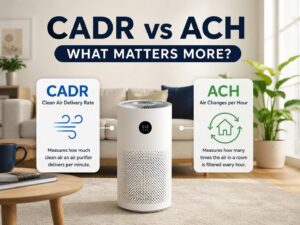
For this reason, CADR matters. CADR stands for Clean Air Delivery Rate. It shows how much filtered air the purifier can deliver. A higher CADR usually means faster cleaning in the right room size.
Noise matters too. A powerful air purifier does little if it runs on the quietest mode all day. That setting may move very little air. So, a purifier should be quiet enough on a useful speed, not only on sleep mode.
What an Activated Carbon Filter Does Best
An activated carbon filter is built for odors and gases. It does not replace HEPA for dust or allergens. Instead, it helps with smells and certain gas pollutants that pass through particle filters.
Activated carbon can help with:
- Cooking odors
- Pet smells
- Smoke smell
- Paint smell
- Cleaning product smells
- Garbage odors
- Some VOCs
- Musty air smells
The amount of carbon matters a lot. A thin carbon sheet can reduce light odors for a short time. A thicker carbon filter with more carbon can hold more odor and gas molecules.
This is where many budget air purifiers disappoint people. The box may say “activated carbon filter,” but the carbon layer may be very thin. That can work for mild smells, yet it will not handle strong kitchen odors, smoke, or constant pet smells for long.
Activated carbon also fills up. After the carbon becomes saturated, odor control drops. Then the purifier may still run fine, but the room starts to smell the same again. In some cases, an old carbon filter can even smell stale.
So, if odor removal is your main goal, check the carbon filter size, replacement cost, and replacement schedule before buying.
HEPA vs Activated Carbon for Allergies
For allergies, HEPA is the better filter. Pollen, dust mite particles, pet dander, and many mold spores are particles. HEPA filters are designed to trap those particles.
Activated carbon can still help an allergy setup, but it plays a secondary role. It can reduce odors from pets, smoke, or cleaning sprays. Still, it does not capture allergens the way HEPA does.
If allergies are your main concern, look for:
- True HEPA filtration
- Strong CADR for your room size
- A sealed filter design
- Low noise on medium speed
- Easy filter replacement
- A pre-filter for larger dust and hair
A bedroom air purifier should run for long periods. That matters more than a long feature list. If the purifier is too loud, you will turn it off. Then the filter cannot help.
For extra help choosing the right size and filter setup, this guide on how to choose the right air purifier can help you avoid common buying mistakes.
HEPA vs Activated Carbon for Smoke
Smoke creates a tougher problem. It contains fine particles and gas pollutants. That means HEPA and activated carbon both matter.
HEPA captures many fine smoke particles. Activated carbon helps reduce smoke smell and some gas compounds. So, a purifier with both filters is usually the better choice for wildfire smoke, tobacco smoke, fireplace smoke, or smoke that enters from nearby homes.
For smoke, look for:
- High smoke CADR
- True HEPA filtration
- A real activated carbon filter
- Good room coverage
- No ozone production
- A tight filter seal
Smoke can also enter through gaps, windows, doors, vents, and shared building spaces. A purifier can help, but it cannot fully fix a constant source. So, source control still matters.
Keep windows closed during heavy outdoor smoke events. Move the purifier near the room you use most. Then run it at a stronger speed until the air improves.
HEPA vs Activated Carbon for VOCs and Chemical Smells
VOCs are gases that come from many household items. Paint, adhesives, cleaning products, scented sprays, new furniture, flooring, and some plastics can release them.
HEPA does not handle gases well. So, a HEPA-only purifier is not the best choice for chemical smells. Activated carbon is the better filter type for many VOC-related odors.
Still, carbon has limits. Its performance depends on the amount of carbon, the type of carbon, airflow, humidity, and how strong the source is. A small carbon filter cannot fix a room filled with fresh paint fumes.
The best fix starts with the source. Open windows when outdoor air is safe. Let new furniture air out. Store paints, solvents, and strong cleaners away from living spaces. Then use activated carbon to reduce what remains.
This is why buyers should be careful with bold odor-removal claims. A good carbon filter can help a lot, but it cannot replace ventilation or source control.
Which Filter Is Better for Pets?
For pets, the best answer is both.
HEPA helps with pet dander, dust, and tiny particles from fur and skin flakes. Activated carbon helps with litter box smells, dog odor, damp fur smell, and pet bedding odors.
A pre-filter is very useful in pet homes. It catches larger hair before it reaches the HEPA filter. That helps protect airflow and can reduce how fast the main filter clogs.
For pet owners, a smart setup looks like this:
- Put the purifier near the main pet area
- Use a pre-filter if pet hair is heavy
- Wash pet beds often
- Vacuum carpets and sofas often
- Replace carbon filters on time
- Keep litter boxes away from bedrooms
A purifier will not remove pet hair from furniture. It cleans air that moves through the unit. So, cleaning habits still matter.
My honest view: pet owners should not buy the cheapest purifier they find. Pet homes create more dust, hair, and odor than many normal spaces. A stronger unit with HEPA, carbon, and a washable pre-filter usually gives better long-term value.
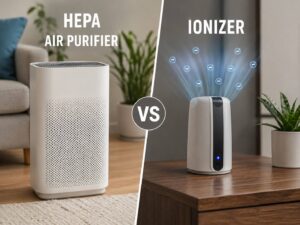
HEPA vs Activated Carbon vs Ionizer
Some air purifiers include ionizers. These features charge particles in the air, which can make them stick to surfaces or collector plates. That sounds useful, but it is not the same as HEPA filtration.
A HEPA filter physically traps particles inside the filter. Activated carbon traps many odor and gas molecules. Ionizers work differently, and some products can create ozone. That is a concern for indoor air.
If you are comparing filter types, this guide on HEPA air purifier vs ionizer explains the difference in a practical way.
For most homes, I would choose HEPA and activated carbon before an ionizer. Clean air should not come with extra ozone risk. A strong mechanical filter setup is easier to understand, easier to maintain, and easier to trust.
Common Problems Buyers Notice
Do not expect an instant fix from an air purifier. Sometimes that happens. Other times, the results feel weaker than expected.
Here are the most common issues:
- The purifier is too small for the room
- The useful fan speed is too loud
- The carbon layer is too thin
- Replacement filters cost too much
- Odors return fast
- Dust on surfaces does not disappear
- The purifier sits in the wrong spot
- The filter is overdue for replacement
Placement matters. Do not hide the purifier behind furniture or curtains. It needs open airflow. Keep it near the problem area, but give it space to pull in and push out air.
Filter age matters too. A clogged HEPA filter slows airflow. A saturated carbon filter stops reducing smells well. So, replacement schedules are not just brand upsells. They affect real performance.
How to Choose Between HEPA and Activated Carbon
Use your main air problem as the starting point.
Choose HEPA if you care most about:
- Allergies
- Dust
- Pollen
- Pet dander
- Mold spores in the air
- Fine particles
- Smoke particles
Choose activated carbon if you care most about:
- Odors
- Cooking smells
- Pet smells
- Smoke smell
- Chemical smells
- Paint fumes
- Some VOCs
Choose both if you deal with:
- Pets and odors
- Smoke and smell
- Dust and cooking fumes
- Allergies and household smells
- City pollution and indoor odors
Then check the practical details. Is the purifier rated for your room? Does it list CADR? Are filters easy to buy? Can you afford replacements every year? Is the purifier quiet enough for daily use?
These questions matter more than extra app features or fancy lights. A purifier that runs often with the right filters will beat a flashy model that sits turned off.
My Honest Opinion
For most homes, HEPA should come first. Dust, pollen, pet dander, and fine particles are common daily problems. A good HEPA purifier can make a room feel cleaner and can reduce airborne allergens.
Still, activated carbon becomes very useful in the right home. If you cook often, have pets, live near smoke, use strong cleaning products, or deal with neighbor odors, carbon is not a bonus. It becomes part of the main filter setup.
The best all-around choice is usually an air purifier with True HEPA, a real activated carbon filter, and enough airflow for the room. It should have simple controls, fair filter prices, and no ozone-generating feature.
I would not buy a purifier only for a “fresh air” scent. Fragrance does not mean clean air. A good purifier should reduce particles and odors without adding perfume or harsh byproducts to the room.
Final Verdict: Which Filter Should You Buy?
Buy a HEPA filter if your main problem is dust, pollen, pet dander, mold spores, and fine particles. Buy an activated carbon filter if your main problem is odors, smoke smell, chemical smells, or VOCs.
For many real homes, the best choice is both. HEPA handles particles. Activated carbon handles smells and gases. Together, they cover more indoor air problems than either filter can handle alone.
The right purifier should match your room size, air problem, noise tolerance, and filter budget. A strong filter system with honest room coverage will serve you better than a purifier loaded with features you never use.