Robot vacuums are meant to save time, but they can quickly become annoying when they get stuck under furniture, chew a cable, drag a sock across the room, or stop halfway through a clean. That is why obstacle avoidance has become one of the biggest features on modern robot vacuums.
Still, the real question is simple: is obstacle avoidance worth paying more for?
For many homes, yes. For others, not really. A cheaper robot vacuum can still do a good job in a tidy space with clear floors. Yet, in a busy home with pets, kids, loose cables, shoes, toys, and chair legs everywhere, better obstacle avoidance can make the robot much easier to live with.
The truth is that obstacle avoidance is not magic. It will not turn a messy room into a perfect cleaning zone. Still, it can reduce failed cleaning runs, protect small objects, and make the robot feel less like another thing you need to manage.
What Robot Vacuum Obstacle Avoidance Really Means
Obstacle avoidance is the robot’s ability to notice objects in its path and move around them instead of hitting them, pushing them, or getting trapped.
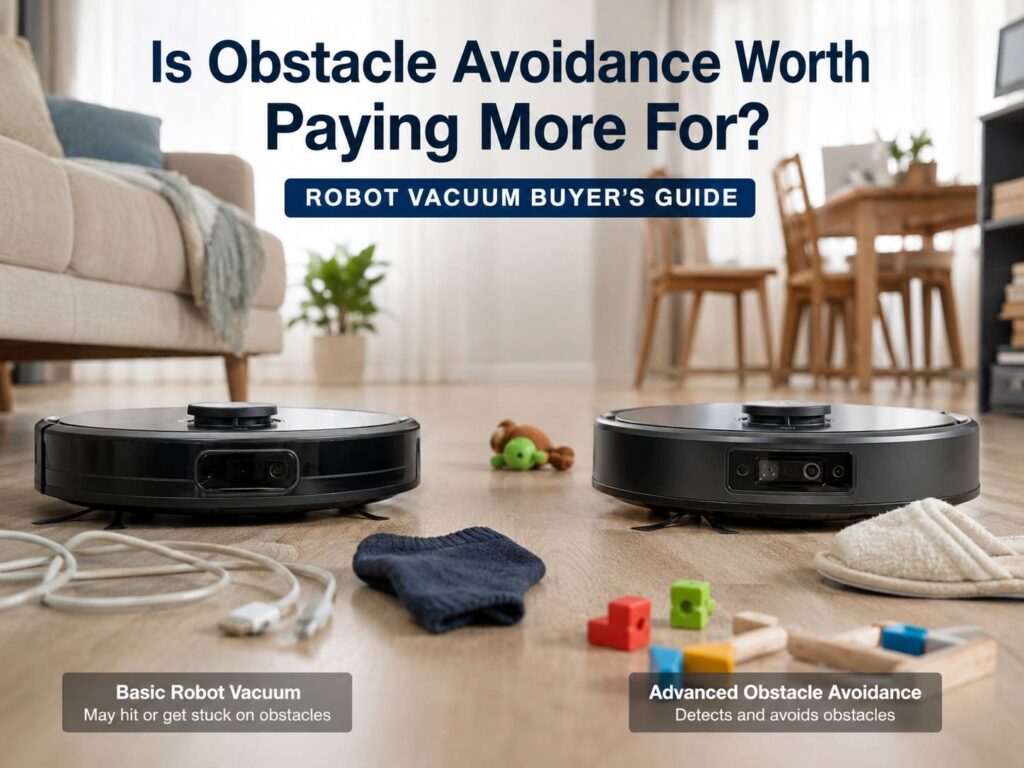
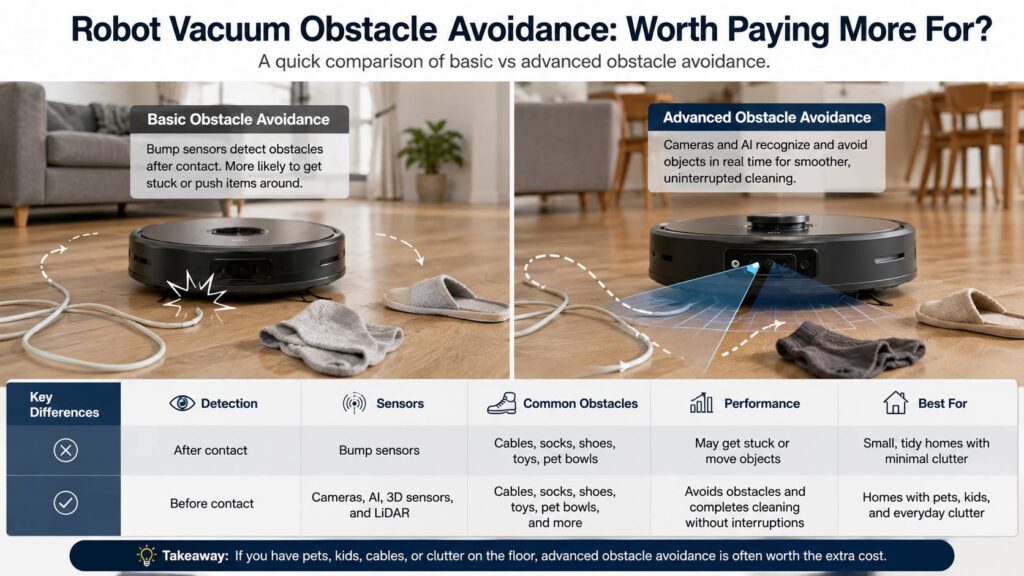
Basic robot vacuums usually rely on bump sensors. They touch an object, back up, and change direction. That works fine for walls, cabinets, and large furniture. It does not work as well for socks, cables, toys, slippers, pet bowls, or small clutter on the floor.
More advanced robot vacuums use smarter sensors. These can include LiDAR, front-facing cameras, 3D structured light, infrared sensors, and AI object recognition. Together, these tools help the robot understand more than just the room layout.
This is where it gets confusing. LiDAR and obstacle avoidance are related, but they are not the same thing. LiDAR helps the robot map your home, clean in straight lines, and return to the dock. Object avoidance helps the robot notice smaller things sitting on the floor.
So, a robot can have great mapping and still get tangled in a charging cable. A smarter model with object detection has a better chance of spotting that cable first.
Why Obstacle Avoidance Costs More
Robot vacuums with better obstacle avoidance cost more because they need extra hardware and smarter software. A basic robot can move around a room with simple sensors. A premium model has to detect objects, judge their shape, and decide how close it can clean without touching them.
That takes more processing power. It also needs better app support, stronger navigation, and regular software updates.
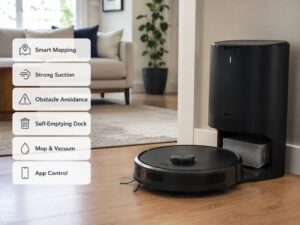
Many premium robot vacuums bundle obstacle avoidance with other expensive features too. You may also get a self-emptying dock, mop washing, mop drying, stronger suction, auto mop lifting, better carpet detection, and more detailed room controls.
So, the higher price is rarely about obstacle avoidance alone. You are often paying for a more hands-off cleaning system.
That can be a good deal if you want the robot to run daily with little help. It can feel like overkill if you only need a simple vacuum for a small, tidy apartment.
The Main Benefits of Better Obstacle Avoidance
The biggest benefit is simple: fewer failed cleaning runs.
A robot vacuum loses value when it keeps stopping. If you start it before work and come home to find it stuck under a chair with only one room cleaned, the whole point is gone.
Better obstacle avoidance can help with several common problems.
It can reduce cable tangles. Charging cords, lamp wires, and thin cables are some of the most common robot vacuum traps. A cheaper robot may pull them, twist them into the brush, or drag a device off a low table. A smarter robot has a better chance of cleaning around them.
It can avoid small clothing. Socks, underwear, and fabric pieces can stop a robot fast. Bedrooms and laundry areas are common trouble spots.
It can help in homes with pets. Pet toys, water bowls, food bowls, and scattered litter can confuse basic robots. A better model can move around these items instead of pushing them across the floor.
It can protect delicate items. A robot that bumps into a light plant stand, pet bowl, or floor decoration can create more work than it saves.
It can make scheduled cleaning more realistic. This matters a lot. If your robot only works after you tidy the whole house, you may stop using it as often.
For a deeper look at which upgrades are worth paying attention to, this guide to robot vacuum features that actually matter is a useful next read.
Where Obstacle Avoidance Still Falls Short
Obstacle avoidance helps, but it does not remove all floor prep.
Small items are still hard. A robot may avoid a shoe but miss a hair tie. It may notice a pet toy but drive over a tissue. It may detect a cable in bright light but miss a dark cable under a TV stand.
Flat objects are tricky too. Thin fabric, paper, plastic bags, and small toy parts can sit too low for some sensors to read well.
Pet waste avoidance also needs caution. Some premium robot vacuums claim to detect pet messes, and this feature can help. Still, no robot vacuum should be fully trusted around pets that have accidents indoors. One missed mess can turn a small problem into a much bigger cleanup.
Camera-based systems raise another concern: privacy. You may not want a camera moving around your home. Many brands add privacy settings, but comfort levels differ. If that bothers you, a camera-free LiDAR model with 3D sensing may feel better.
Low furniture can still cause issues. Obstacle avoidance will not fix every height problem. A robot can still wedge itself under a sofa, radiator, bed frame, or cabinet if the gap is awkward.
Dark floors, glossy tiles, and black rugs may also confuse some sensors. Performance varies from model to model, so the feature name alone does not tell the full story.
Is Obstacle Avoidance Worth It for Pet Owners?
For pet owners, obstacle avoidance is usually worth paying more for.
Pets create unpredictable floor clutter. Toys move around. Bowls shift. Hair collects near edges. Litter spreads outside the box. Some pets also leave surprises on the floor, which is the nightmare scenario for any robot vacuum owner.
That said, obstacle avoidance should not be the only feature you look for. A good robot vacuum for pet hair should also have strong suction, an anti-tangle brush, a self-emptying dock, solid edge cleaning, and a filter that is easy to replace.
A real-world opinion here is fair: pet owners should be careful with very cheap robot vacuums. They can work, but they often need more babysitting. A smarter model will not be perfect, but it can save you from more stuck runs and more small disasters.
If your pet leaves toys around the house, drinks from floor bowls, or sheds heavily, obstacle avoidance moves from “nice to have” to “probably worth it.”
Is It Worth It for Families With Kids?
Families with kids can benefit a lot from obstacle avoidance.
Toys, socks, school bags, slippers, craft items, and random floor clutter are normal in a family home. A basic robot vacuum can get stuck often in that kind of space.
A robot vacuum should make life easier. If you need to clear every room perfectly before it runs, it becomes one more chore. Better object detection gives you more room for real life.
Still, it will not catch everything. Small toy parts, Lego pieces, stickers, paper scraps, and flat items can still be missed. So, it helps, but it does not replace common sense.
For families, the upgrade makes the most sense if the robot runs on a schedule. If you only use it after tidying by hand, a cheaper model may be enough.
Is It Worth It for Small Apartments?
Obstacle avoidance is less important in a small, tidy apartment.
If your floors stay clear and your layout is simple, a mid-range robot vacuum with good mapping may be all you need. In that case, it makes more sense to focus on suction, battery life, noise level, body height, and app quality.
Small homes also have shorter cleaning runs. That means fewer chances for the robot to get trapped far away from the dock.
Still, there are exceptions. Some apartments have tight furniture, lots of cables, small rugs, pet bowls, and work-from-home setups. In that case, better obstacle avoidance can still help.
The sweet spot for many apartment owners is a good LiDAR robot vacuum without every premium dock feature. You get organized cleaning and solid navigation, but you do not pay top price for features you may not need.
Is It Worth It for Large Homes?
For large homes, obstacle avoidance becomes more useful.
A longer cleaning run gives the robot more chances to find trouble. One cable in a bedroom or one toy in a hallway can stop the whole job. That is frustrating if the robot was supposed to clean several rooms while you were away.
Large homes also benefit from smarter maps, room-by-room cleaning, no-go zones, self-emptying docks, and better battery management. Obstacle avoidance fits naturally into that setup.
If the robot runs daily or several times per week, the upgrade makes more sense. The more often you use it, the more value you get from fewer failed runs.
A cheap robot can still clean a large home, but it will need more help. That extra supervision can defeat the purpose.
LiDAR vs Camera-Based Obstacle Avoidance
LiDAR and camera-based systems do different jobs.
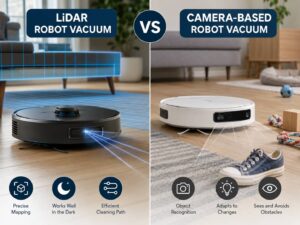
LiDAR is great for mapping. It helps the robot scan rooms, build floor plans, clean in organized paths, and return to the dock. It also works well in low light.
Camera-based obstacle avoidance helps with object recognition. A front camera can help the robot identify shoes, toys, cables, pet items, and other common objects. Some robots pair a camera with 3D structured light, which helps them judge depth better.
The best premium models often use both. LiDAR handles the map. The camera or 3D sensor handles smaller objects.
For privacy-focused buyers, a camera-free model may feel better. It may not recognize as many objects, but it can still avoid larger obstacles with the right sensors.
If you want a fuller comparison, this guide on LiDAR robot vacuum vs camera-based robot vacuum explains the difference in more detail.
Real Problems Owners Still Notice
Even good obstacle avoidance can create small annoyances.
One common issue is missed dirt around objects. If the robot avoids a sock, the area under that sock stays dirty. The room may look cleaner overall, but hidden patches can remain.
Some robots also become too careful. They leave wide gaps around furniture legs, curtains, cables, or pet bowls. That reduces the chance of getting stuck, but it can leave dust behind near edges.
Object labels can be wrong too. A robot may label a toy as a shoe or a cable as fabric. The label does not matter much if the robot avoids the item, but it can make the app feel less polished.
Low light can reduce detection on some models. Robots with extra lighting or better depth sensors handle darker rooms better, but performance still varies.
Software updates can change behavior as well. A robot may avoid objects better after an update. It may also become more cautious or change how close it cleans around furniture.
So, obstacle avoidance is useful, but buyers should treat it as a safety net. It is not a promise that the robot will handle every messy room perfectly.
Who Should Pay More for Obstacle Avoidance?
You should pay more for obstacle avoidance if your home often has clutter on the floor.
It is a smart upgrade for homes with pets, kids, loose cables, shoes near entryways, toys in living areas, and mixed furniture layouts. It also makes sense if you want scheduled cleaning with less prep.
The feature is also worth it if you hate rescuing stuck gadgets. Some people do not mind freeing a robot vacuum once in a while. Others find it annoying enough to stop using the robot. If that sounds like you, better obstacle avoidance is money well spent.
It also helps if you run the robot while you are away. A smarter robot has a better chance of finishing the job instead of sitting helpless in the hallway.
Who Can Skip It?
You can skip the expensive upgrade if your home is simple and tidy.
A basic or mid-range robot vacuum can be enough if your floors are usually clear, you do not have pets, and you live in a smaller space. It can also make sense if you only run the robot after picking up the room.
In that case, spend your money on the basics: strong suction, reliable mapping, decent battery life, easy maintenance, and replacement parts that are easy to find.
Obstacle avoidance is helpful, but it is not the only feature that matters. A robot with poor suction and great object detection can still disappoint you. Clean floors matter more than fancy app labels.
What to Check Before You Buy
Do not buy a robot vacuum just because the box says “AI obstacle avoidance.” Brands use different names for similar features, and performance can vary a lot.
Before you pay more, check what the robot can actually detect. Look for cables, shoes, toys, socks, pet bowls, and pet waste if that matters to you.
Check if it works in low light. Some systems rely more on cameras, so dark rooms can reduce accuracy.
Look at the app too. Good no-go zones, room naming, map editing, object history, and cleaning settings can make the robot much easier to use.
Dock size matters as well. Some premium docks are large. Make sure you have space for one before buying a high-end model.
Replacement parts are another thing to check. Brushes, filters, mop pads, dust bags, and side brushes will need replacing. A robot vacuum is easier to own when parts are affordable and easy to buy.
Final Verdict: Is Obstacle Avoidance Worth Paying More For?
Obstacle avoidance is worth paying more for if your robot vacuum will face real-life clutter. Pets, kids, cables, toys, shoes, and busy rooms make this feature much more valuable.
It is also worth it if you want the robot to clean on a schedule with less help from you. A robot that finishes the job is far more useful than one that gets stuck often.
Still, not every buyer needs it. If your floors are clear and your home is simple, a cheaper LiDAR robot vacuum can be a better value. You may get strong mapping and reliable cleaning without paying for advanced object recognition.
The best answer is practical. Pay more for obstacle avoidance if stuck robots are likely in your home. Skip it if your floors are usually clear.
A robot vacuum should save time, not create new work. If better obstacle avoidance helps your robot clean more often, finish more jobs, and avoid more messes, then the upgrade is worth it.