A mouse can look perfectly fine and still feel bad to use. The clicks may work. The sensor may track well. Yet the glide can feel slow, scratchy, sticky, or uneven. In many cases, the problem is not the mouse sensor or the mouse pad. It is the small material pads on the bottom of the mouse.
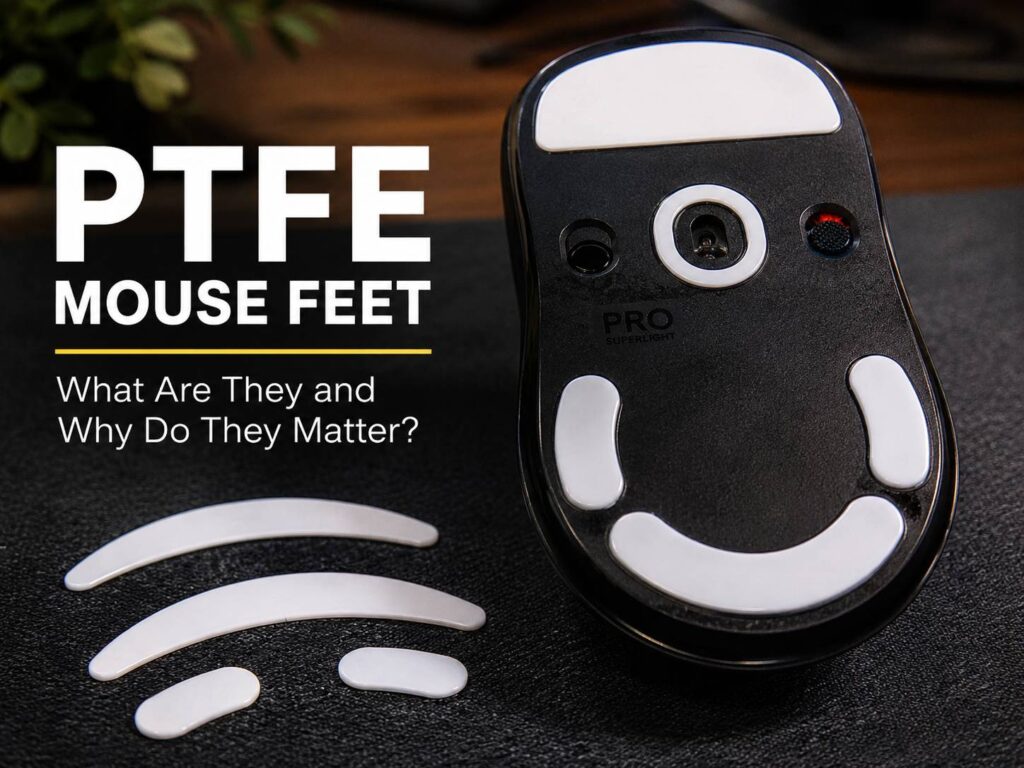
These pads are called PTFE mouse feet. Some people call them mouse skates, mouse glides, glide pads, or replacement mouse feet. They all do the same basic job. They help your mouse move smoothly across a mouse pad, desk mat, or hard surface.
For gamers, PTFE mouse feet can make fast swipes and small aim corrections feel cleaner. For office users, they can make the mouse feel lighter and less tiring during long work sessions. They are small parts, but they affect the way your mouse feels every single day.
What Is a PTFE Mouse Foot?
A PTFE mouse foot is a smooth pad attached to the bottom of a mouse. PTFE stands for polytetrafluoroethylene, a material known for low friction. That low-friction feel is the main reason brands use it for mouse skates.
The feet sit between the mouse shell and the surface below it. Without them, the plastic base of the mouse would rub directly against your mouse pad or desk. That would feel rough, loud, and unpleasant.
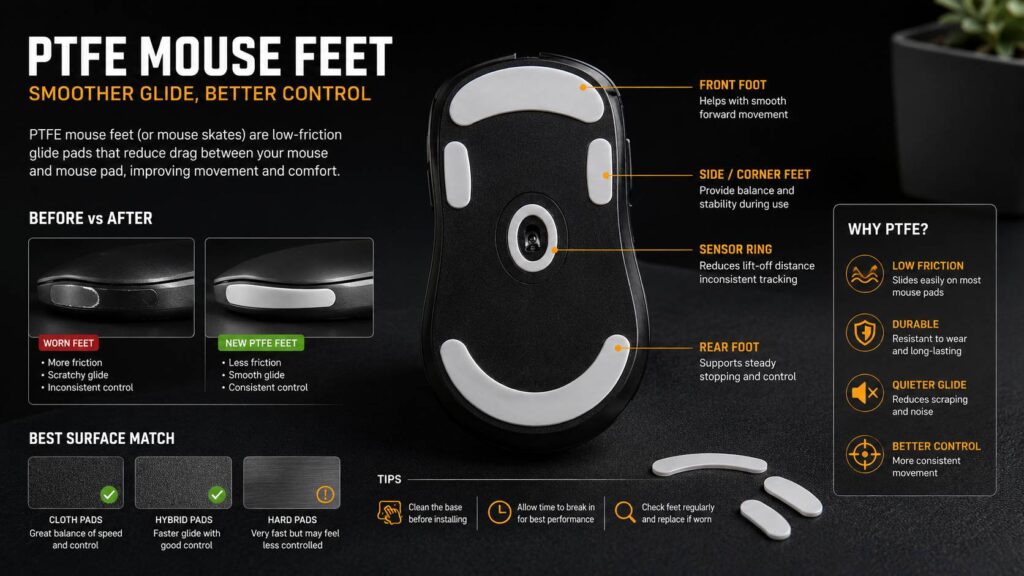
Most mice have several feet on the bottom. Some use two large skates. Others use four smaller corner feet, plus a ring around the sensor. Gaming mice often use larger PTFE skates to create a smoother glide and better control during fast movement.
Good PTFE feet should feel smooth, flat, and stable. The mouse should not wobble. The edges should not scratch the pad. The glide should feel natural, not slippery in a weird or hard-to-control way.
Why PTFE Is Used for Mouse Feet
PTFE is popular because it slides well on many surfaces. It has less drag than many cheaper plastics, so the mouse moves with less effort.
That matters more than it sounds. A mouse with rough feet can feel heavy, even if the mouse itself is light. Small movements can feel sticky. Fast movements can feel uneven. Over time, that rough feeling can become annoying.
PTFE helps with:
- Smoother mouse movement
- Lower friction on cloth and hybrid pads
- Better control during small corrections
- Less scraping noise
- A more consistent glide over time
This is why many gaming mouse brands now mention PTFE feet in their product specs. It is not just a small detail anymore. Mouse feet are part of the whole performance package, just like shape, weight, sensor quality, and click feel.
PTFE Mouse Feet vs Regular Mouse Feet
Regular mouse feet can be made from different types of plastic. Some are decent. Others feel rough from day one. Cheaper feet can wear down quickly, collect dirt around the edges, or create a scratchy glide.
PTFE mouse feet usually feel smoother, especially on cloth mouse pads. They help the mouse start moving with less effort. They also make long swipes feel more even.
Pure PTFE feet are often white. Black mouse feet can still contain PTFE, but they may include dye or other additives. That does not automatically make them bad. Still, white virgin-grade PTFE skates give the cleanest glide.
The difference is easy to feel if your old feet are worn. A mouse that once dragged across the pad can suddenly feel fresh again. It is not magic, but it is one of the simplest upgrades you can make.
What Does Virgin-Grade PTFE Mean?
Virgin-grade PTFE means the material is made from pure PTFE instead of recycled or mixed material. Many aftermarket mouse feet brands use this term to show that their skates are designed for smoother glide.
In real use, virgin-grade PTFE often feels cleaner and faster than cheap stock feet. It also tends to break in nicely after a short period of use.
Still, material is only one part of the story. Shape and finish matter too. Rounded edges are very important. A PTFE foot with sharp edges can scrape against a soft cloth pad, even if the material itself is good.
Thickness matters as well. Feet that are too thin may let the mouse shell touch the pad. Feet that are too thick can slightly change the sensor height. Most modern gaming mice handle this well, but a poor fit can still make the mouse feel off.
How PTFE Mouse Feet Affect Gaming
PTFE mouse feet can change how a mouse feels in games. The difference is most noticeable in FPS games, battle royale games, aim trainers, and fast competitive titles.
A smoother glide can help with:
- Quick flick shots
- Tracking moving targets
- Small aim corrections
- Large low-sensitivity swipes
- More consistent stopping control
The biggest benefit is not always speed. It is consistency. A mouse that feels smooth in one direction but rough in another can hurt your rhythm. Better skates reduce that uneven feeling.
If you play shooters, mouse feet work together with your mouse pad, grip style, sensitivity, and mouse weight. For a deeper look at what matters in a gaming mouse, this guide on best FPS gaming mouse features is a helpful next read.
One small warning: faster is not always better. Very fast skates can make it hard to stop the mouse cleanly. A balanced glide is usually better than a glide that feels too slippery.
PTFE Mouse Feet for Work and Daily Use
PTFE mouse feet are not only useful for gaming. They can make a regular work mouse feel better too.
If you use a mouse for hours each day, rough feet can make every movement feel harder. You may push the mouse more than needed. The cursor may feel less precise during small movements. The bottom of the mouse may even scrape on the desk.
Fresh PTFE feet can make the mouse feel lighter without changing its actual weight. That can be useful for office work, photo editing, video editing, spreadsheets, browsing, and design tasks.
A good desk setup helps too. Your monitor, mouse, keyboard, and chair all affect comfort. If you are improving your workspace, this comparison of curved monitor vs flat monitor can help you decide what screen style fits your setup better.
Common Problems with PTFE Mouse Feet
PTFE mouse feet are simple, but a few problems can happen.
The most common issue is scratchiness after installation. This often happens when old adhesive stays under the new feet. Even a tiny bump can make the new skate sit unevenly.
Another common problem is poor edge finish. Some cheap skates have sharp edges. These edges can dig into soft cloth pads and make the mouse feel worse than before.
Bad adhesive can also ruin the experience. If the feet shift during use, the glide becomes uneven. This can happen during long gaming sessions, especially in warm rooms.
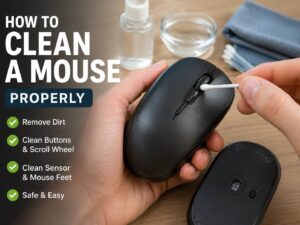
Dust is another small but real issue. Dirt can collect around the edges of the skates. Over time, it can make the glide feel rough. A clean mouse pad and a quick wipe with a microfiber cloth usually help.
Signs You Need New Mouse Feet
You do not need to replace mouse feet every month. Still, they do wear down. Heavy gamers and daily users may notice wear faster than casual users.
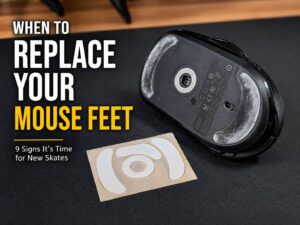
You probably need new mouse feet if:
- The mouse feels scratchy on a clean pad.
- The feet look thin, shiny, or uneven.
- One skate is peeling at the edge.
- The mouse feels slower than it used to.
- You hear scraping during normal use.
- The mouse body touches the pad.
- Dirt sticks around the old adhesive.
- The glide feels different from one side to the other.
Try cleaning the mouse pad first. Then wipe the bottom of the mouse. If the rough feeling stays, the feet are likely worn.
PTFE Mouse Feet vs Glass Mouse Feet
Glass mouse feet are another popular option. They feel very fast and very smooth on some pads. Some players love them. Others find them too slippery.
PTFE is usually more balanced. It gives smooth glide, but it still keeps some control. That makes it easier to stop the mouse during precise movements.
Glass skates can also feel louder. They may wear cloth pads faster than PTFE. Dust can become more noticeable too. One tiny particle under glass skates can feel harsh.
My honest opinion: PTFE is the safer choice for most people. Glass feet are fun if you already know you want a very fast setup. For gaming and everyday use, good PTFE skates make more sense.
PTFE Mouse Feet vs Ceramic Mouse Feet
Ceramic mouse feet are hard, smooth, and long-lasting. They can feel fast on some surfaces, but they are not for everyone.
Ceramic skates feel very different from PTFE. They can be louder and harder on certain pads. Some users like the firm glide. Others feel less control.
PTFE works better as a general choice. It pairs well with cloth pads, hybrid pads, and many hard pads. It also feels more familiar if you are coming from standard mouse feet.
Ceramic skates are worth trying only if you already know your pad and glide preference. For a first replacement set, PTFE is the smarter pick.
How to Choose Good PTFE Mouse Feet
The best PTFE mouse feet are the ones that fit your exact mouse model. Fit matters a lot. A badly shaped skate can cover screw holes, sit unevenly, or interfere with the sensor area.
Look for these features:
- Exact mouse model compatibility
- Virgin-grade or pure PTFE material
- Rounded edges
- Good adhesive backing
- Correct thickness
- Full replacement set
- Sensor ring included, if your mouse uses one
Avoid random generic sticker sheets unless you are comfortable trimming and testing them. They can work, but they are easier to mess up.
It is also nice to buy a pack with two sets. Installation mistakes happen. A spare set gives you room to fix a bad placement without buying again.
How to Replace PTFE Mouse Feet
Replacing mouse feet is not hard, but take your time.
Turn off the mouse first. Then remove the old feet slowly. A plastic pry tool works better than a metal tool. Metal can scratch the bottom shell.
After removing the old feet, clean the surface well. Old adhesive must come off. If it stays there, the new feet will not sit flat. A little isopropyl alcohol on a soft cloth can help. Let the area dry before installing the new skates.
Next, align each foot carefully. Do not press hard until the placement looks right. Once the skate is lined up, press it down evenly for a few seconds.
New PTFE feet may feel a little sharp or too fast at first. That is normal. After a few hours or days, the edges settle and the glide usually becomes smoother.
Best Mouse Pad Types for PTFE Feet
PTFE feet work with many mouse pads, but the surface changes the feel.
Cloth pads give more control. They are comfortable, quiet, and easy to use. For PTFE feet, this is the best match.
Hybrid pads feel faster. They are good for users who want quicker movement but still need some stopping power.
Hard pads feel the fastest. They can be fun for speed, but they are louder and less forgiving. Dust and small particles are easier to feel.
If you are not sure what to choose, start with a quality cloth pad. It gives a smooth glide without making the mouse feel too loose.
Do PTFE Mouse Feet Improve Aim?
PTFE mouse feet can improve mouse feel, but they do not automatically improve aim. Aim comes from practice, good settings, steady grip, comfort, and a setup that feels consistent.
What PTFE feet can do is remove unwanted friction. That can make your aim feel more natural. If your old feet were worn or scratchy, the improvement can be very noticeable.
The best result comes from matching the feet with the right pad. Fast skates on a fast pad can feel hard to control. Smooth PTFE feet on a medium-control pad usually feel better.
Are PTFE Mouse Feet Worth It?
Yes, PTFE mouse feet are worth it if your mouse feels rough, slow, or uneven. They are cheap compared with buying a new mouse, and they can make an older mouse feel much better.
They are also worth it if your mouse has good specs but poor stock skates. Some mice have great sensors and shapes, yet the feet feel average. A better PTFE set can fix that weak point.
They are less useful if your mouse is new and already has good PTFE feet. In that case, you can wait until the stock feet wear down.
My honest view is simple. PTFE mouse feet are one of the easiest mouse upgrades to recommend. They do not solve every problem, but they fix glide problems very well.
Final Verdict
A PTFE mouse foot is a small glide pad that helps your mouse move smoothly across a mouse pad or desk surface. It reduces drag, protects the bottom shell, and makes movement feel cleaner.
For gaming, PTFE feet can help with smoother flicks, tracking, and small corrections. For work, they can make daily mouse use feel lighter and more comfortable.
The best PTFE mouse feet fit your exact mouse, use good material, have rounded edges, and stick firmly in place. Pair them with a clean cloth or hybrid mouse pad for the best result.
If your mouse feels scratchy, heavy, or uneven, new PTFE feet are a simple upgrade that can make it feel fresh again.